
An AC blowing warm or weak air is one of the most common (and most urgent) HVAC complaints in Texas homes, and it almost always traces back to one of a few key causes. Some are quick fixes you can handle yourself while others require a licensed technician to prevent whole system failure.
Here are the eight most common reasons your AC isn’t cooling, and how to tell when it’s time to repair versus when it’s time to replace the unit.
AC not keeping up with the Texas heat? Schedule a repair with McWilliams Heating, Cooling and Plumbing and get cool air back today.
Top 8 Reasons Why Your AC Unit Isn’t Cooling Your Texas Home
Texas heat and humidity push AC systems harder than most other climates, which means small issues turn into bigger problems faster. These eight causes account for the vast majority of calls we get asking “Why is my AC not blowing cold air?”
1. Dirty or Clogged Air Filters
A clogged or dirty air filter restricts airflow across the system, forcing it to work harder while cooling less effectively. This is the single most common cause of weak or warm airflow, and it’s also the easiest to fix yourself.
As a rule of thumb, replace disposable filters every 1–3 months, more often during peak summer use or if you have pets. If your filter looks gray or matted, that’s a clear sign it’s overdue for a replacement.
2. Incorrect Settings or Faulty Thermostat
If the fan on the thermostat is set to “on” instead of “auto,” the fan runs constantly (even when the system isn’t actively cooling), which can feel like warm or weak airflow. A miscalibrated or aging thermostat can also fail to communicate properly with the system.
Check that the thermostat is set to “cool” and “auto,” and confirm the temperature setting is actually below the current room temperature. If settings look correct and cooling still isn’t working, the thermostat itself may need replacement.
3. Dirty Condenser Coil
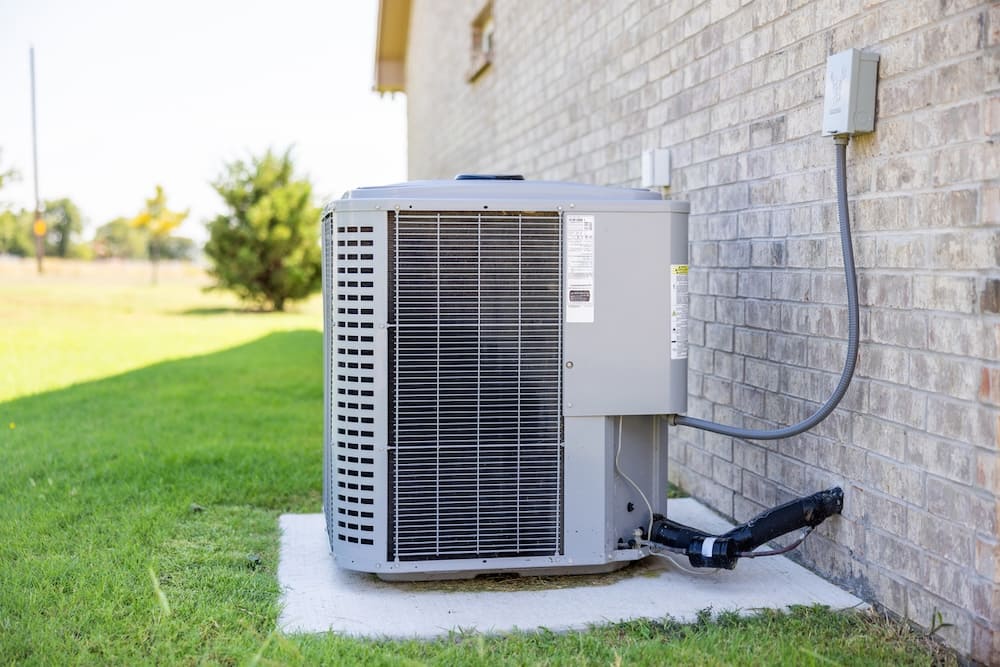
The condenser coil, located in the outdoor unit, releases heat pulled from inside your home. When they’re coated in dirt, pollen, or grass clippings, they can’t release heat efficiently, which reduces cooling capacity.
This is especially common in Texas, where pollen and dust accumulate quickly outdoors. Gently hosing off the outdoor unit a few times a year (with the power off) helps, but a heavily soiled coil often needs a professional cleaning.
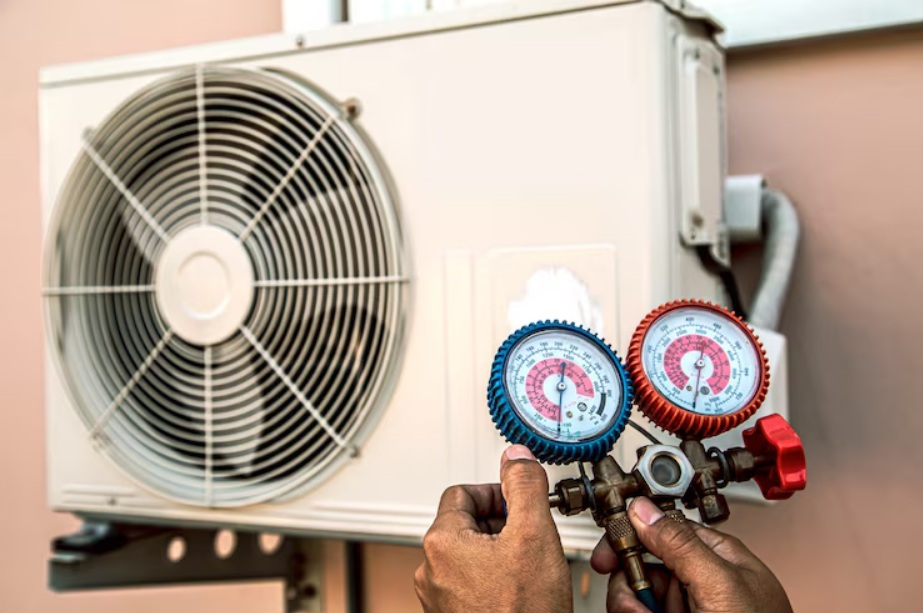
4. Refrigerant Leak
Low refrigerant means the system can’t absorb enough heat from your home’s air, resulting in warm or barely-cool airflow even when everything else is running normally. Refrigerant moves in a closed loop, which means it doesn’t get completely used up over time. This means any low levels almost always point to a leak somewhere in the system.
Keep in mind, this is not a DIY fix. Handling refrigerant requires EPA certification, and a technician needs to locate and repair the leak before recharging the system properly.
5. Undersized or Oversized Air Conditioning Unit
A unit that’s the wrong size for your home will struggle to cool it evenly, regardless of how well-maintained it is. An undersized unit runs constantly without the means to keep up, while an oversized unit cycles on and off too quickly to effectively remove humidity.
This issue usually surfaces after a previous installation didn’t account for your home’s actual square footage, insulation, and layout. Correcting it means having a technician run a proper load calculation and, in some cases, replacing the unit with a correctly sized one.
6. Electrical Problems
Faulty wiring, a tripped breaker, or a failing capacitor can prevent the compressor or fan from running at full capacity, negatively affecting your unit’s cooling performance. Not to mention, electrical issues can also cause a system to run intermittently or shut off unexpectedly.
Check your breaker panel for a tripped switch first. If that’s not the issue, electrical repairs inside the unit should be left to a licensed technician, since they involve high-voltage components.
7. Damaged Heat Pump
For homes using a heat pump system, physical damage or a failing reversing valve can prevent the unit from switching into cooling mode when needed. Your system may appear to be running, but it’s producing air that’s only marginally cooler than room temperature.
Heat pump issues can be tricky to diagnose without experience, since the same symptoms can point to several different internal components. A technician familiar with heat pump systems can pinpoint the actual cause quickly.
8. Ice Buildup on Unit
Ice forming on the indoor coil or refrigerant lines usually means airflow is restricted, refrigerant is low, or both. Once ice builds up, it blocks airflow further, which can create a cycle that eventually damages the compressor if left unaddressed.
If you notice ice on your unit, turn the system off and let it thaw completely before running it again. Afterwards, have a technician diagnose the underlying cause. Keep in mind, ice buildup is a symptom, not the root problem.
Signs It’s Time to Replace Your AC Unit
Replace your air conditioning system when repairs become frequent, the system is over 10-years old, or a single repair costs close to half the price of a new system. Repeatedly repairing an aging unit often costs more over time than investing in a new one.
Additional signs replacement makes more sense than another repair:
- Energy bills have climbed steadily despite regular maintenance
- The system uses an older refrigerant type that’s becoming harder to source
- The unit struggles to cool the home evenly, even after recent repairs
- You’re facing a major component failure, like the compressor or coil
AC Won’t Blow Cold Air? Get Help from the McWilliams Pros
If your AC still isn’t cooling after checking the basics, it’s time to bring in a professional who can diagnose the exact cause and fix it. McWilliams Heating, Cooling and Plumbing has served East Texas homeowners since 1974, and our technicians carry the equipment and experience to handle any of the eight causes above.
Why Texas Homeowners Choose McWilliams for HVAC Needs
- Over 50 years of experience serving Lufkin, Nacogdoches, Livingston, Huntsville, and the surrounding East Texas area
- We’re available 7am–7pm, 7 days a week, so a hot house doesn’t have to wait for a weekday appointment
- Free in-home estimates before any work begins
- Professionally trained technicians equipped to service all major HVAC brands
- Locally operated, with a genuine understanding of what Texas heat and humidity do to home comfort systems
Ready to get your AC back on track? Contact McWilliams Heating, Cooling and Plumbing online or call us to schedule service today.
Can You Finance a New HVAC System?
Yes, McWilliams offers flexible financing options so a new HVAC system doesn’t have to mean a large upfront expense. Financing breaks the cost into manageable monthly payments, making it easier to replace a failing system with the right one for your home rather than settling for whatever fits your immediate budget.
Frequently Asked Questions
Why is my AC running but not cooling the house?
This usually points to restricted airflow, low refrigerant, or a sizing mismatch. Start by checking the air filter and thermostat settings, then call a technician if the problem continues.
Is it safe to run my AC if it’s blowing warm air?
It’s generally safe short-term, but running the system while ice is forming on the unit or while refrigerant is low can cause further damage. Turn it off and get it inspected if you notice ice buildup or unusual noises.
How often should I get my AC serviced?
Most Texas homes benefit from a professional tune-up once a year, ideally in the spring before peak cooling season begins.
How do I know if my AC needs a repair or a full replacement?
As a general rule, if the unit is under 10 years old and the repair cost is reasonable, repair is usually the better option. Past that age, or with a costly repair, replacement often makes more financial sense long-term.