
Why Choosing the Right Air Conditioning Repair Service Matters
When your Air Conditioning Repair needs arise during a sweltering Texas summer, making the wrong choice can leave your family uncomfortable for days or even weeks. Here’s what you need to know about air conditioning repair services:
Most Common AC Problems:
- Insufficient cooling or warm air blowing
- Strange noises (grinding, squealing, clanging)
- Water leaks around the unit
- Frequent cycling on and off
- Foul odors or poor air quality
- High energy bills
Typical Repair Process:
- Diagnosis – Professional assessment (usually 4-8 hours)
- Written Estimate – Clear breakdown of costs
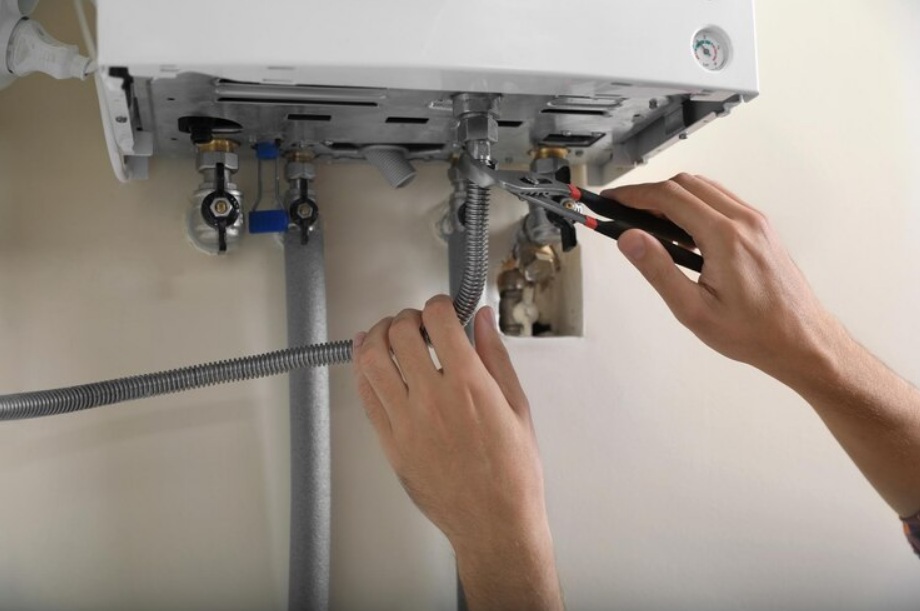
- Repair Work – Using quality parts and proper techniques
- Testing – Ensuring system works correctly
- Cleanup – Leaving your home spotless
When to Repair vs. Replace:
- Repair if: Unit is under 10 years old, single issue, still under warranty
- Replace if: Unit is 15+ years old, frequent breakdowns, repair costs exceed 50% of replacement cost
As one Texas homeowner finded during a recent heat wave, “I called ten locations and found one-month delays elsewhere, but the right company installed my system in just 48 hours.” This highlights why asking the right questions upfront can save you from prolonged discomfort and inflated costs.
Most HVAC systems can last 15-20 years with proper maintenance, but choosing an unqualified repair service can cut that lifespan in half. The key is knowing what questions to ask before you hire.
The average AC repair costs a few hundred dollars, but prices vary widely based on the problem, parts needed, and the contractor you choose. More importantly, hiring the wrong service can lead to repeated breakdowns, voided warranties, and safety hazards.
Questions 1-3: Verifying Credentials, Experience, and Costs
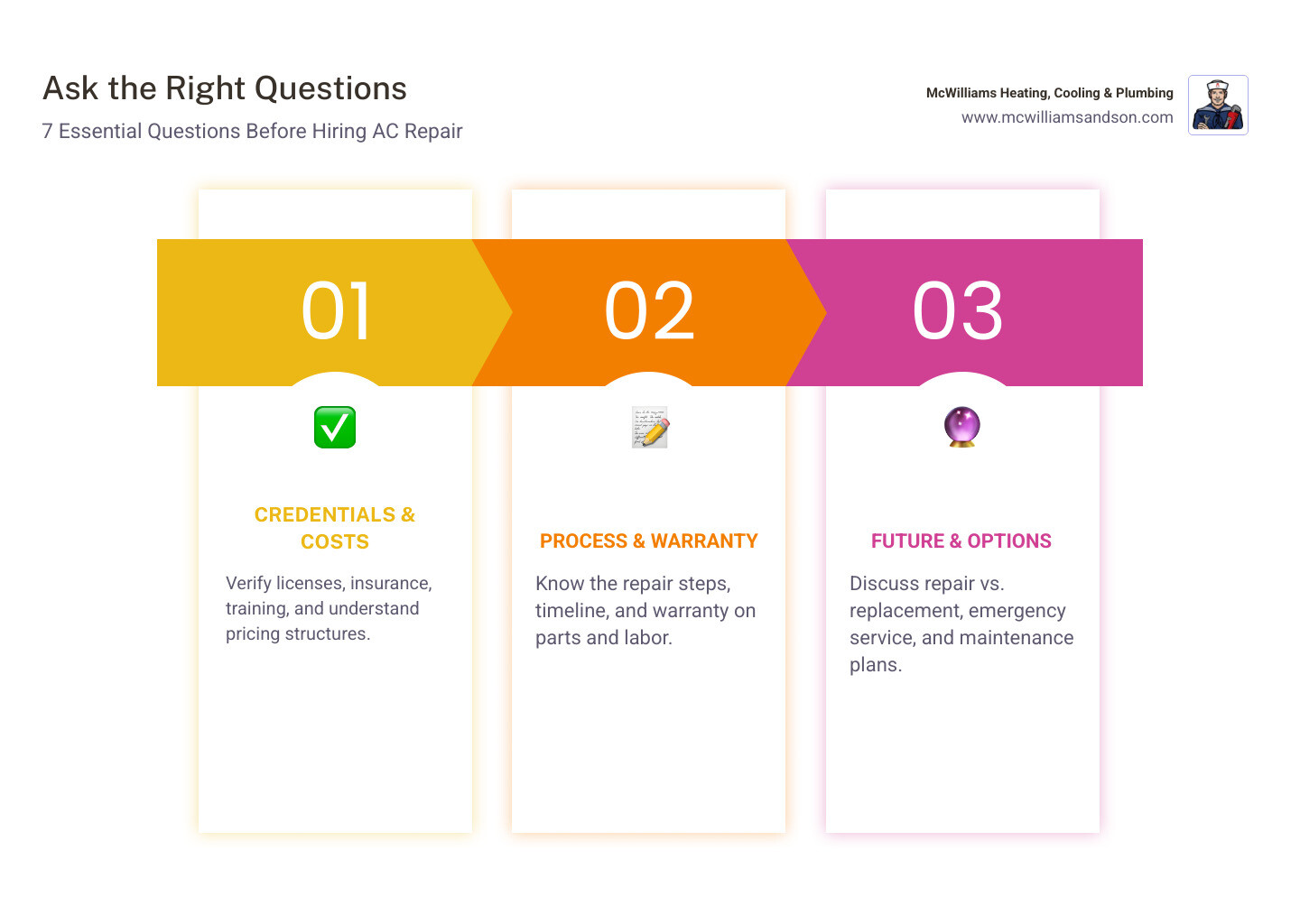
When your AC decides to take an unscheduled vacation during a blazing Texas summer, panic mode kicks in fast. But before you call the first number you find online, take a deep breath. The difference between a reliable repair and a costly nightmare often comes down to asking three crucial questions upfront.

1. Are Your Technicians Licensed, Insured, and Trained?
This question isn’t just paperwork talk – it’s your safety net. Any professional Air Conditioning Repair company worth their salt should answer with a confident “absolutely” to all three parts.
State licensing means the technician has proven they know what they’re doing. In Texas, HVAC professionals must pass rigorous exams that test their knowledge of complex cooling systems, electrical work, and safety protocols. Think of it as your assurance that the person working on your expensive equipment actually understands how it works.
Liability insurance protects you from financial disaster. Imagine if an uninsured technician accidentally floods your living room or gets hurt on your property. Without proper insurance, you could be stuck with thousands in damages or medical bills. Always ask to see proof of insurance – legitimate companies are happy to provide it.
Professional training keeps technicians current with evolving technology. Look for NATE certification and manufacturer-specific training credentials. These show the technician stays updated on the latest systems and repair techniques. When your high-tech smart thermostat starts acting up, you want someone who actually knows how to fix it, not someone who’s guessing.
The best companies invest heavily in ongoing education because HVAC technology changes constantly. New refrigerants, energy-efficient components, and digital controls require specialized knowledge. What to look for in a contractor’s credentials can help you understand the certifications that matter most.
2. What Is Your Company’s Experience and Reputation?
Experience isn’t just about years in business – it’s about proven problem-solving ability. A company that’s survived multiple decades has weathered economic storms, earned customer loyalty, and built deep expertise across all types of systems.
McWilliams Heating, Cooling & Plumbing has served the Greater Texas Area for over 50 years. That’s half a century of keeping families comfortable through scorching summers and unexpected breakdowns. This longevity means we’ve seen every possible AC problem and developed efficient solutions for each one.
Local reputation tells the real story. Check online reviews, but look beyond star ratings. Read what customers actually say about response times, work quality, and follow-up service. One recent customer mentioned how our technicians “worked tirelessly in extreme heat” to restore their cooling, while another appreciated our team’s patience in answering “thousands of questions.”
Brand expertise matters too. A reputable company should service all major HVAC manufacturers, not just one or two brands. This versatility indicates comprehensive knowledge and the ability to source parts quickly. Whether you have a newer energy-efficient unit or an older system, experienced technicians know the quirks and common issues of each brand.
Trust builds over time through consistent, reliable service. When neighbors recommend the same company their families have used for years, that’s a powerful endorsement. More info about our HVAC services shows the breadth of experience that comes with decades in business.
3. How Do You Structure Your Pricing and Estimates?
Nobody enjoys surprise bills, especially when you’re already stressed about a broken AC. Understanding pricing structure upfront prevents unpleasant shocks and helps you budget appropriately.
Most professional companies charge a diagnostic fee to cover the cost of sending a qualified technician to identify your system’s problems. This fee pays for their expertise in pinpointing issues that might not be obvious to untrained eyes. Think of it as paying for a medical diagnosis – you need to know what’s wrong before you can fix it.
Written estimates should always come before any repair work begins. This detailed breakdown shows exactly what repairs are needed, which parts will be used, and how much labor is involved. Verbal estimates can lead to misunderstandings and disputes later.
Flat-rate pricing versus hourly billing makes a big difference in your final cost. Flat-rate pricing means you pay a set amount for specific repairs, regardless of how long they take. This approach provides predictability and prevents costs from spiraling if complications arise. Hourly billing can work in your favor for simple fixes but becomes expensive for complex problems.
Several factors influence Air Conditioning Repair costs. Parts availability and quality affect pricing significantly. Labor complexity varies depending on system accessibility and repair difficulty. System age impacts both parts costs and repair time, since older units may require additional troubleshooting.
At McWilliams, we believe in complete transparency. We provide free in-home estimates so you know exactly what to expect before committing to repairs. We also understand that unexpected breakdowns can strain household budgets, which is why we offer Our flexible financing options to make necessary repairs more manageable.
The key is finding a company that explains costs clearly and stands behind their pricing. When estimates are detailed and honest, you can make informed decisions about your home’s comfort system.
Questions 4-5: Understanding the Air Conditioning Repair Process & Warranty
You’ve checked their credentials and pricing – now let’s talk about what actually happens when that repair truck pulls into your driveway. Understanding the repair process and warranty protection can mean the difference between a smooth experience and a frustrating ordeal.

4. What Does a Typical Repair Visit Involve?
A professional Air Conditioning Repair visit shouldn’t feel like a mystery novel where you’re left guessing what’s happening. The best companies follow a clear, structured process that keeps you informed every step of the way.
The scheduling process should be straightforward and accommodating. When your AC breaks down during a Texas heat wave, you don’t want to wait weeks for service. Reputable companies understand the urgency and often provide same-day or next-day service, even during the busiest summer months.
When the technician arrives, they should look professional and be clearly identifiable. No unmarked vans or questionable characters – just skilled professionals who take pride in their appearance and their work.
The diagnosis phase is where the real expertise shows. A qualified technician will perform what’s often called a 21-point inspection of your entire system. This isn’t a quick glance at your outdoor unit – it’s a comprehensive examination of everything from electrical connections to refrigerant levels to airflow patterns.
Here’s what makes this phase so important: they should clearly explain the issues they’ve found in terms you can actually understand. No technical jargon that leaves you nodding politely while having no idea what’s wrong with your system. A good technician becomes a translator, helping you understand exactly what’s broken and why.
The repair timeline can vary dramatically depending on what’s wrong. Simple fixes might take an hour, while complex issues could require 4 to 8 hours of work. The technician should give you a realistic timeframe upfront, so you can plan your day accordingly.
Throughout the repair process, worksite cleanliness matters more than you might think. Professional technicians protect your floors, clean up as they work, and leave your home in the same condition they found it – minus the broken AC, of course.
Final system testing is the victory lap. After completing the repairs, the technician should thoroughly test your system to ensure everything is working correctly. They’ll check airflow, temperature output, and overall performance to make sure the problem is truly solved.
To learn more about what’s included in our comprehensive service approach, visit Our AC Repair Services.
5. What Kind of Warranty Do You Offer on Parts and Labor?
Here’s where you separate companies that truly stand behind their work from those that disappear the moment they cash your check. A solid warranty isn’t just nice to have – it’s essential protection for your investment.
Parts warranty coverage can vary significantly between companies. Some parts might come with a 30-day warranty, while others could be covered for several years. The key is understanding exactly what’s covered and for how long. High-quality parts should come with manufacturer backing, but the installing company should also provide their own warranty on the components they supply.
Labor guarantee is equally important. If the same problem comes back because of faulty installation or repair work, you shouldn’t have to pay twice. A reputable company will return to fix any issues related to their workmanship at no additional charge. This shows they’re confident in their technicians’ skills and committed to getting it right the first time.
Handling manufacturer warranty claims is another service that separates the pros from the amateurs. If your existing AC unit has warranty coverage, a good company will help you steer those claims and ensure you get the coverage you’re entitled to. They’ll handle the paperwork and communicate with manufacturers on your behalf.
Written warranty terms are non-negotiable. Verbal promises are nice, but written guarantees protect both you and the company. These documents should clearly spell out what’s covered, for how long, and any conditions that apply. Don’t accept vague assurances – insist on written documentation that you can reference if issues arise.
A company that offers comprehensive warranty protection is essentially putting their money where their mouth is. They’re betting on their own quality, which should give you confidence in their work. At McWilliams, we’ve been standing behind our repairs for over 50 years because we believe in doing the job right the first time.
Question 6: Making the Critical Choice – Repair vs. Replacement
Here’s the moment of truth that every Texas homeowner dreads: standing in front of a broken AC unit, wondering if it’s time to say goodbye to an old friend or give it one more chance. This decision can feel overwhelming, especially when the summer heat is beating down and you need answers fast.
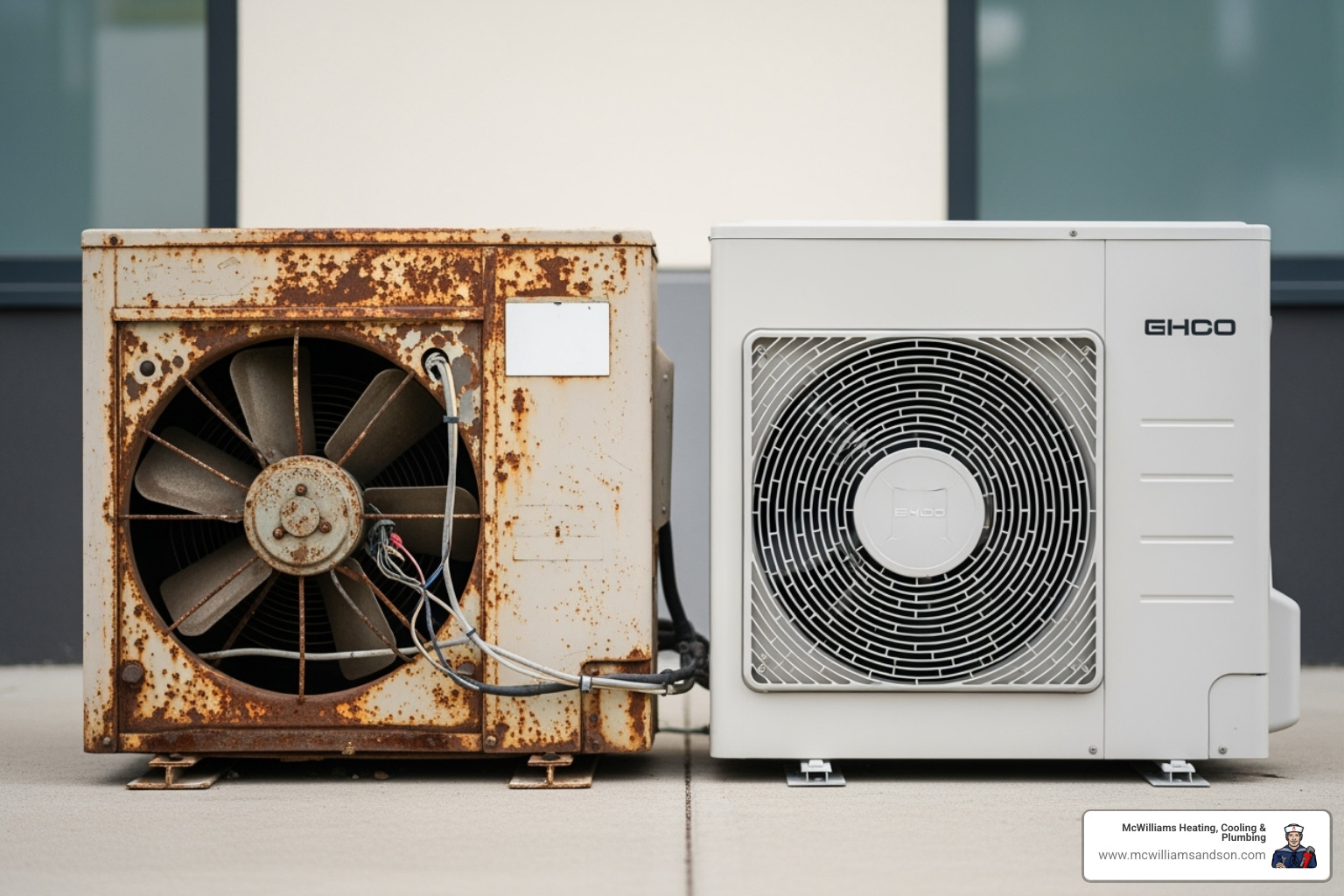
When Do You Recommend Repairing Versus Replacing an Air Conditioner?
The good news? A trustworthy technician won’t try to sell you a shiny new system if your current one still has life left in it. Instead, they’ll walk you through a honest evaluation based on several key factors that really matter for your wallet and comfort.
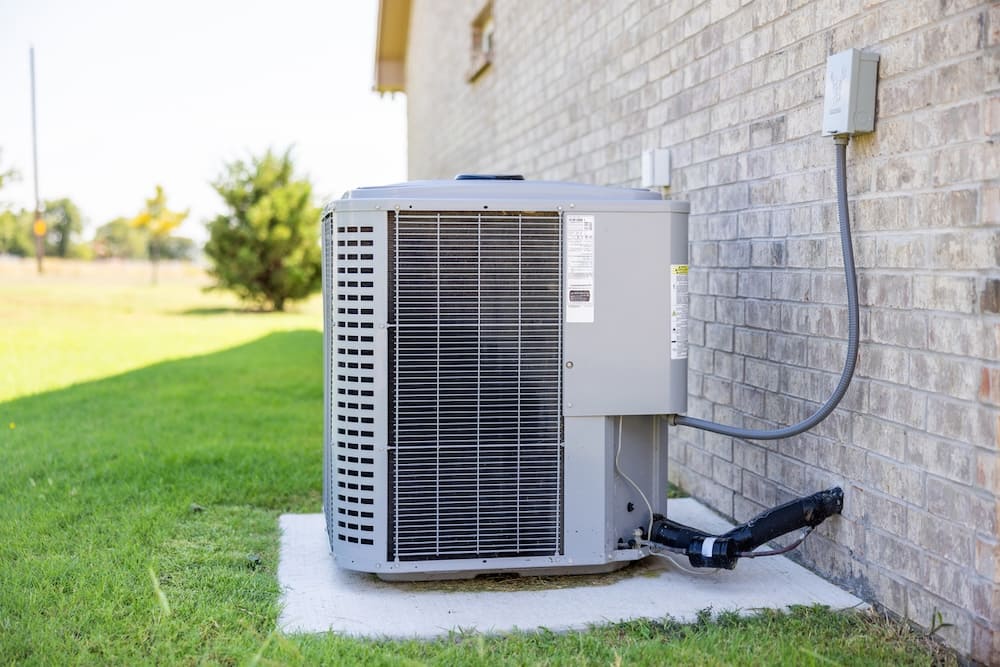
Age is more than just a number when it comes to air conditioners. Most AC units live happy, productive lives for about 10 to 15 years with proper care. If your system is only 7 years old and acting up, it’s likely just hitting its teenage rebellion phase – a good Air Conditioning Repair can get it back on track. But if your unit is pushing 15 years and constantly causing headaches, it might be time to start shopping for a replacement.
Here’s where the math gets interesting: the 50% rule. If your repair estimate costs more than half the price of a brand-new system, replacement usually makes more financial sense. Think of it this way – would you spend $2,500 fixing a car that’s only worth $3,000? Probably not, and the same logic applies to your AC.
Energy efficiency is another game-changer. Older units often guzzle electricity like a thirsty camel, especially if they have low SEER ratings. Modern systems can cool your home using significantly less energy, which means lower monthly bills that add up to real savings over time. Sometimes the energy savings alone can justify the upgrade cost.
Pay attention to how often you’re calling for repairs. If your AC is breaking down multiple times each summer, those frequent repair bills can quickly exceed the cost of a new system. Plus, there’s something to be said for the peace of mind that comes with reliable cooling when you need it most.
One critical factor many homeowners don’t realize is the R-22 refrigerant phase-out. If your older system uses this refrigerant (sometimes called Freon), repairs involving refrigerant leaks can be extremely expensive since R-22 is no longer manufactured. In these cases, replacement often becomes the only practical option.
| Factor | Repair Makes Sense | Replacement is Better |
|---|---|---|
| Unit Age | Under 10 years old; plenty of life remaining | 15+ years old; nearing end of lifespan |
| Repair Cost | Less than 50% of replacement cost | More than 50% of replacement cost |
| Efficiency | Can restore good performance | Significant energy savings with new high-SEER unit |
| Breakdowns | Isolated, infrequent issues | Multiple repairs per season |
| Refrigerant | Uses modern refrigerants like R-410A | Still uses expensive, phased-out R-22 |
At McWilliams, we’ve been helping Texas families make this decision for over 50 years. Our technicians will give you an honest assessment – sometimes that means recommending a repair that costs a few hundred dollars instead of a replacement that costs several thousand. We believe in protecting your investment and your budget.
When replacement does make sense, we’ll guide you through selecting the most efficient system for your home and budget. Our AC Installation Services ensure you get a system that will keep you comfortable for years to come, backed by our commitment to quality workmanship and customer satisfaction.
Question 7 & FAQs: Planning for the Future and Answering Your Top Questions
Picture this: your Air Conditioning Repair is complete, your home is comfortably cool again, and life is good. But here’s the thing – the smartest homeowners think beyond the immediate fix. They ask about emergency services for those inevitable middle-of-the-night breakdowns and maintenance plans that keep problems from happening in the first place.
7. Do You Offer Emergency Services and Maintenance Plans?
When your AC decides to take a summer vacation on the hottest day of the year (and it always seems to happen at the worst possible moment!), you don’t want to be stuck waiting until Monday morning for relief.
Emergency availability is a game-changer during Texas summers. While McWilliams proudly offers service seven days a week, it’s worth asking any HVAC company about their after-hours availability. AC emergencies don’t follow a 9-to-5 schedule, and neither should quality service. Whether it’s a Saturday night or a holiday weekend, knowing help is just a phone call away provides incredible peace of mind.
But here’s what most homeowners don’t realize: the best emergency service is the one you never need. That’s where maintenance plans come in, and they’re honestly one of the smartest investments you can make for your home comfort.
Think of maintenance like taking your car in for regular oil changes – except the stakes are higher when it’s 105°F outside! A quality maintenance plan typically includes thorough coil cleaning, refrigerant level checks, electrical connection inspections, and lubricating all those moving parts that keep your system humming.
Regular maintenance doesn’t just prevent breakdowns; it actually extends your system’s lifespan significantly. Most HVAC systems can last up to 20 years with proper care, but neglected units often need replacement in half that time. Plus, a well-maintained system runs more efficiently, which means lower energy bills month after month.
At McWilliams, we’ve designed The Advantage Maintenance Plan specifically to keep your system in peak condition year-round. It’s like having a personal trainer for your AC – keeping it in fighting shape so it can handle whatever Texas weather throws at it.
Top FAQs About Air Conditioning Repair
Even after asking all the right questions, homeowners still have concerns about Air Conditioning Repair. Here are the questions we hear most often, along with straightforward answers to help you feel more confident.
How do I know if my AC needs repair?
Your AC system is pretty good at telling you when something’s wrong – you just need to know what to listen for. Warm air blowing from your vents is an obvious red flag, usually pointing to refrigerant issues or compressor problems. Poor airflow might mean a clogged filter or blocked ductwork, while water leaks around your unit often signal drainage problems.
Strange sounds are never a good sign. Grinding, squealing, or clanging noises typically indicate mechanical issues like failing motor bearings or loose components. Foul odors can range from musty smells (suggesting mold in the ductwork) to burning odors that might indicate electrical problems.
If your home feels muggy even with the AC running, your system might not be dehumidifying properly. And if your unit constantly cycles on and off, that “short cycling” wastes energy and suggests deeper issues that need professional attention.
How much does a typical AC repair cost?
This is probably the question we get asked most, and honestly, it’s like asking “How much does a car repair cost?” – it really depends on what’s broken! Diagnostic fees are standard across the industry, covering the time and expertise needed to identify the problem.
Simple fixes like replacing a clogged drain line or changing a faulty capacitor might cost a few hundred dollars. Major component replacements like compressors or evaporator coils can run into the thousands. The age of your system, availability of parts, and warranty coverage all factor into the final cost.
What matters most is getting that written estimate before any work begins. No surprises, no shock bills – just clear, upfront pricing so you can make informed decisions about your home comfort investment.
Can I troubleshoot my AC myself before calling?
Absolutely! Sometimes the simplest solutions are the most effective. Check your thermostat settings first – make sure it’s set to “cool” and the temperature is actually lower than your current room temperature. Don’t forget to check those thermostat batteries too!
Changing your air filter is probably the easiest thing you can do, and dirty filters are behind more AC problems than you might think. If your unit won’t turn on at all, check your circuit breaker – sometimes a simple reset does the trick.
Take a walk outside and clear any debris from around your outdoor unit. Leaves, grass clippings, and other yard waste can seriously impact your system’s efficiency. Make sure there’s at least two feet of clear space all around the unit.
Inside your home, ensure all vents are unobstructed by furniture or curtains. And if you notice ice on your outdoor unit or refrigerant lines, turn off the AC and let everything thaw completely before restarting.
These simple checks can resolve many common issues and might save you a service call. But remember to always turn off power to the unit before doing any hands-on checking. If these steps don’t solve the problem, it’s time to call in the professionals. For more detailed guidance, check out A guide to simple AC fixes.
Conclusion
When your Air Conditioning Repair needs arise during another scorching Texas summer, you don’t have to feel helpless or overwhelmed. Armed with these seven essential questions, you’re ready to separate the true professionals from the wannabes.
Think back to what we’ve covered together. We started with the fundamentals: verifying credentials, experience, and transparent pricing. Then we dove into understanding the actual repair process and warranty protection. We explored the critical decision between repair versus replacement, and finally discussed emergency services and ongoing maintenance to keep your system running strong.
These questions aren’t just a checklist – they’re your roadmap to confidence. When you ask about licensing and insurance, you’re protecting your family and your home. When you inquire about experience and reputation, you’re tapping into decades of knowledge. When you understand their pricing structure, you’re avoiding nasty surprises on your bill.
Most importantly, you’re not just hiring someone to fix a broken machine. You’re choosing a partner who will be there when the next heat wave hits, when that strange noise starts up again, or when it’s time to make that big decision about replacement.
At McWilliams Heating, Cooling & Plumbing, we’ve been answering these exact questions for homeowners across Texas for over 50 years. Our licensed and insured technicians understand that your comfort can’t wait, which is why we’re available 7 days a week. We believe in transparent pricing with free in-home estimates, and we stand behind our work with solid warranties.
Whether you’re in Richmond, Katy, Nacogdoches, Lufkin, Livingston, or anywhere throughout the Greater Texas Area, we’re ready to earn your trust by answering every question you have.
Don’t spend another day sweating it out. Schedule your AC repair in Richmond, TX today and experience the peace of mind that comes with choosing the right partner for your home’s comfort needs.