

Why Every Texas Home Needs a Radon Air Quality Monitor
A radon air quality monitor is a device that continuously measures radioactive radon gas levels in your home, helping protect your family from the second leading cause of lung cancer in the United States.
Top Radon Air Quality Monitor Features to Look For:
- Continuous monitoring – Tracks levels 24/7, not just snapshots
- Smart connectivity – WiFi and Bluetooth for real-time alerts on your phone
- Multi-sensor capability – Monitors PM2.5, CO2, VOCs, humidity beyond just radon
- Long battery life – 1-3 years of operation without replacement
- Professional accuracy – Lab-grade sensors trusted by radon professionals
You probably can’t see, smell, or taste radon gas. But according to industry data, about 1 in 15 homes in the U.S. has liftd radon levels. This invisible threat kills more than 6 times the number of people than home fires and carbon monoxide poisoning combined.
Here in Texas, radon can accumulate in your home through foundation cracks, especially in basements and ground floors. Modern air-tight homes built for energy efficiency can actually trap radon indoors, making continuous monitoring essential for your family’s long-term health.
The good news? Today’s radon monitors are smarter and easier to use than ever. Instead of waiting weeks for lab results from charcoal test kits, you can get real-time readings on your smartphone. Many devices now monitor multiple air quality factors – not just radon, but also particulates, chemicals, and humidity that affect your family’s comfort and health.
The Silent Threat: Understanding Radon and Its Health Risks
Picture an invisible houseguest that never leaves – one you can’t see, smell, or even taste. That’s radon gas, and it’s living in more homes than you might think.
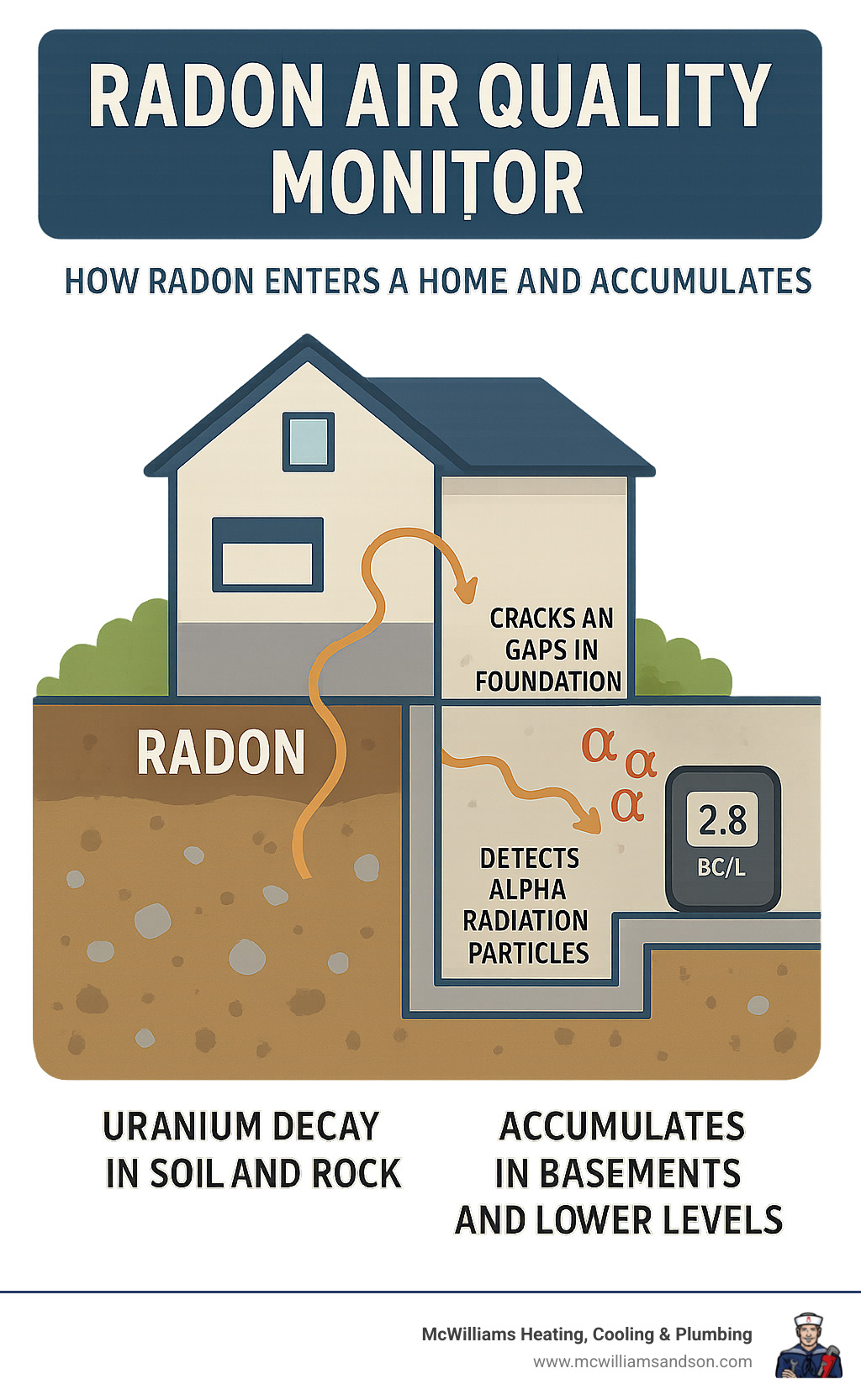
Radon forms naturally when uranium in soil and rocks breaks down underground. As this radioactive decay happens, radon gas seeps up through the ground and can accumulate inside our homes. While outdoor radon usually disperses harmlessly, indoor levels can build up to dangerous concentrations – especially in our cozy, energy-efficient Texas homes that are designed to keep air sealed inside.
Here’s the sobering reality: radon is the second leading cause of lung cancer in the United States, right after cigarette smoking. According to scientific research from the EPA, this colorless, odorless gas kills approximately 21,000 Americans each year. That’s more than six times the number of deaths from house fires and carbon monoxide poisoning combined.
For non-smokers, radon actually becomes the number one cause of lung cancer. When we breathe in radon, tiny radioactive particles get trapped in our lungs. Over time, these particles damage our cells’ DNA, potentially leading to cancer. The scary part? Symptoms may not show up for years, if at all.
Currently, about 1 in 15 US homes has liftd radon levels that exceed the EPA’s action level of 4 pCi/L (picocuries per liter). But here’s what makes radon particularly tricky – levels can vary dramatically from house to house, even between next-door neighbors.
Radon typically enters homes through the path of least resistance. Foundation cracks are the most common entry point, but radon can also sneak in through construction joints, gaps around pipes and wires, openings around sump pumps, and even through well water. Basements and ground floors usually see the highest concentrations since they’re closest to the source.
Interestingly, modern energy-efficient homes can actually trap radon more effectively than older, draftier houses. While this airtight construction saves on energy bills, it can also prevent radon from naturally escaping back outside.
Radon levels fluctuate throughout the day and across seasons, which is why a radon air quality monitor provides much more reliable data than one-time testing. The average indoor radon level in the US is about 1.3 pCi/L, while outdoor levels typically measure around 0.4 pCi/L. However, some homes can have levels many times higher than the national average.
The good news? Once you know radon is present, there are proven ways to reduce it. But first, you need to detect it – and that’s where continuous monitoring becomes your family’s best defense against this silent health threat.
How Radon Detectors Work: From Simple Tests to Continuous Monitoring
Ever wonder how a small device can detect something completely invisible? A radon air quality monitor is actually quite clever in how it catches this sneaky gas. These aren’t just simple gadgets – they use some pretty sophisticated science to keep your family safe.
Most modern radon air quality monitors work using something called alpha spectrometry. Don’t worry, it’s not as complicated as it sounds! Here’s what happens: radon gas naturally drifts into a small chamber inside your monitor through a process called passive diffusion. Once inside, those radon atoms start doing what they do best – decaying and releasing tiny alpha particles.
The monitor acts like a microscopic particle counter, detecting and counting these alpha particles as they’re released. It then converts this count into a measurement you can actually understand – typically shown as picocuries per liter (pCi/L) or becquerels per cubic meter (Bq/m3).
What makes this technology so impressive is its precision. The sensor technology has advanced tremendously in recent years, giving us professional-level accuracy in devices we can easily use at home. Some of the latest monitors use solid-state technology that requires virtually no maintenance while delivering lab-grade results.
There’s one important thing to know about data accuracy – your new monitor needs a little time to settle in. Most devices require a calibration period of about 7 days when you first set them up. Think of it like your monitor getting to know your home’s unique environment. During this time, the sensor adjusts and establishes a reliable baseline, ensuring all future readings are spot-on accurate.

Short-Term vs. Long-Term Testing
When you’re ready to test for radon, you’ll encounter two very different approaches. It’s a bit like the difference between checking your weight once versus stepping on the scale every day for a month – both give you information, but one tells a much more complete story.
| Feature | Short-Term Charcoal Tests | Long-Term Digital Monitors (e.g., Radon Air Quality Monitor) |
|---|---|---|
| Duration | 2-7 days | Weeks, months, or continuous |
| Data Type | Snapshot | Continuous, historical trends |
| Accuracy | Influenced by short-term fluctuations | Accounts for daily/seasonal fluctuations, more representative of average exposure |
| Cost | Generally lower upfront | Higher upfront, but no recurring lab fees |
| Results | Sent to lab for analysis (days/weeks) | Immediate digital display, app access |
| Actionability | Good for initial screening | Provides actionable insights based on average exposure, peace of mind |
| Re-testing | Recommended annually or after renovations | Always-on, no need for separate re-tests |
Short-term charcoal tests work by sitting in your home for a few days, absorbing radon like a tiny sponge. You then seal the container and mail it to a lab for analysis. While these tests are great for getting a quick snapshot data reading, they have a significant limitation – radon levels naturally go up and down throughout the day and across seasons.
Weather changes, how much you ventilate your home, and even using certain appliances can cause fluctuating levels. So that one-week test might catch your home on its best behavior or worst day, but it won’t tell you about your true average exposure over time.
The Advantage of a Continuous Radon Air Quality Monitor
Here’s where continuous monitoring really shines. Imagine trying to understand your sleep patterns by only looking at one night, or judging a restaurant by a single meal. That’s essentially what short-term testing does with radon.
A continuous radon air quality monitor gives you the full picture with always-on monitoring. It’s working 24/7, constantly sampling your air and building a comprehensive database of your home’s radon levels.
This ongoing vigilance lets you see daily fluctuations – maybe levels are higher when your house is sealed up tight on cold nights, or lower when you’ve got windows open during spring cleaning. You’ll also spot seasonal changes that you’d completely miss with a one-time test. Many homes see higher radon levels in winter when windows stay closed, or during heavy rains when saturated soil pushes more gas upward.
The real value comes from understanding your long-term health assessment. Health risks from radon are tied to extended exposure over months and years, not just occasional spikes. Your continuous monitor averages readings over time, giving you the true picture of what your family is breathing day in and day out.
Many smart monitors also provide real-time alerts when levels climb above safe thresholds. Instead of waiting weeks for lab results, you get instant notifications on your phone if action is needed. Plus, you can access historical data trends anytime – perfect for tracking patterns or seeing if any changes you’ve made are actually working.
This comprehensive approach moves you from guessing to knowing, giving you genuine actionable insights and peace of mind about your family’s long-term health.
Choosing Your Guardian: Key Features in a Top-Tier Radon Air Quality Monitor
Think of choosing a radon air quality monitor like picking a security guard for your family’s health. You want someone reliable, alert, and easy to communicate with. The best monitors share some important traits that make them worth your investment.
Accuracy tops the list because we’re dealing with your family’s safety here. Look for devices that get more precise over time – quality monitors often achieve accuracy within 10% after a week and 5% after two months of operation. That’s the kind of reliability you can trust when making important decisions about your home.
Ease of use matters just as much. If a device is complicated to set up or hard to understand, it’ll likely end up collecting dust instead of protecting your family. The best monitors work right out of the box with minimal fuss.
Power options determine where and how long you can monitor. Battery-powered units give you flexibility to test different rooms, while plug-in models provide continuous operation without worrying about dead batteries. Many modern units run for over a year on a single set of batteries.
Finally, clear data display – whether on the device itself or through your phone – ensures you actually understand what the monitor is telling you. After all, data is only useful if you can make sense of it.
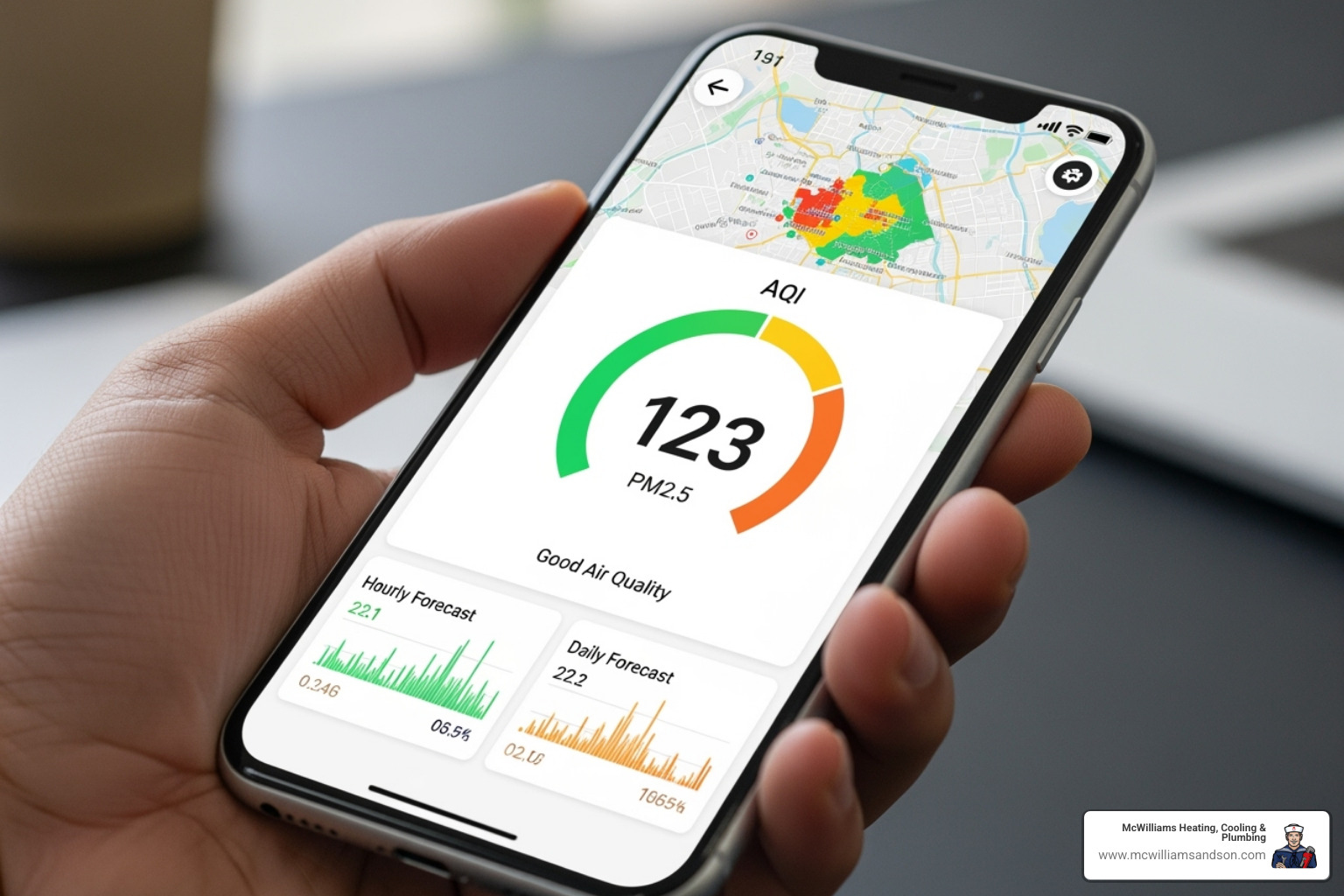
What to Look for in a Basic Digital Monitor
Sometimes simple is better. A basic digital radon air quality monitor gives you straightforward readings without the bells and whistles of smart home integration. These devices are perfect if you prefer direct, no-nonsense information.
The LCD screen is your window into your home’s radon levels. A good basic monitor shows both short-term readings (like the past 24-48 hours) and long-term averages (over weeks or months) right on the display. No phone required – just walk up and check your levels instantly.
Battery operation makes these monitors incredibly versatile. You can easily move them from your basement to your bedroom, or from the main floor to the kids’ playroom. This portability helps you understand radon levels throughout your entire home, not just one spot.
Simple setup should be just that – simple. The best basic monitors require nothing more than inserting batteries and finding a good spot to place them. After about a week of calibration, you’re getting reliable readings that update continuously.
These monitors excel at giving you peace of mind without any technical complexity. They’re always working in the background, quietly keeping track of your home’s radon levels.
What to Look for in a Smart Radon Air Quality Monitor
If you love staying connected and want the most comprehensive air quality insights, a smart radon air quality monitor transforms basic detection into a powerful home health system.
Bluetooth connectivity handles the initial setup and local data syncing with your phone or tablet. It’s the foundation that makes everything else possible.
Wi-Fi connection is where smart monitors really shine. You can check your home’s radon levels from anywhere – whether you’re at the office, on vacation, or just curious while lying in bed upstairs. This remote access provides incredible peace of mind.
A well-designed smartphone app becomes your command center. The best apps show live readings alongside historical graphs, let you set custom alert thresholds, and provide helpful insights based on your specific air quality patterns. You’ll start noticing trends you never would have caught with basic monitoring.
Push notifications act like a personal alarm system. If radon levels spike above safe thresholds, your phone alerts you immediately so you can take action right away.
Smart home integration with platforms like Amazon Alexa, Google Assistant, and IFTTT adds convenience you didn’t know you needed. Imagine asking Alexa about your basement’s radon level while cooking dinner, or having your smart ventilation system automatically adjust based on air quality readings.
Some advanced monitors even work as internet hubs for other air quality devices throughout your home, creating a comprehensive monitoring network that all reports through one central app.
Cloud storage and data sharing features let you securely share your air quality data with professionals via email – incredibly helpful during home inspections or when consulting with radon mitigation specialists.
These smart features transform simple radon detection into proactive air quality management, putting detailed insights and control right in your pocket.
Beyond Radon: The Importance of Comprehensive Air Quality Monitoring
Think of radon as just one troublemaker in a group of invisible guests living in your home. While your radon air quality monitor is doing important work tracking that radioactive gas, there’s a whole cast of other air quality characters that deserve your attention too.
The truth is, creating a truly healthy home means looking at the bigger picture. Modern multi-sensor monitors don’t just track radon – they’re like having a team of air quality detectives working around the clock to keep your family safe and comfortable.
PM2.5 particles are probably the sneakiest of the bunch. These microscopic troublemakers are so tiny – just 2.5 micrometers or smaller – that they can slip right past your body’s natural defenses and get deep into your lungs. They come from everyday activities like cooking dinner, lighting candles, or using your fireplace. But they also sneak in from outside sources like wildfire smoke or traffic pollution. The scary part? They can actually enter your bloodstream and contribute to heart disease and breathing problems.
Carbon dioxide levels tell a story about your home’s ventilation that might surprise you. While CO2 won’t directly harm you at typical indoor levels, high concentrations often mean your home isn’t getting enough fresh air. This can leave you feeling tired, foggy-headed, or dealing with headaches. Some families have finded that something as simple as leaving bedroom doors open at night dramatically improves their sleep quality by reducing CO2 buildup. The EPA suggests keeping levels below 800 ppm, while ASHRAE recommends staying under 700 ppm above outdoor air levels.
Volatile Organic Compounds (VOCs) might sound intimidating, but they’re actually quite common. These airborne chemicals float out of household products we use every day – cleaning supplies, fresh paint, new furniture, and even personal care products. While some VOCs just cause minor irritation like watery eyes or headaches, others like benzene are known cancer-causing agents. Levels above 300-500 microgram/m³ are generally considered concerning. For detailed information about these compounds and their health effects, check out the EPA’s guide on Volatile Organic Compounds (VOCs).
Humidity is like the Goldilocks of indoor air quality – it needs to be just right. Too much moisture (above 60-70%) creates a paradise for mold growth, which can trigger allergies and breathing problems. Too little humidity (below 25%) leaves you dealing with dry skin, scratchy throats, and annoying static electricity. Many modern monitors include smart mold risk indicators that warn you when conditions are perfect for unwanted fungal guests. ASHRAE recommends keeping humidity below 56% at 80°F to prevent mold issues.
Temperature and air pressure might seem basic, but they play bigger roles than you’d expect. Consistent temperature monitoring helps you optimize your HVAC system for both comfort and energy savings. Air pressure changes can actually influence how much radon gets drawn into your home, and some people are sensitive enough to feel pressure changes in their comfort levels or allergy symptoms.
When your radon air quality monitor tracks all these factors together, you get a complete picture of what your family is breathing every day. This comprehensive approach helps you make smart decisions that lead to better focus during work, fewer allergy flare-ups, more restful sleep, and an overall healthier home environment.
It’s not just about making your house look good – it’s about creating a space that feels good to breathe in, where your family can truly thrive.
From Data to Action: What to Do if You Detect High Radon Levels
Finding high radon levels in your home can feel overwhelming at first, but here’s the good news: you now have the information you need to protect your family’s health. Knowledge is power, and your radon air quality monitor has given you exactly that.
The U.S. Environmental Protection Agency sets clear guidelines to help us steer this situation. If your radon levels are at or above 4 pCi/L, it’s time to take action. The EPA also suggests considering mitigation for levels between 2 pCi/L and 4 pCi/L, especially if you’re planning to spend many years in your home.
Don’t panic – take it step by step. If you’ve only done a short-term test, your first move should be to verify those readings with a continuous radon air quality monitor or another long-term test. Radon levels naturally fluctuate throughout the day and across seasons, so getting an average reading over several weeks or months gives you the most accurate picture of your family’s actual exposure.
While you’re gathering more data, there are some immediate steps you can take. Improving ventilation won’t solve a serious radon problem permanently, but it can help reduce concentrations temporarily. Open windows and doors on your lower levels when weather permits, and make sure exhaust fans in basements, bathrooms, and kitchens are working properly to draw indoor air outside.
Sealing visible cracks in your foundation, floors, and walls is another important step. Look for openings around pipes and other penetrations too. While this alone usually won’t bring high radon levels down to safe ranges, every little bit helps, and it’s something you can tackle right away.
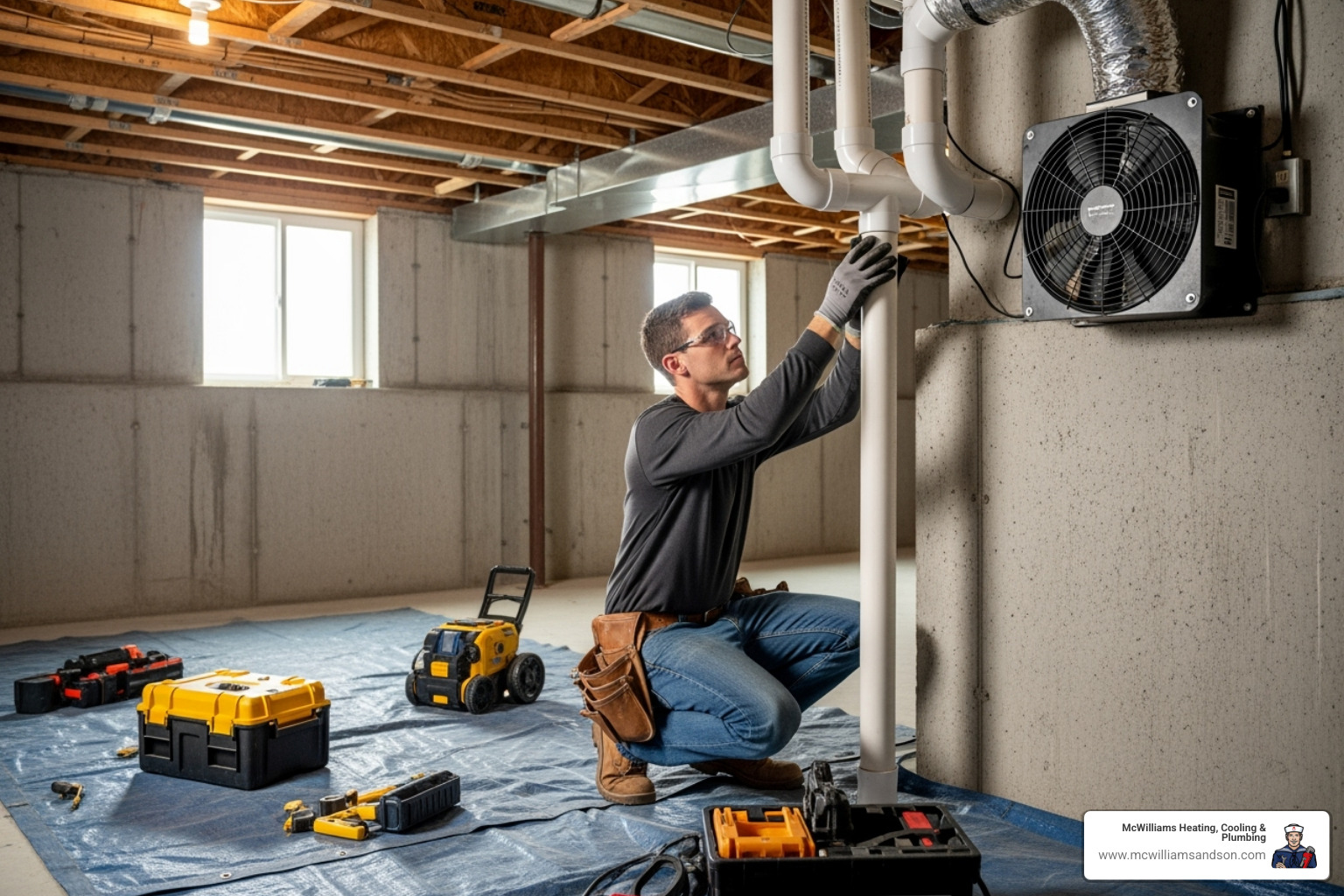
For sustained high radon levels, especially those at or above 4 pCi/L, professional radon mitigation is your best bet. A certified radon remediation specialist will evaluate your specific home and recommend a system designed for your unique situation. The most common and effective approach is called sub-slab depressurization. This system works by installing a ventilation pipe that runs from beneath your foundation to the outside of your home, typically extending above the roofline. A fan in the pipe creates a gentle vacuum beneath your foundation, pulling radon gas from the soil and safely venting it outside before it can enter your living space.
Here’s where we can help. At McWilliams Heating, Cooling & Plumbing, we understand that indoor air quality affects every aspect of your family’s comfort and health. While you’re addressing radon concerns, it’s also worth having your entire HVAC system evaluated to ensure it’s supporting the best possible indoor air quality. Proper ventilation and air circulation work hand-in-hand with radon mitigation efforts. You can learn more about our comprehensive approach to indoor air quality at our services page.
Once your mitigation system is installed, your continuous monitoring doesn’t stop – it becomes even more valuable. Use your radon air quality monitor to verify that the system is working effectively and keeping levels in the safe range. This ongoing monitoring gives you peace of mind and helps ensure your mitigation system continues working properly over the years.
You’ve already taken the most important step by monitoring your home’s air quality in the first place. With over 50 years of experience serving families across the Greater Texas Area, we’re here to support you seven days a week with any questions about your home’s air quality, HVAC system, or indoor comfort needs. Taking action on high radon levels isn’t just about fixing a problem – it’s about creating a safer, healthier home for the people you care about most.