
Why Choosing the Right Installer Makes All the Difference
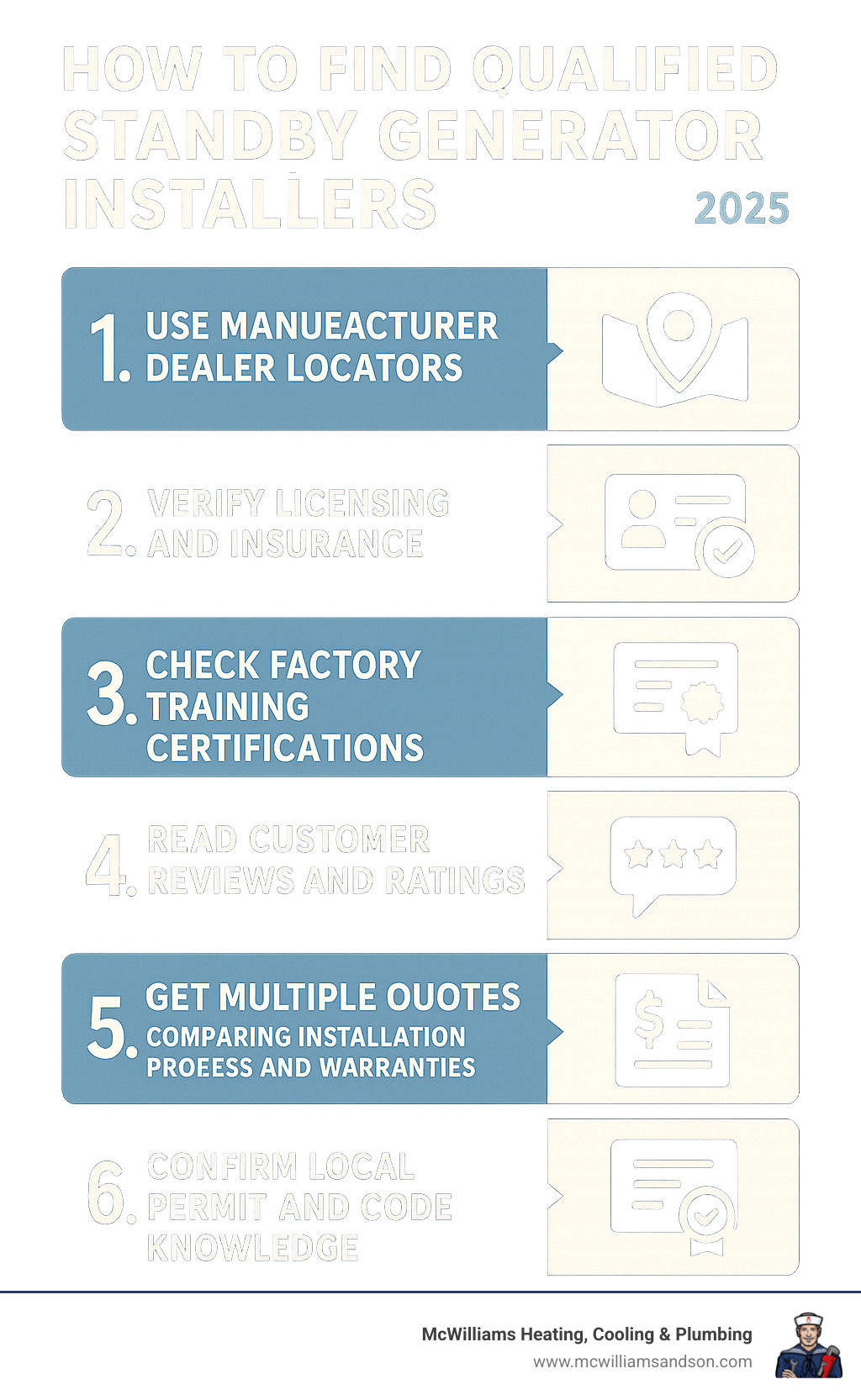
Searching for standby generator installers near me will yield many results, but expertise and quality vary. Here’s how to find qualified professionals:
Top Ways to Find Qualified Installers:
- Manufacturer Websites: Major generator brands have online tools to locate authorized dealers.
- Licensed Electrical Contractors: Ensure they also hold gas fitting credentials.
- Local HVAC Companies: Many established companies offer generator installation services.
- Online Reviews and Referrals: Check Google, the Better Business Bureau, and ask neighbors for recommendations.
When power goes out in Texas, you need reliable backup power. However, your generator is only as good as the person who installs it.
Permanent generator installation is not a DIY project. It requires factory-trained technicians who understand both electrical and gas systems. A poor installation can lead to safety hazards, code violations, and a voided warranty.
Texas homeowners face challenges from extreme weather and an aging electrical grid. Professional installation ensures your home is prepared.
The good news is that a professional installation by a qualified team typically takes just 6-8 hours. The key is to find an installer who is licensed, insured, factory-trained, and experienced with local codes.
What is a Standby Generator and Why Do You Need One?
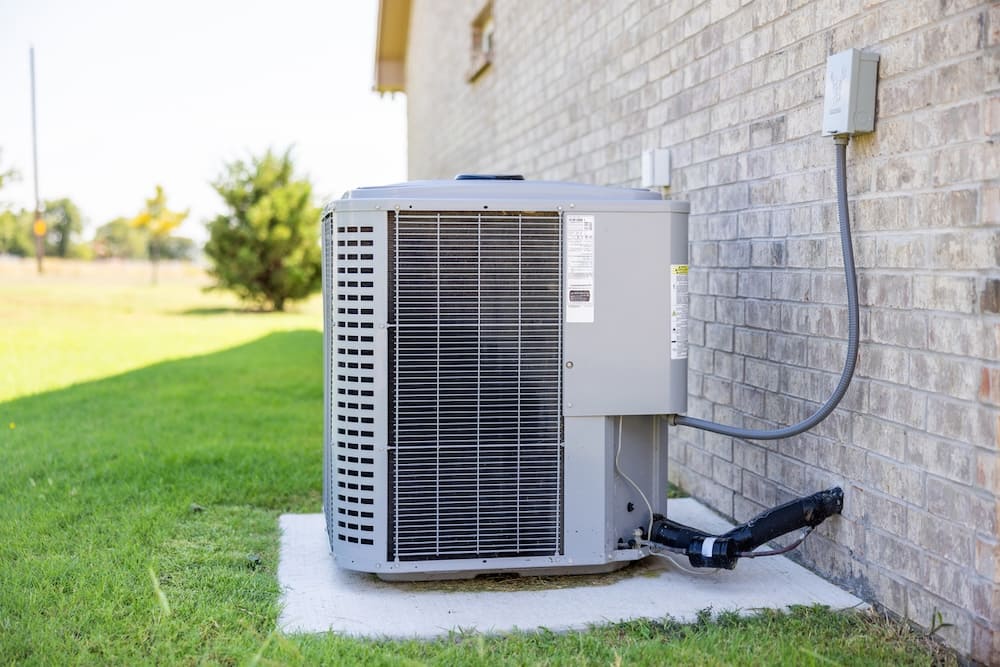
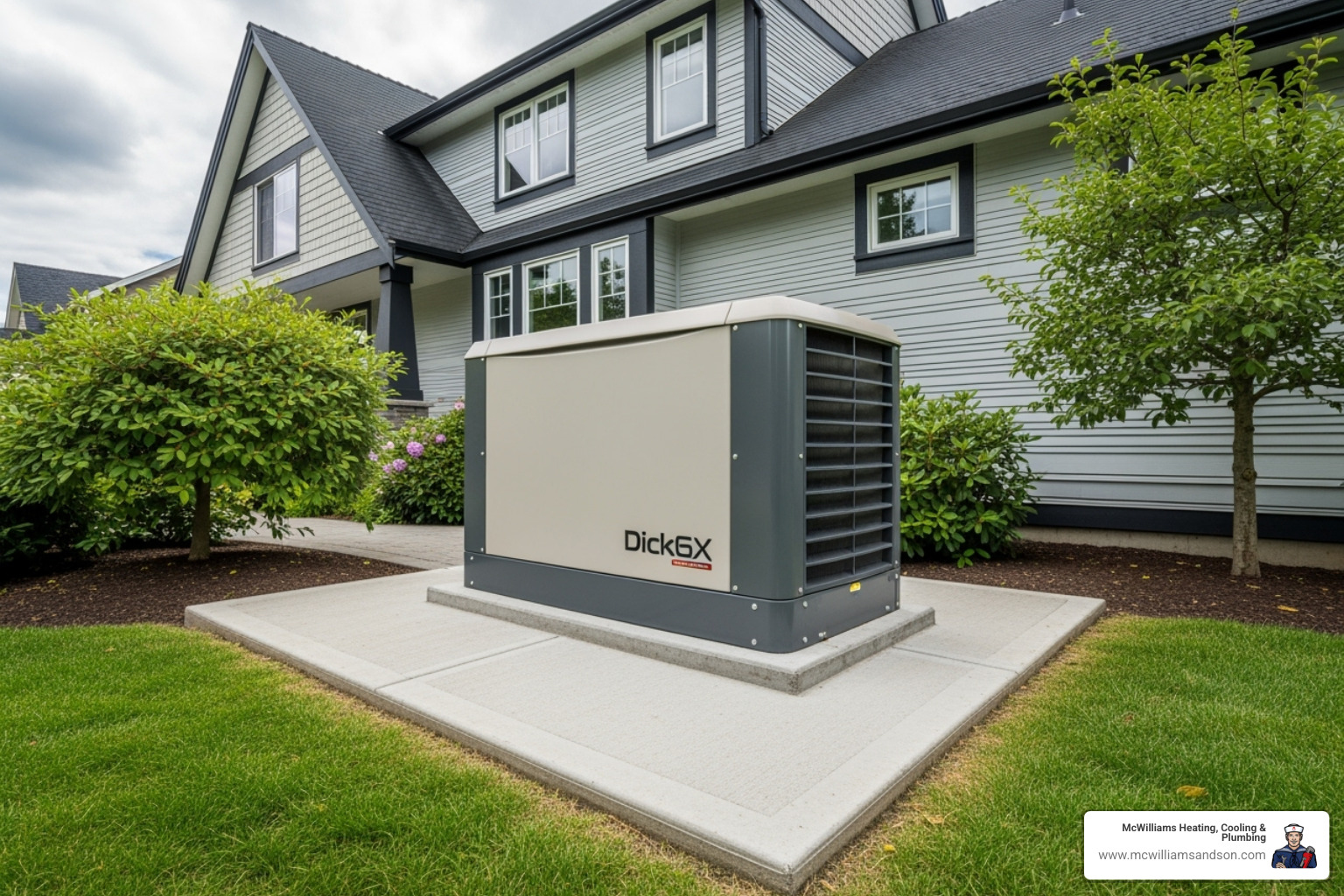
A standby generator is permanently installed outside your home, much like an air conditioning unit. It monitors your home’s power and restores electricity automatically during an outage.
Here’s how it works: An automatic transfer switch detects a power outage, disconnects your home from the grid, starts the generator, and transfers the electrical load to backup power. When utility power returns, it reverses the process.
This seamless transition provides uninterrupted power for your most important systems. Your HVAC keeps running, food stays preserved in your refrigerator, and critical medical equipment remains operational. The peace of mind of knowing your home is protected from power surges and outages is invaluable. You can learn more in our guide on Benefits of Installing Standby Generators.
A standby generator is essential if your area has frequent outages, if you rely on medical equipment, or if you work from home.
Standby vs. Portable Generators
While portable generators are temporary, manual solutions for a few appliances, standby generators are automatic, permanent, and can power your entire home.
| Feature | Standby Generators | Portable Generators |
|---|---|---|
| Operation | Automatic startup and operation | Manual startup and connection required |
| Installation | Permanent, professional installation | DIY setup, can be moved and stored |
| Power Coverage | Whole-home or extensive essential load coverage | Limited power for select appliances |
| Convenience | Completely hands-off operation | Requires setup, monitoring, and refueling |
Standby generators connect to your home’s natural gas line or a large propane tank for a continuous fuel supply, eliminating the need to store and handle gasoline. They also operate much more quietly than most portable units. While the upfront cost is higher, the convenience and safety are worth the investment for many homeowners. For a deeper dive, see our guide: Standby vs. Portable: Your Generator Options.
Common Fuel Sources
Natural gas is a convenient option if your home has an existing line. It provides a continuous, cost-effective fuel supply directly from your utility.
Propane (LP) is ideal for homes without natural gas. A large on-site tank can power your generator for days or even weeks. Propane is fuel-efficient and has a long shelf life.
Both options eliminate the hassle and danger of storing gasoline during an emergency. Our team can help you determine the best fuel source for your home. Learn more in our article on Natural Gas vs. Diesel for Home Generators.
Sizing and Selecting the Right Generator for Your Home
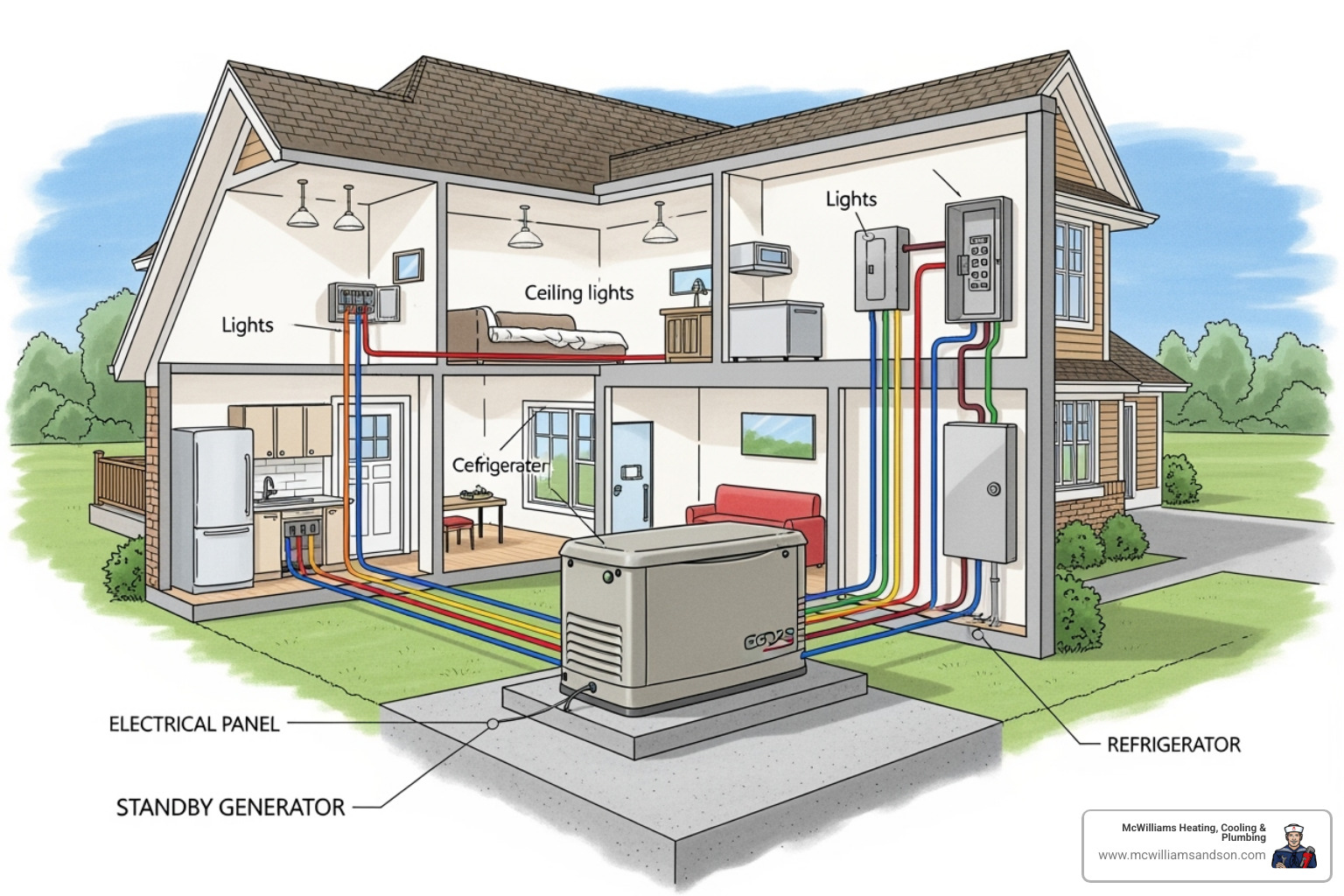
Choosing the right generator size is crucial for meeting your home’s power needs without overspending.
Calculating Your Power Requirements
To determine your power needs, list the essential items you want to run during an outage. This typically includes your refrigerator, freezer, some lights, and your HVAC system. Don’t forget critical items like a sump pump, medical equipment, or a well pump.
Every appliance has a wattage rating. Appliances with motors, like refrigerators or air conditioners, require a higher starting wattage than their running wattage. A professional assessment from standby generator installers near me will account for these power spikes to prevent overloads.
Also, consider future power needs, such as an electric vehicle charger or a hot tub, to avoid needing an upgrade later. While online sizing calculators can provide a rough estimate, our team offers free in-home assessments for precise calculations.
Whole-Home vs. Essential Load Coverage
You can choose to power your entire house or only the most critical systems.
Whole-home coverage allows life to continue as normal, with every outlet and appliance working. This offers maximum convenience but requires a larger, more expensive generator.
Essential load coverage is a more budget-friendly approach that powers your priority items: refrigeration, key lights, and heating or cooling. You’ll have everything you truly need for safety and comfort.
The right choice depends on your budget and lifestyle. Our guide on how Home Generators Can Protect Your Home can help you decide what’s most important for your family. Our team can also help you find the perfect balance between your needs and budget.
How to Find Qualified Standby Generator Installers Near Me
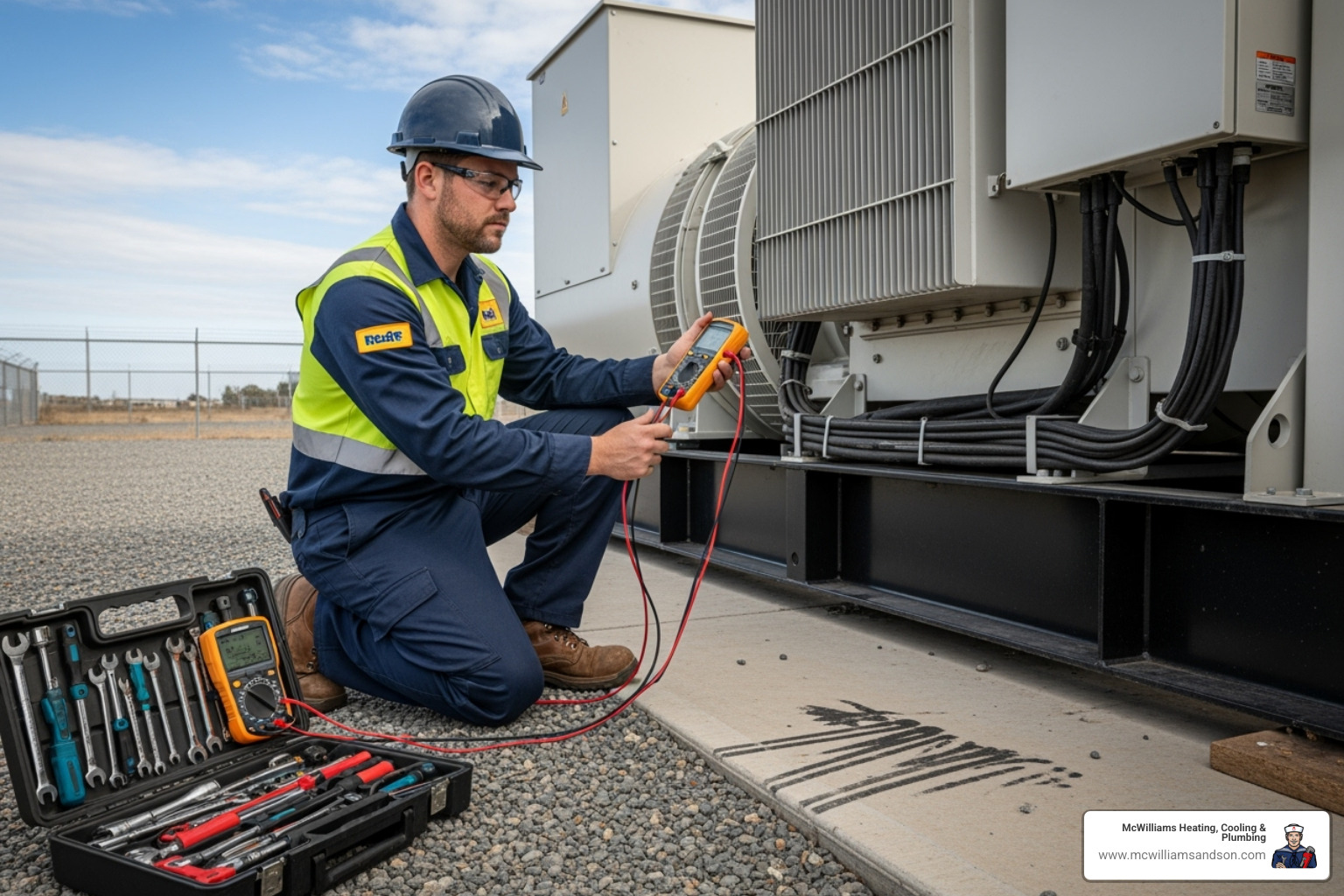
Finding the right standby generator installers near me is critical for a safe and reliable installation. This job requires a unique mix of electrical and gas fitting expertise, along with knowledge of local regulations. A poor installation can lead to safety hazards, voided warranties, and system failure when you need it most.
What to Look for in Standby Generator Installers Near Me
When vetting installers, look for these key qualifications:
- Factory-Trained Certifications: Top installers invest in training from major generator manufacturers to stay current on the latest products and techniques.
- Licensed and Insured: This is non-negotiable. Your installer must employ licensed electricians and certified gas fitters and carry comprehensive liability insurance.
- Years of Experience: Experienced installers can handle unexpected challenges efficiently and safely.
- Positive Customer Reviews: Check Google and the Better Business Bureau to gauge an installer’s reputation for professionalism and quality work.
- Local Knowledge: Installers familiar with your area will understand local permitting, building codes, and utility company procedures, ensuring a smooth process.
Questions to Ask Potential Standby Generator Installers Near Me
Once you have a shortlist, ask these questions:
- Can you walk me through the entire installation process? A knowledgeable installer should clearly explain every step.
- What is the project timeline? This includes permitting, installation, and inspections.
- Who handles permits and inspections? Professional installers should manage this process for you.
- What are the warranty details? Clarify coverage for both the generator and the installation labor.
- What maintenance do you recommend? A quality installer will offer service plans to keep your generator reliable.
The Installation Process, Costs, and Long-Term Care
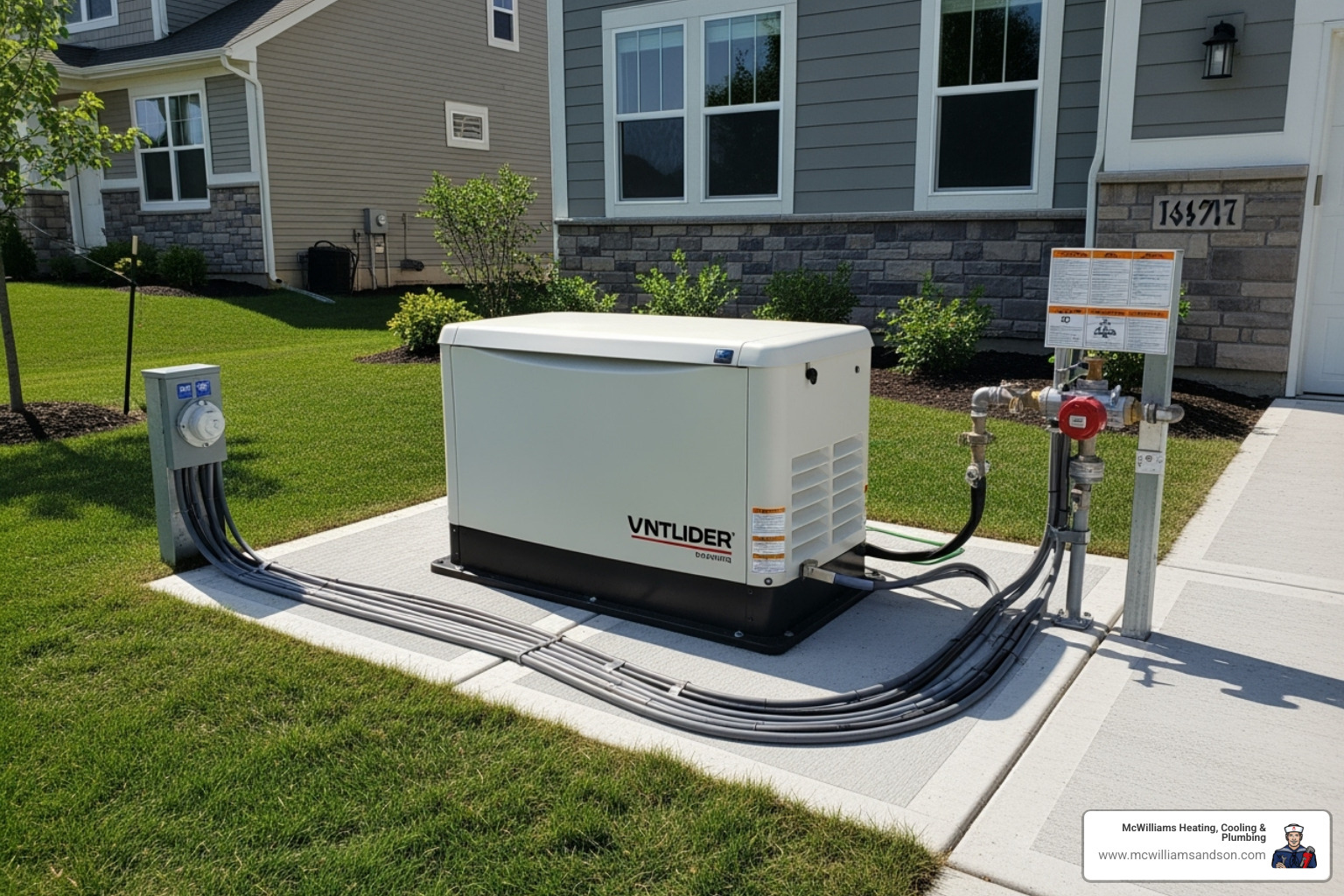
Understanding the installation process can make investing in a standby generator feel less overwhelming. With a professional team, the process is straightforward and efficient.
What to Expect During Installation
A typical professional installation takes 6-8 hours and follows a clear process:
- Site Preparation: A level, concrete pad is created for the generator, positioned to meet all safety clearances.
- Generator Placement: The unit is carefully set on the new pad.
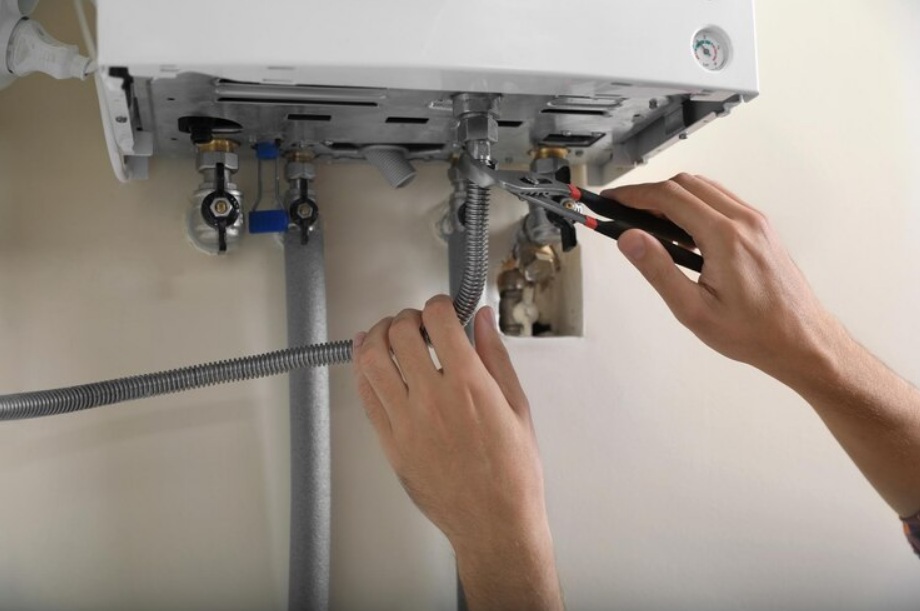
- Fuel Line Connection: A licensed gas fitter safely connects the generator to your natural gas line or propane tank.
- Transfer Switch Installation: The “brain” of the system is installed near your electrical panel to monitor utility power.
- Electrical Connections: Licensed electricians link the generator, transfer switch, and your home’s electrical panel.
- System Testing: The installer simulates a power outage to ensure the system functions perfectly.
Understanding Costs and Permits
The total cost includes the generator unit, installation labor, and permit fees.
- Generator Unit Costs: Prices vary by size and features, from around $5,000 for an essential-load system to $15,000 or more for a whole-home unit.
- Installation Labor: Costs depend on the complexity of the installation, such as the distance between the generator and the electrical panel.
- Permits and Upgrades: Your installer should handle all necessary permits. Some homes may also require an electrical panel upgrade, which will be identified during the initial assessment.
We offer flexible financing options and free in-home estimates to provide clear, upfront pricing.
Generator Maintenance and Lifespan
Regular care ensures your generator is ready when you need it. Most generators perform an automatic weekly or bi-weekly self-test.
Professional servicing should be done every 6-12 months. A technician will change the oil and filters, inspect spark plugs, and perform a thorough system check. This preventative maintenance is key to reliability and is often required to keep your warranty valid.
With proper care, a standby generator can have a lifespan of 10-20 years or more, providing decades of protection.
Frequently Asked Questions about Standby Generators
Here are answers to some of the most common questions we receive about backup generators.
Can I install a standby generator myself?
Absolutely not. Standby generator installation is not a DIY project. It involves complex high-voltage electrical work and pressurized gas line connections that require licensed electricians and certified gas fitters. A professional installation is necessary for safety, code compliance, and to keep your manufacturer’s warranty valid. Attempting to do it yourself can lead to dangerous gas leaks, electrical fires, or carbon monoxide hazards.
How much noise does a standby generator make?
Modern standby generators are designed for quiet operation. Most produce noise levels similar to a central air conditioning unit, around 60-70 decibels from a distance. Liquid-cooled models are typically quieter than air-cooled units. A professional installer will help you choose a model and placement that complies with local noise ordinances and minimizes sound impact on you and your neighbors.
How long will a standby generator run during an outage?
A standby generator’s runtime is one of its biggest advantages.
- A generator connected to a natural gas line can run almost indefinitely, as long as the utility’s gas supply is uninterrupted.
- For propane-powered generators, runtime depends on the size of your storage tank and your home’s power consumption. A standard 500-gallon tank can often power a home for a week or more.
Standby generators are built for extended operation, making them a reliable solution for multi-day outages common in Texas.
Secure Your Home’s Power and Your Peace of Mind
A standby generator transforms the stress of a power outage into a minor inconvenience. The reliability of automatic backup power provides safety, convenience, and priceless peace of mind. While your neighbors deal with the dark, your family can continue with normal life, fully protected.
However, the importance of professional installation cannot be overstated. Your generator is only as reliable as its installation. A poor job can create safety hazards and leave you without power when you need it most.
At McWilliams Heating, Cooling & Plumbing, we’ve been helping Texas families stay comfortable and secure for over 50 years. We understand that finding the right standby generator installers near me can be challenging. Our factory-trained technicians bring decades of experience to every installation, ensuring your system works flawlessly from day one.
What sets us apart is our commitment to being there when you need us. We offer 7-day-a-week availability because emergencies don’t wait for business hours. Our flexible financing options make this essential investment accessible, and our free in-home estimates ensure you know exactly what to expect – no surprises, no hidden costs.
We serve the Greater Texas Area, including Katy, Nacogdoches, Lufkin, and Livingston. We know the unique challenges Texas weather brings to your home’s power needs.
Don’t wait for the next outage. Contact us for a free in-home estimate on your generator installation today, and take the first step toward never losing power again.