

Why Natural Gas Generator Installation Makes Sense for Texas Homeowners
Natural gas generator installation offers Texas homeowners a reliable backup power solution. Given the state’s isolated electrical grid and severe weather, a dependable power source is essential for protecting your home and family.
Quick Answer for Natural Gas Generator Installation:
- Professional installation required – Licensed electrician and gas fitter needed
- Installation time – 6-8 hours once permits are secured
- Total cost range – $5,000-$26,000 (unit + installation)
- Key components – Generator unit, automatic transfer switch, gas line connection
- Permits needed – Electrical and gas permits required in most Texas jurisdictions
Events like the February 2021 winter storm highlighted the grid’s vulnerability. Natural gas generators solve the fuel problem inherent in portable units. While gasoline generators need constant refueling—a challenge when gas stations also lose power—natural gas flows continuously through underground lines with 99.99988% reliability, often outlasting electrical systems during storms.
Unlike portable generators, which max out around 12 kilowatts, standby natural gas units can power your entire home. They start automatically within seconds of an outage and run as long as needed without refueling. While the initial investment of $5,000-$26,000 is significant, operating costs are much lower than gasoline or propane alternatives.
Fuel Source Reliability and Convenience
One of the primary benefits of a natural gas generator is the reliability of its fuel source. Natural gas is delivered directly to your home via an underground pipeline, eliminating the need for on-site fuel storage tanks that require refilling. This means you won’t have to search for gasoline during a widespread outage.
The natural gas grid is remarkably resilient, with systems like Énergir’s boasting a 99.99988% reliability index. Even when the electrical grid fails due to storms, your gas supply is likely to remain uninterrupted. This is a significant advantage over gasoline, diesel, or propane generators, which require constant refueling and management during an emergency.
Furthermore, natural gas is a cleaner-burning fuel than gasoline or diesel, resulting in fewer emissions and less long-term engine maintenance. The operational convenience and environmental benefits make natural gas generators a superior choice for dependable backup power. Learn more in our guide on Natural Gas for Home Generators.
Standby Generator Advantages
When choosing backup power, the decision is often between portable and standby generators. Portable units are affordable but have limitations: they run on gasoline (consuming 12-20 gallons daily), require manual setup and refueling, and typically can’t power an entire home.
Standby natural gas generators offer a hands-off, whole-home solution. Here’s a quick comparison:
| Feature | Portable Generator | Standby Natural Gas Generator |
|---|---|---|
| Operation | Manual start, manual connection | Automatic start, automatic transfer |
| Power Output | Up to 12 kW (essential appliances) | 8 kW to 22 kW+ (whole-home or essential circuits) |
| Fuel Source | Gasoline (requires refueling) | Natural Gas (continuous supply) |
| Fuel Storage | On-site tanks/cans (limited, requires management) | No on-site storage (piped in) |
| Installation | Plug-and-play (manual setup) | Permanent, professional installation |
| Noise Level | Generally louder | Quieter, often enclosed |
| Cost | Lower initial cost | Higher initial cost, lower operating cost |
| Reliability | Dependent on manual intervention & fuel availability | Automatic, continuous, highly reliable |
Standby generators are permanently installed and connected to your electrical system via an automatic transfer switch (ATS) and your natural gas line. When an outage occurs, the ATS automatically switches your home’s power to the generator in about 10 seconds. When utility power returns, the system switches back and the generator shuts down.
Whether you need to power your entire home or just essential circuits, a standby generator can be sized to meet your needs, providing unparalleled convenience and peace of mind. For more details, see our guide on Standby Generator Options.
Sizing and Selecting Your Generator
Choosing the right natural gas generator installation requires matching the unit to your family’s specific power needs. Whether you work from home, rely on medical equipment, or simply want to keep your home running normally during an outage, we can help you find the perfect fit.
Key factors to consider are sizing your generator correctly, understanding wattage requirements, choosing a reputable brand, and ensuring you have comprehensive warranty coverage. Our Generator Warranty Houston TX service protects your investment long after installation.
How Many Watts Do You Need?
Sizing your generator correctly is crucial for both performance and cost-effectiveness.
- For essential needs only (8-16 kilowatts): This size typically covers a refrigerator, some lights, outlets for phones and medical devices, and perhaps a window AC unit. It’s a budget-friendly way to keep your family safe and comfortable.
- For whole-home comfort (15-30 kilowatts): This allows you to run central air conditioning, all lights, and maintain your normal lifestyle. A 22kW unit is a popular choice that powers most homes without being oversized.
When calculating needs, we consider both running watts and starting watts. Motor-driven appliances like your refrigerator or central AC can draw up to three times their normal power for a few seconds on startup. A central AC might run on 3,000-5,000 watts but need up to 15,000 watts to start. This surge is why professional sizing is essential to prevent system overloads.
Key Considerations for Your Natural Gas Generator Installation
Beyond wattage, several other factors are critical for a successful installation.
- Automatic Transfer Switch (ATS): This essential device monitors utility power and automatically switches your home to generator power during an outage. Crucially, it prevents dangerous back-feeding that could injure utility workers.
- Liquid-cooled vs. Air-cooled Models: Air-cooled generators are more affordable but can be louder. Liquid-cooled units run quieter and last longer but have a higher upfront cost.
- Noise Levels: We help you select a model and placement location to minimize noise impact on your home and your neighbors.
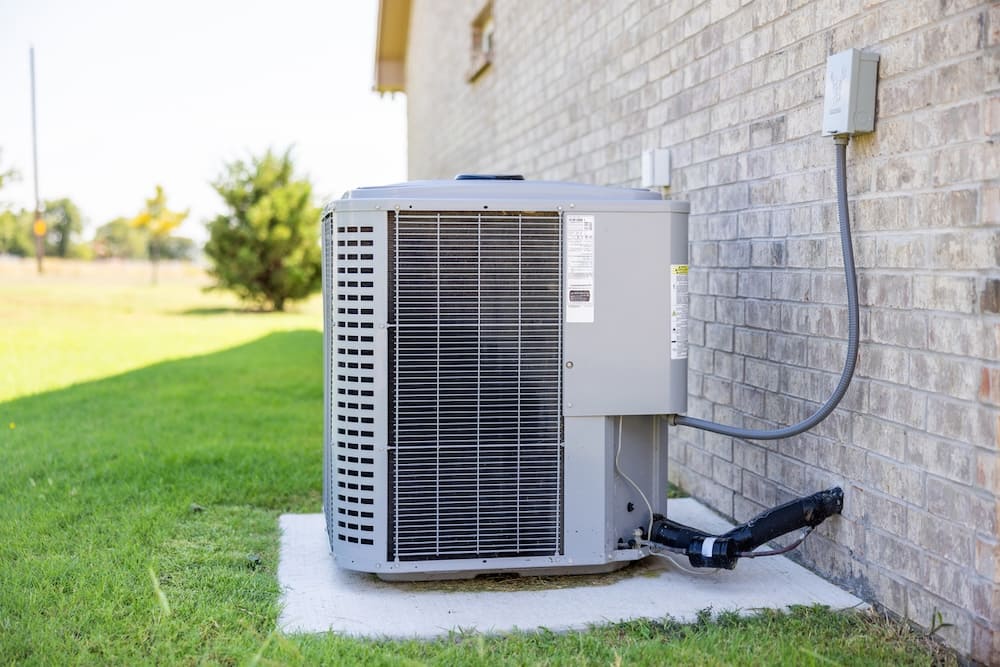
- Placement Location: Your generator must be placed on a level concrete pad at least 5 feet from windows and doors, with proper ventilation and away from flammable materials.
- Local Codes and Permits: Every natural gas generator installation requires electrical and gas permits in most Texas jurisdictions. These safety requirements protect your family and are handled by our team from start to finish.
Our comprehensive approach ensures your Home Generators Can Protect Your Home safely and reliably.
The Natural Gas Generator Installation Process: A Step-by-Step Guide
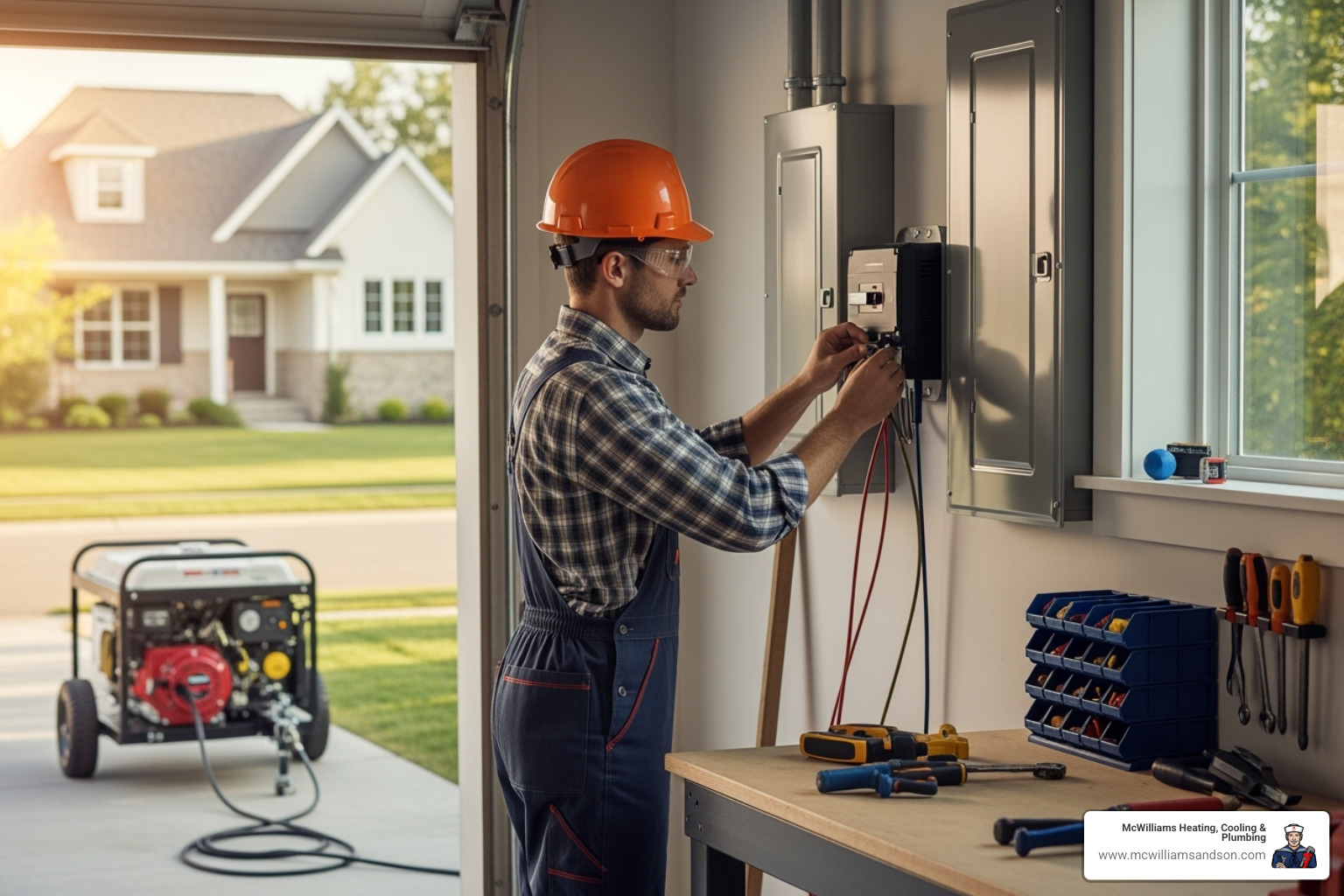
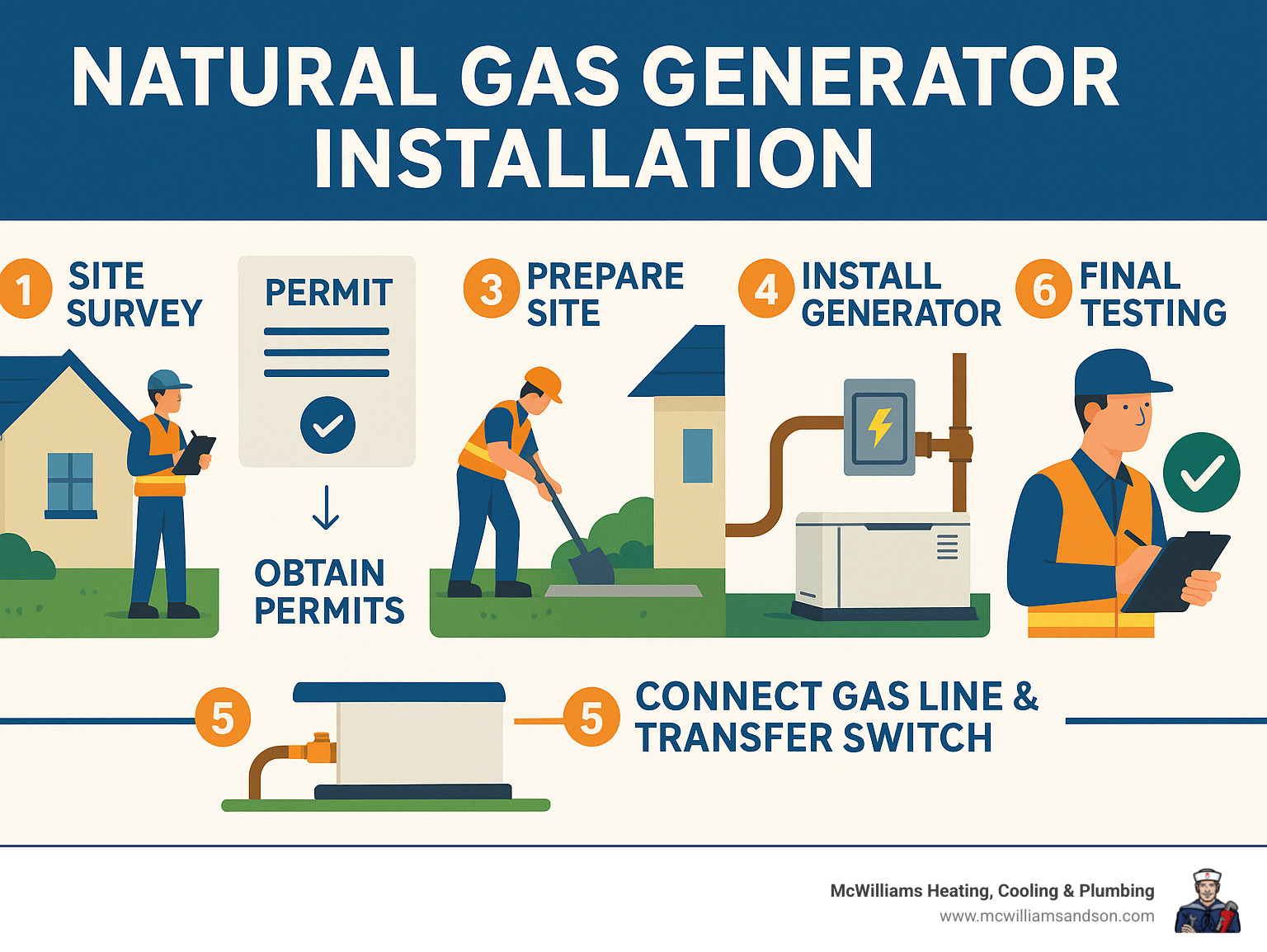
A natural gas generator installation involves complex electrical and gas line work that requires professional expertise to ensure safety and compliance. At McWilliams Heating, Cooling & Plumbing, we manage every detail of the installation, which typically takes 6-8 hours once permits are secured. Our process ensures your Standby Generators Houston TX installation meets all local codes.
Step 1: Site Survey and Preparation
A successful installation begins with choosing the right location. Our technicians evaluate your property for safety, performance, and accessibility.
- Clearance Requirements: The generator must be at least 5 feet from windows and doors to prevent exhaust from entering your home and spaced properly from flammable materials.
- Foundation: The unit requires a stable, level concrete pad to operate smoothly. We’ll prepare the ground and pour a new pad if needed.
- Ventilation and Accessibility: We consider wind patterns to direct exhaust away from living spaces and ensure the unit is accessible for future maintenance.
Step 2: Electrical and Transfer Switch Setup
This step is handled by a Licensed Electrical Contractor (LEC) and is critical for your system’s function.
- Automatic Transfer Switch (ATS) Installation: The ATS is wired into your home’s electrical system, usually near the main panel. It monitors utility power and automatically manages the switch to generator power.
- Grid Isolation: The most critical safety feature of the ATS is preventing back-feeding, where generator power flows back to utility lines, endangering workers.
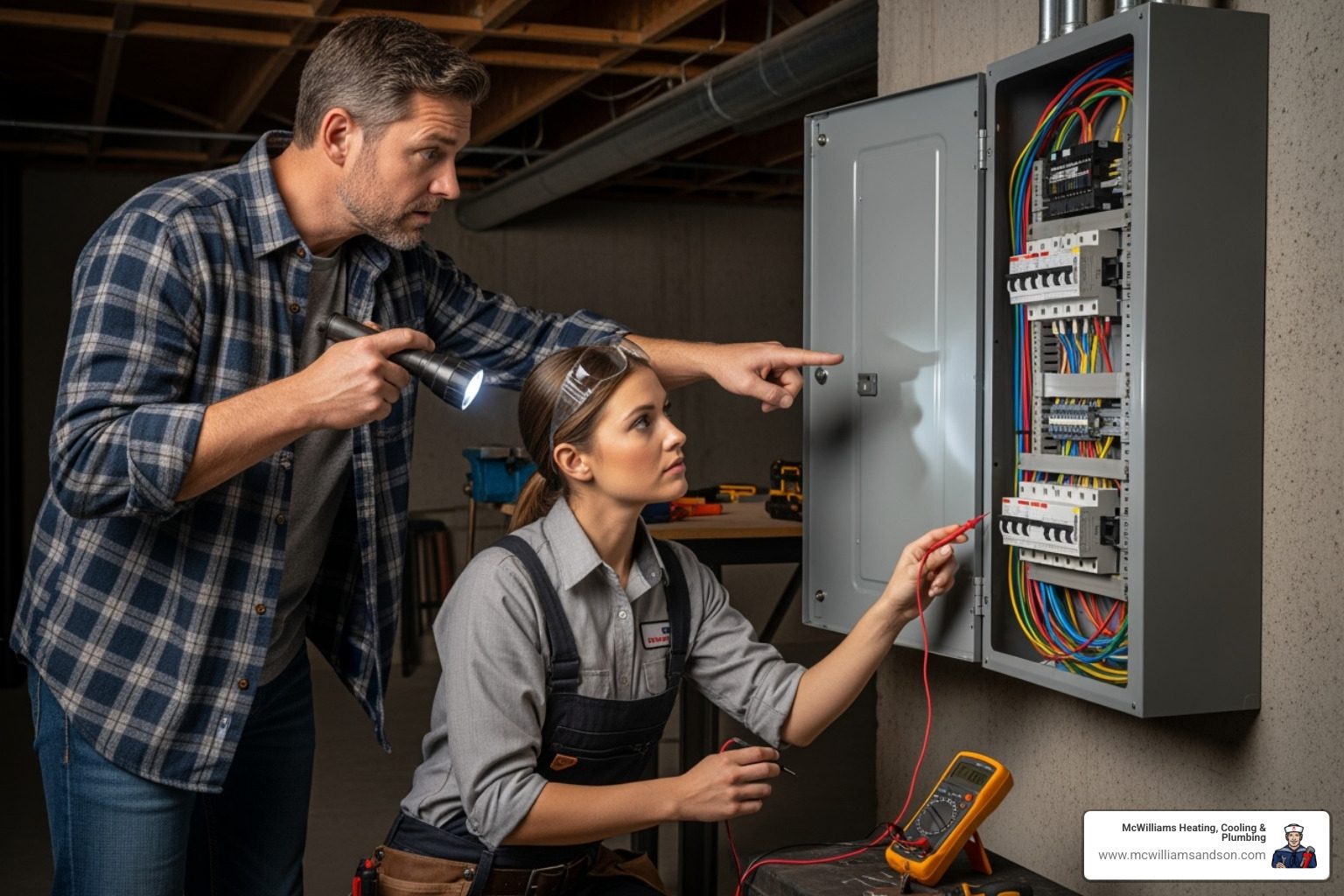
- Panel Inspection: We inspect your electrical panel to ensure it can safely handle the generator’s load, recommending upgrades if necessary. We also handle all permit filings with local authorities, following safety standards like those from the ESA.
Step 3: Connecting to the Natural Gas Line
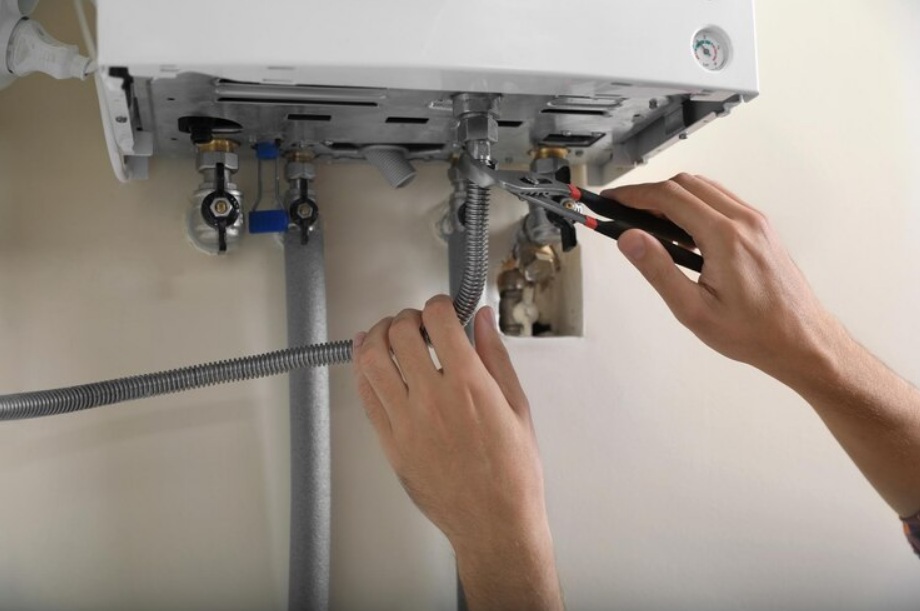
Connecting to your home’s gas supply requires a licensed gas fitter to prevent dangerous leaks.
- Pipe Sizing and Load Calculation: We calculate your home’s total BTU load to ensure the gas line can support the generator without affecting other appliances like your furnace or water heater.
- Gas Pressure: Generators require specific pressure levels (typically 0.25psi) to operate correctly, which we verify and adjust for.
- Tapping the Main Line: We connect to the gas line, usually at the meter, to ensure priority fuel flow. All connections are rigorously tested for leaks and follow NFPA standards. This is part of the comprehensive Services we provide.
Step 4: Final Connection, Testing, and Permitting
The final phase brings the system online.
- Final Connections: Our technicians connect the generator, transfer switch, and gas line, double-checking all work.
- System Testing: We simulate a power outage to verify the generator starts automatically, the ATS switches correctly, and power is restored to your home. We also test the automatic shutdown sequence.
- Permits and Inspection: We manage all local permits and coordinate with inspectors to ensure your installation passes final inspection.
Once complete, your backup power system is ready to protect your home. For specific models, see our information on Generac Residential Generators Houston TX.
Understanding the Costs of a Natural Gas Generator Installation
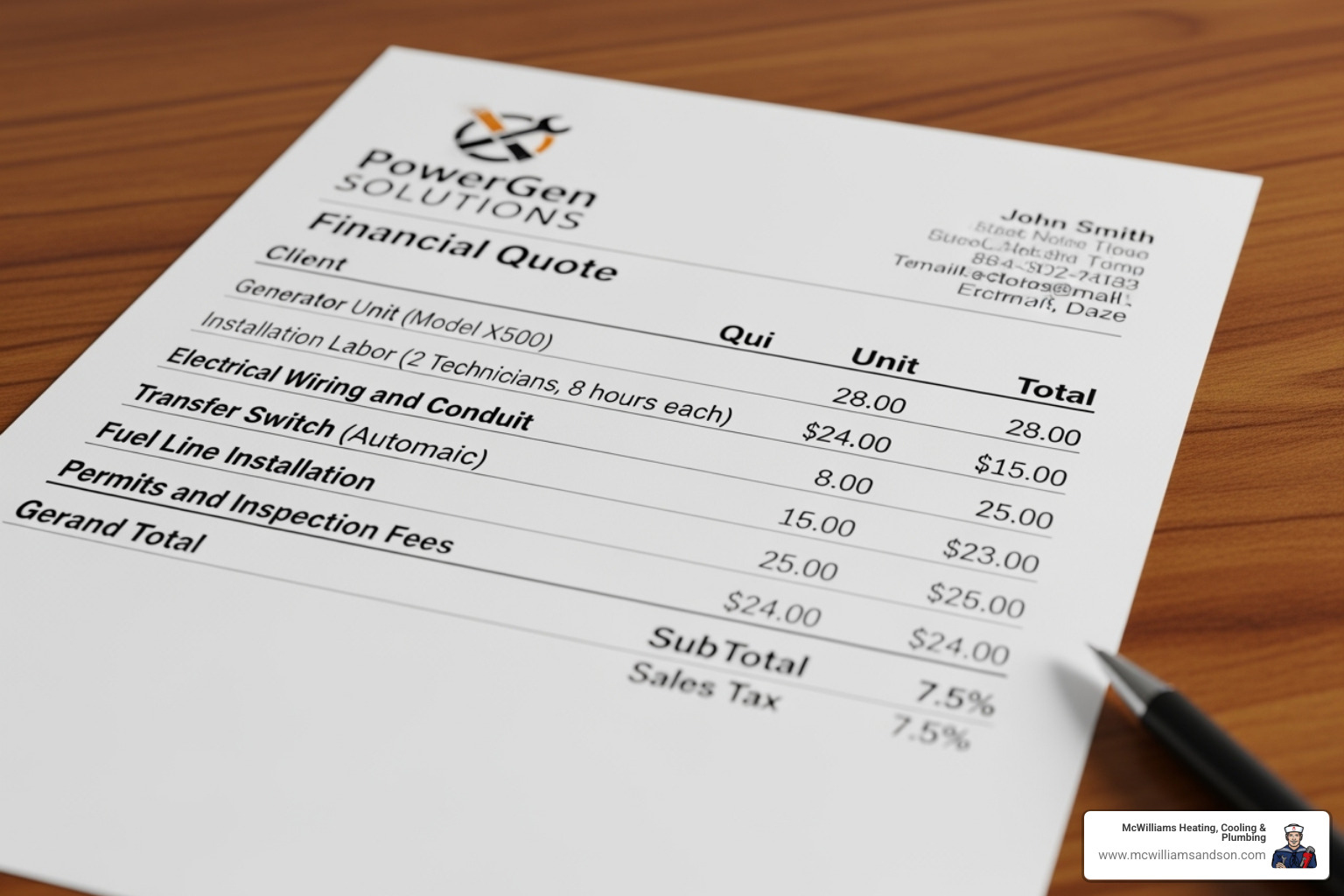
When considering a natural gas generator installation, it’s important to understand the costs. While a significant upfront investment, the long-term value and peace of mind are worthwhile for most Texas homeowners. The total cost typically ranges from $5,000 to $26,000, depending on the generator’s size and your home’s specific needs. You’re not just buying a machine; you’re investing in your family’s comfort and safety. For specific options, see our Generac Whole House Generators Houston TX services.
Breakdown of Installation Expenses
Here are the major cost components for a typical natural gas generator installation:
- Generator Unit: This is the largest expense, ranging from $2,000 for smaller units to $21,000 for large, whole-home models. The price is determined by power output (kW).
- Installation Labor: Professional labor typically costs $500 to $2,000. This covers the expertise of licensed electricians and gas fitters needed for a safe installation.
- Automatic Transfer Switch (ATS): The ATS unit and installation cost $800 to $2,000. This component is essential for automatic operation.
- Materials: Piping, wiring, and the concrete pad generally cost $1,000 to $3,000. Costs can vary based on the distance from the generator to your electrical panel and gas meter.
- Permit Fees: Expect to pay around $400+ for municipal permits, which ensure your installation meets local safety codes. We handle all the paperwork for you.
Most homeowners invest $5,600 to $26,000 for a complete system. For regional pricing, our Generac Generators Katy TX page has more information.
Long-Term Operating Costs
Natural gas generators are cost-effective to run compared to other fuel types.
- Fuel Cost: A generator typically costs $0.50 to $3 per hour to operate, depending on its size and the load. During an extended outage, a 10kW generator might cost only $40 to $50 per day to run continuously, far less than a gasoline model. The fuel is delivered directly to your home, eliminating the need to store or search for fuel during an emergency.
- Maintenance Expenses: Manufacturers recommend service every six months or after 200 hours of use. This includes oil changes, filter replacements, and inspections. Proper maintenance extends your generator’s lifespan to 15-30 years. Many homeowners choose an annual maintenance contract for convenience. Our Essential Generator Maintenance Tips guide provides more details.
Safety, Maintenance, and Compliance
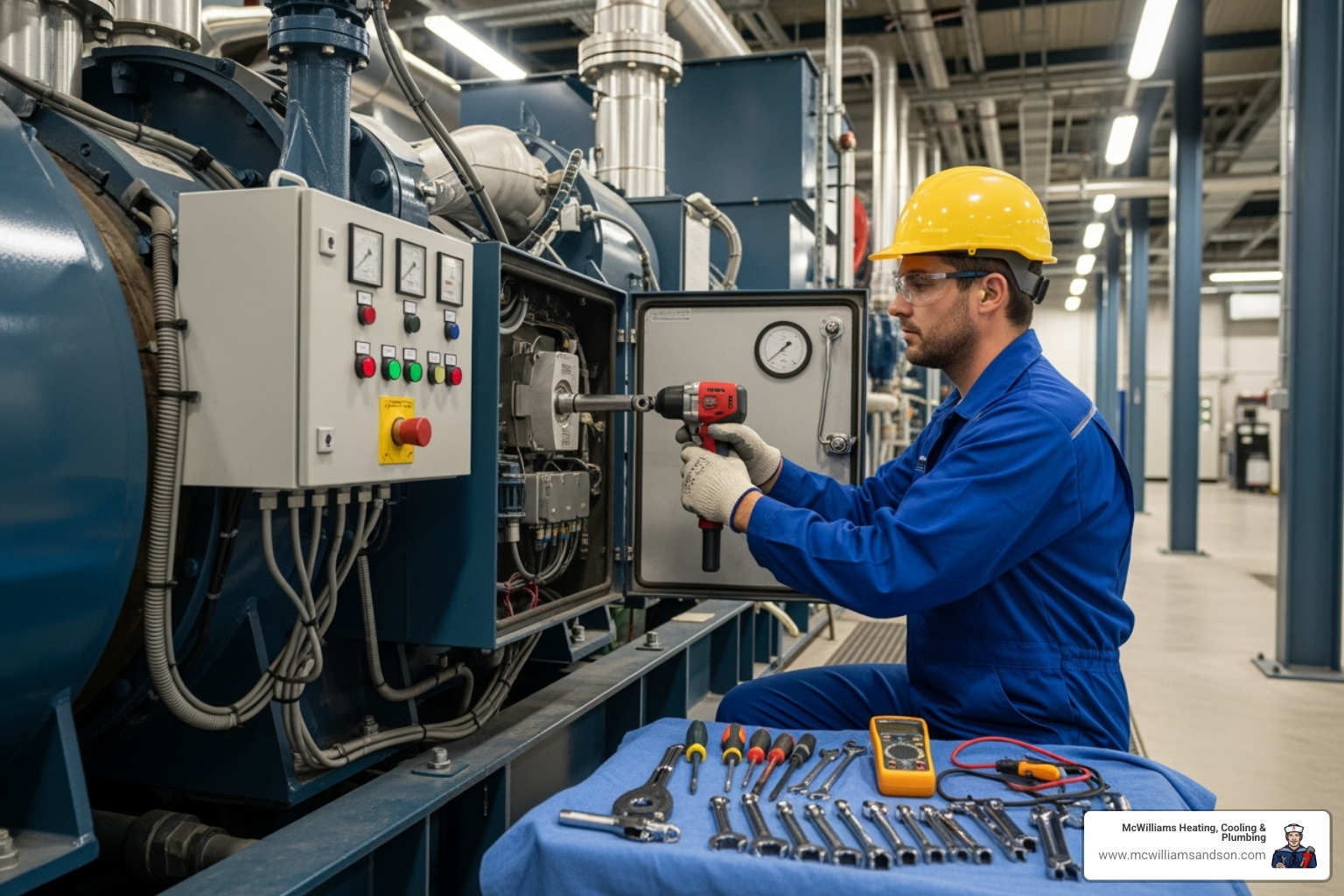
For a natural gas generator installation, safety is paramount. With proper professional installation and maintenance, your generator will provide decades of safe, reliable backup power. That’s the standard we deliver with All of McWilliams and Son’s Services.
DIY vs. Professional Natural Gas Generator Installation
Attempting a DIY natural gas generator installation is extremely dangerous. The risks associated with complex electrical and gas work are too great.
- Electrical Hazards: Incorrect wiring can cause fires, electrocution, or damage to your home’s electrical system. Improper ATS installation can lead to “back-feeding,” which endangers utility workers.
- Gas Leak Dangers: Natural gas is highly flammable. Even a small leak from an improper connection can lead to explosions or carbon monoxide poisoning.
- Code Violations: A DIY installation will likely violate local codes, which can void your home insurance, lead to fines, and require expensive professional repairs.
Our licensed electricians and gas fitters have the training and tools to handle the installation safely and correctly. If you need to verify a contractor’s credentials, the ESA’s contractor lookup tool is a useful resource.
Adhering to Codes and Standards
A professional natural gas generator installation adheres to a strict set of safety codes. These aren’t suggestions; they are life-saving requirements.
- Local Building Codes: These govern placement, such as requiring the unit to be at least 5 feet from windows and doors and 18 inches from flammable materials to prevent fire and carbon monoxide hazards.
- National Standards: We follow National Fire Protection Association (NFPA) standards, including NFPA 37 and NFPA 70 (the National Electrical Code), which cover engine, wiring, and grounding safety.
- Gas and Electrical Codes: Specific codes dictate proper pipe sizing, pressure testing, and ATS installation to prevent gas leaks and electrical faults.
Our team is current on all codes in the Greater Texas Area. We handle all permitting and inspections to guarantee your installation meets or exceeds every safety standard, like those found in the CSA Group Natural Gas Installation Code. Professional installation is essential for protecting your family and your investment.
Frequently Asked Questions about Natural Gas Generators
We’ve helped Texas homeowners with natural gas generator installation for years and have compiled answers to the most common questions.
How long can a natural gas generator run continuously?
A key advantage of natural gas is its continuous fuel supply. A natural gas generator can run for as long as the gas line is active, which could be days or even weeks. This eliminates the need for constant refueling, unlike gasoline generators. For safety and longevity, manufacturers recommend a brief shutdown for maintenance checks, such as checking oil levels, after approximately 500 hours of continuous operation. For residential use, this means your generator can easily handle even the most extended outages.
Do I need a permit to install a standby generator?
Yes, permits are required for a natural gas generator installation. In Texas and most other jurisdictions, you will need both electrical and gas permits. This is a critical safety measure, as the installation involves connecting to your home’s main electrical panel and natural gas line. These connections must be inspected to ensure they meet local safety codes and pose no risk of gas leaks or electrical fires. Our professional team handles the entire permitting process for you, ensuring all work is done correctly and to code.
How often does a natural gas generator need maintenance?
Natural gas generators require regular maintenance to ensure reliability, much like a car. Most manufacturers recommend a full service by a qualified technician annually or after every 200 hours of use, whichever comes first. This service typically includes changing the oil and filters, checking spark plugs, and testing the system. Most modern generators also perform a weekly self-test cycle, running for 5-15 minutes to ensure they are ready for an outage. Proper maintenance can extend the life of your generator to 15-30 years, protecting your investment.
Secure Your Home’s Power with a Professional Installation
When the lights go out in Texas, a professionally installed natural gas generator means your life continues without interruption. Instead of stress, you have security. Your lights stay on, your home stays comfortable, and your family remains safe, no matter the weather.
This is the peace of mind that comes with being prepared. A natural gas generator is a key part of your home’s infrastructure, protecting your comfort and your property during any emergency.
At McWilliams Heating, Cooling & Plumbing, we have over 50 years of experience helping Texas families. We understand the challenges of our state’s climate, from summer heatwaves to winter freezes. Our professional expertise ensures your generator installation meets all safety codes and performance standards.
We’re not just installing equipment; we’re protecting your investment in your home’s well-being. Our team handles everything from permits to final testing, and with our 7-day-a-week availability and flexible financing, the process is seamless.
For a reliable, code-compliant installation that guarantees your family’s safety and comfort, trust the experts. Contact us today for a free in-home estimate on your generator installation. You’ll be glad you did when the power goes out.