

Why Your Home’s Indoor Environmental Quality Matters More Than You Think
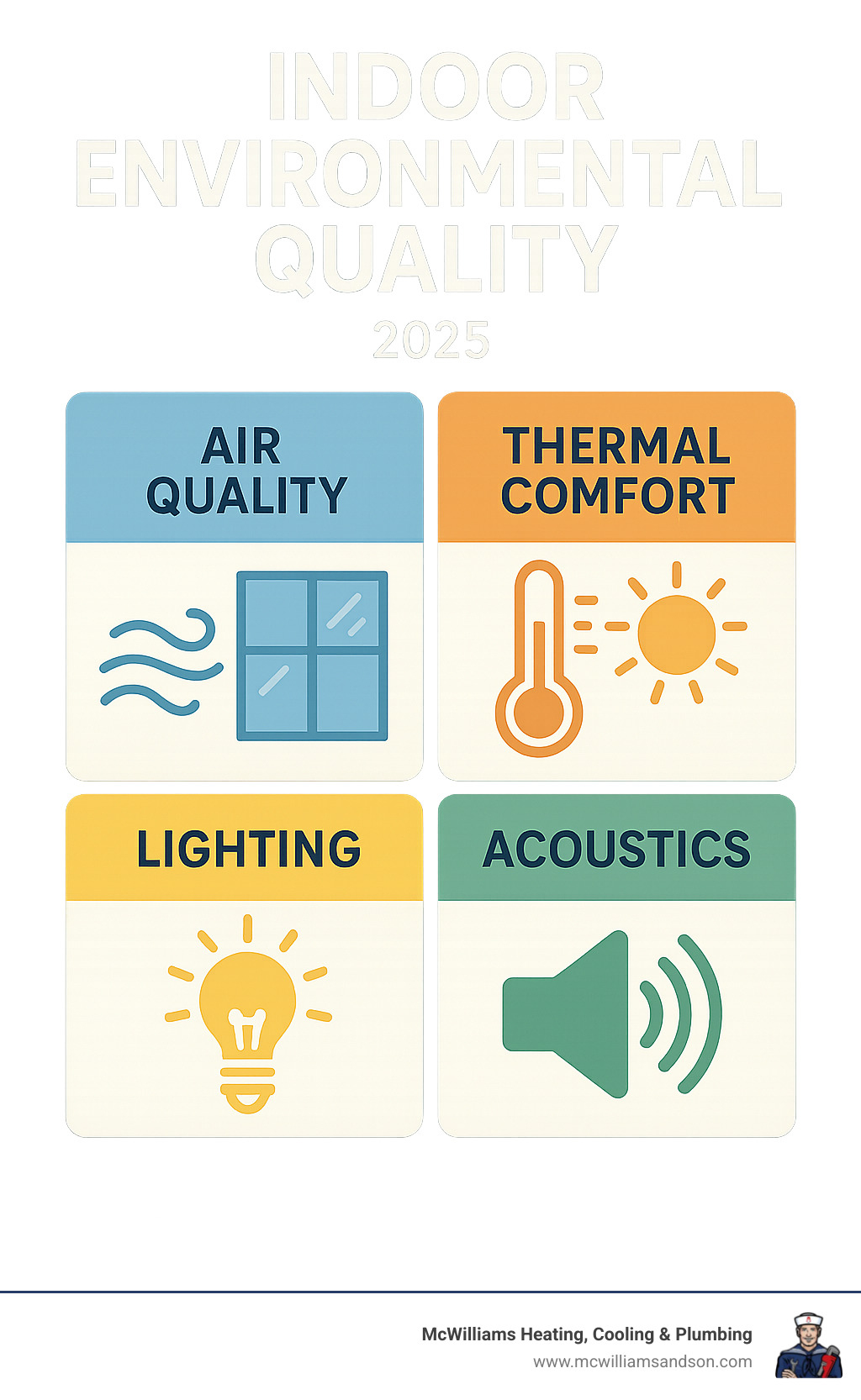
Indoor environmental quality is the overall condition of your home’s environment, including air quality, temperature, lighting, and sound levels that affect your family’s health, comfort, and daily life.
Quick Answer – Indoor Environmental Quality includes:
- Air Quality: Clean, pollutant-free air with proper ventilation
- Thermal Comfort: Consistent temperature and humidity levels
- Lighting: Natural daylight and proper artificial lighting
- Acoustics: Comfortable sound levels without excessive noise
Here’s something that might surprise you: Americans spend about 90% of their time indoors, where air pollutant concentrations are often much higher than outside. That means the quality of your home’s environment directly impacts nearly your entire day. For residents in Texas, from Katy to Lufkin, this is especially true. Our hot, humid summers mean we rely heavily on our homes as sealed refuges from the outdoor climate. While modern, energy-efficient homes are great for keeping cooling costs down, their airtight construction can also trap pollutants, allergens, and moisture inside, making a proactive approach to IEQ not just a luxury, but a necessity for healthy living.
Poor indoor environmental quality isn’t just uncomfortable – it’s costly. Studies show that productivity losses from poor indoor environments cost employers $225.8 billion annually in the United States. For Texas homeowners working from home, this hits even closer to home.
The good news? Small improvements to your indoor environment can make a huge difference. When one property company installed better lighting, employees reported an 18% increase in productivity. Students in classrooms with more natural light scored 25% higher on standardized tests.
Your home’s environment affects everything from your family’s health to your energy bills. Unlike outdoor air pollution, you have direct control over your indoor environment – and making it healthier doesn’t have to break the bank.
What is IEQ and Why Does It Matter?
If you’ve ever walked into a room and immediately felt uncomfortable – maybe it was too stuffy, too bright, or just didn’t feel “right” – you’ve experienced poor indoor environmental quality firsthand. But what exactly does that mean, and how is it different from the indoor air quality we hear so much about?
Think of Indoor Air Quality (IAQ) as one piece of a much larger puzzle. IAQ focuses specifically on what’s floating around in the air you breathe – things like dust, pollen, chemical fumes, and other airborne nasties. It’s absolutely crucial, but it’s not the whole story.
Indoor Environmental Quality (IEQ), on the other hand, is like looking at your home’s comfort through a wide-angle lens. It includes air quality, but it also considers whether you’re too hot or too cold, if there’s enough natural light streaming through your windows, and whether that noisy HVAC system is driving you crazy. It’s the complete sensory experience of being inside your home.
Here’s why this matters to Texas homeowners: You might have perfectly clean air, but if your living room feels like a sauna in July or you can’t concentrate because of constant noise, your home still isn’t supporting your family’s well-being. Indoor environmental quality takes a holistic approach – because comfort isn’t just about one thing.
| Feature | Indoor Environmental Quality (IEQ) | Indoor Air Quality (IAQ) |
|---|---|---|
| Scope | All factors impacting the indoor environment, including air quality, thermal comfort, light, and acoustics. | Focuses specifically on the air within and around indoor spaces, including pollutants and airborne contaminants. |
| Key Factors | Air quality (ventilation, filtration, pollutants), thermal comfort (temperature, humidity, air movement), lighting (natural daylight, artificial lighting, glare control), and acoustics (noise levels, sound absorption, speech privacy) | Pollutant control (VOCs, particulates, allergens), ventilation rates, humidity levels, filtration efficiency, and pathogen management |
| Primary Goals | Create a comprehensive environment that supports health, comfort, productivity, and overall well-being through the integration of multiple environmental factors | Ensure clean, breathable air by controlling airborne contaminants, maintaining proper ventilation, and managing humidity levels |
The beauty of understanding this distinction is that it helps you think about your home as a complete system. When your HVAC system is properly maintained, it’s not just cleaning your air – it’s also maintaining comfortable temperatures and humidity levels while operating quietly enough not to disturb your daily life.
This synergy is where true home comfort is born. For example, upgrading to a modern, variable-speed HVAC system doesn’t just impact one area. It improves thermal comfort with more consistent temperatures, improves IAQ through better filtration and humidity control, and boosts acoustics by operating at much quieter levels than older models. Conversely, a neglected system can degrade all aspects of IEQ simultaneously—circulating dusty air, failing to remove humidity, and creating a distracting racket. Viewing your home through the IEQ lens helps you make smarter, more impactful decisions for your family’s well-being.
The Importance of Indoor Environmental Quality for Health and Well-being
Poor indoor environmental quality isn’t just annoying – it can genuinely impact your family’s health and happiness. You’ve probably experienced some of the warning signs without realizing what was causing them.
Stuffy air and poor ventilation can trigger headaches, make you feel drowsy during the day, or worsen asthma and allergies. When your home’s air isn’t circulating properly, you’re basically breathing the same air over and over again, along with everything that gets mixed into it. This lack of fresh air allows carbon dioxide (CO2) from our own breathing to build up, leading to that classic feeling of lethargy and difficulty concentrating. For family members with respiratory conditions, it means a higher concentration of triggers like pet dander and dust, leading to more frequent and severe symptoms.
Temperature and humidity problems create their own set of issues. Too much humidity and you’re looking at potential mold growth, dust mites, and that clammy feeling that makes everything uncomfortable. Too little humidity, especially during Texas winters when heaters are running, and you’ll deal with dry skin, irritated sinuses, and increased static electricity. The ideal indoor humidity level is between 30% and 50%. In the humid Texas climate, levels can easily creep above 60%, creating a breeding ground for mold, mildew, and dust mites—all major allergy triggers. You might notice condensation on windows or a persistent musty smell. Conversely, overly dry air from constant heating in winter can dry out mucous membranes, making you more susceptible to colds and sinus infections, and can even cause wooden furniture and floors to crack.
Poor lighting affects more than just your ability to read the newspaper. Your body’s natural rhythms depend on exposure to bright light during the day and dimmer light in the evening. Homes with inadequate natural light or harsh artificial lighting can disrupt sleep patterns and even affect mood. This is tied to our circadian rhythm, the body’s internal 24-hour clock. Insufficient daylight can lead to eye strain and headaches, but it can also disrupt this rhythm, leading to poor sleep quality and daytime fatigue. The wrong type of artificial light—such as harsh, flickering fluorescent bulbs—can also contribute to stress and reduce concentration, making work-from-home tasks more challenging.
Excessive noise from HVAC systems, traffic, or other sources creates chronic stress that you might not even notice consciously. But your body notices, and over time, it can impact everything from concentration to blood pressure. This constant background noise, whether from a rattling air conditioner or nearby traffic, can lift stress hormones like cortisol. Even if you’ve “tuned it out,” your body is still reacting. This chronic stress response can interfere with sleep, impair cognitive function, and contribute to long-term cardiovascular issues. A quiet environment is not just peaceful—it’s physically restorative.
The medical community has even given a name to the collection of symptoms caused by poor indoor environments: Sick Building Syndrome (SBS). People with SBS experience fatigue, headaches, eye irritation, and respiratory problems that improve when they leave the building but return when they come back.
The link between IEQ and improved health is well-documented in research. Studies consistently show that people in environments with good indoor environmental quality report better health, sleep better, and are more productive when working from home.
The Financial Impact of a Healthy Home
Improving your home’s indoor environmental quality isn’t just about feeling better – it’s also about saving money in ways you might not expect.
Energy efficiency often goes hand-in-hand with better IEQ. When your HVAC system is properly maintained and your home is well-sealed, you’re not just improving air quality and comfort – you’re also reducing energy waste. A system that doesn’t have to work as hard to maintain comfortable conditions will last longer and cost less to operate. For example, sealing leaky ductwork not only prevents conditioned air from escaping into your attic but also stops dust, insulation fibers, and other contaminants from being pulled into your breathing air. This single fix improves both IEQ and your utility bills. Similarly, a whole-home dehumidifier integrated with your HVAC system makes the air feel cooler at higher temperatures, allowing you to raise your thermostat setting and save money without sacrificing comfort.
Healthcare savings can be significant too. Families living in homes with poor indoor air quality often deal with more respiratory issues, allergy flare-ups, and sick days. While it’s hard to put an exact dollar figure on avoided doctor visits and missed work days, the savings add up over time.
Property value gets a boost when you invest in improvements that improve indoor environmental quality. Energy-efficient HVAC systems, good ventilation, and other IEQ improvements are increasingly important to homebuyers who understand the long-term benefits. Today’s savvy buyers look beyond curb appeal. A home with a well-maintained, high-efficiency HVAC system, evidence of good ventilation, and features that promote a healthy environment can be a major selling point. It signals a well-cared-for home and promises lower utility bills and better living conditions for the future owners.
For Texas families working from home, the productivity benefits are especially relevant. Studies show that people working in environments with good lighting, comfortable temperatures, and clean air are significantly more productive and make fewer errors. When your home office supports your well-being, you’re setting yourself up for professional success too.