

Why Formaldehyde Indoor Air Pollution Threatens Your Family’s Health
Formaldehyde indoor air pollution is a serious health concern that affects millions of homes across Texas. This colorless gas with a strong, pickle-like odor is a volatile organic compound (VOC) that can cause immediate irritation and long-term health risks, including cancer.
Quick Facts About Formaldehyde Indoor Air Pollution:
- What it is: A colorless, flammable gas that easily evaporates at room temperature
- Common sources: Pressed-wood furniture, cabinets, flooring, paints, and gas appliances
- Health risks: Eye/throat irritation, headaches, asthma triggers, and cancer (IARC Group 1 carcinogen)
- Typical levels: Indoor levels average 20-40 ppb, while outdoor levels are only 2-4 ppb
- Most vulnerable: Children, elderly, and people with respiratory conditions
Your home should be your safe haven, but many Texas homeowners unknowingly live with liftd formaldehyde levels. New furniture, recent renovations, or even that fresh paint smell could signal dangerous off-gassing in your indoor air.
The good news? Understanding the sources and taking simple steps can dramatically reduce your family’s exposure. With proper ventilation, smart product choices, and awareness of the biggest culprits, you can breathe easier knowing your home’s air is clean and safe.
What is Formaldehyde and Why is it a Concern?
Think of formaldehyde indoor air pollution as an invisible houseguest that you never invited—but somehow keeps showing up anyway. This colorless gas has a distinctive, strong pickle-like odor that you’ve probably encountered before. Ever noticed that sharp smell when you walk into a furniture store or catch a whiff of fresh paint? That’s likely formaldehyde saying hello.
Formaldehyde is what scientists call a volatile organic compound (VOC), which is a fancy way of saying it easily evaporates into the air at room temperature. It’s naturally occurring in small amounts—our bodies even produce tiny amounts as part of normal metabolism, and it’s released during natural processes like forest fires. The problem starts when concentrations build up indoors due to the products we bring into our homes.
The off-gassing process is how formaldehyde escapes from materials like furniture, flooring, and adhesives into your indoor air. While a little formaldehyde is unavoidable, high concentrations transform this common chemical from a minor nuisance into a serious health threat.
The International Agency for Research on Cancer doesn’t mince words—they’ve classified formaldehyde as a Group 1 carcinogen, meaning it’s a known human carcinogen. This classification comes from solid evidence linking formaldehyde exposure to nasopharyngeal cancer. You can read the detailed scientific findings in the IARC monograph on the carcinogenic risk from exposure to formaldehyde.
Short-Term Health Effects
Your body has a pretty good early warning system when it comes to formaldehyde exposure. Those immediate, uncomfortable symptoms you might experience after bringing home new furniture or completing a home renovation? That’s your body telling you something’s not right with your indoor air.
Eye irritation is often the first sign—your eyes might water, burn, or feel gritty. Nose and throat burning follows closely, creating that stinging sensation that feels like a mild chemical burn. Many people also experience watery eyes, coughing, and wheezing, especially if they have sensitive airways.
Nausea and headaches can make you feel generally unwell, while skin irritation might occur if you directly touch formaldehyde-containing products. These symptoms typically show up when formaldehyde levels climb above 0.1 parts per million (ppm).
The good news is that these effects are usually temporary. Once you reduce the exposure—maybe by increasing ventilation or removing the source—the symptoms often subside. Think of them as your body’s way of saying, “Hey, let’s fix this air quality situation!”
Long-Term Health Risks
While short-term symptoms are uncomfortable, the long-term health risks are where formaldehyde exposure becomes truly concerning. The nasopharyngeal cancer risk is the most well-established danger, affecting the upper part of the throat behind the nose. Research also suggests a potential link to leukemia, particularly with high-level occupational exposure.
Beyond cancer risks, chronic formaldehyde exposure can turn your home into an asthma trigger zone. For people with asthma, even low levels can lead to more frequent and severe attacks. Non-asthmatic individuals might develop persistent coughing, wheezing, and general respiratory discomfort.
Perhaps most troubling is how some people develop allergic sensitivity over time. This means that even small amounts of formaldehyde that once didn’t bother them can suddenly trigger allergic reactions, including respiratory symptoms or skin reactions.
Vulnerable Populations
Some family members face higher risks from formaldehyde indoor air pollution than others. Children top this list because their developing respiratory systems and higher breathing rates make them more susceptible to pollutants. They also spend considerable time indoors, often in bedrooms where new furniture might be off-gassing.
Elderly family members may have weakened immune systems or pre-existing conditions that make them more vulnerable. Individuals with asthma or other respiratory conditions can experience triggered or worsened symptoms, leading to increased difficulty breathing and medication use.
People with existing respiratory conditions and those with chemical sensitivities round out the most vulnerable groups. For these individuals, formaldehyde can trigger everything from headaches to fatigue, making it crucial to maintain the cleanest possible indoor air.
At McWilliams Heating, Cooling & Plumbing, we’ve seen how improving indoor air quality can transform the comfort and health of Texas families, especially for these sensitive household members.
Understanding Formaldehyde Indoor Air Pollution: Sources and Levels
Here’s something that might surprise you: formaldehyde indoor air pollution isn’t just lurking in old buildings or industrial spaces. It’s actually woven into the fabric of our everyday lives, hiding in plain sight throughout our Texas homes.
The tricky thing about formaldehyde is how sneaky it can be. This colorless gas doesn’t just appear once and disappear—it keeps off-gassing from various materials and products over time. And here in Texas, our warm, humid climate makes things even more interesting. Higher temperatures and humidity levels act like an accelerator, speeding up the release of formaldehyde from materials in your home. So that new furniture that seemed fine in the showroom might start off-gassing more aggressively once it’s sitting in your living room during a hot Texas summer.
While formaldehyde off-gassing is highest when products are brand new, it doesn’t just stop after a few days. It can continue at lower levels for months or even years, which means that “new home smell” or “new furniture smell” is actually a warning sign worth paying attention to.
Common Sources of Formaldehyde in Your Home
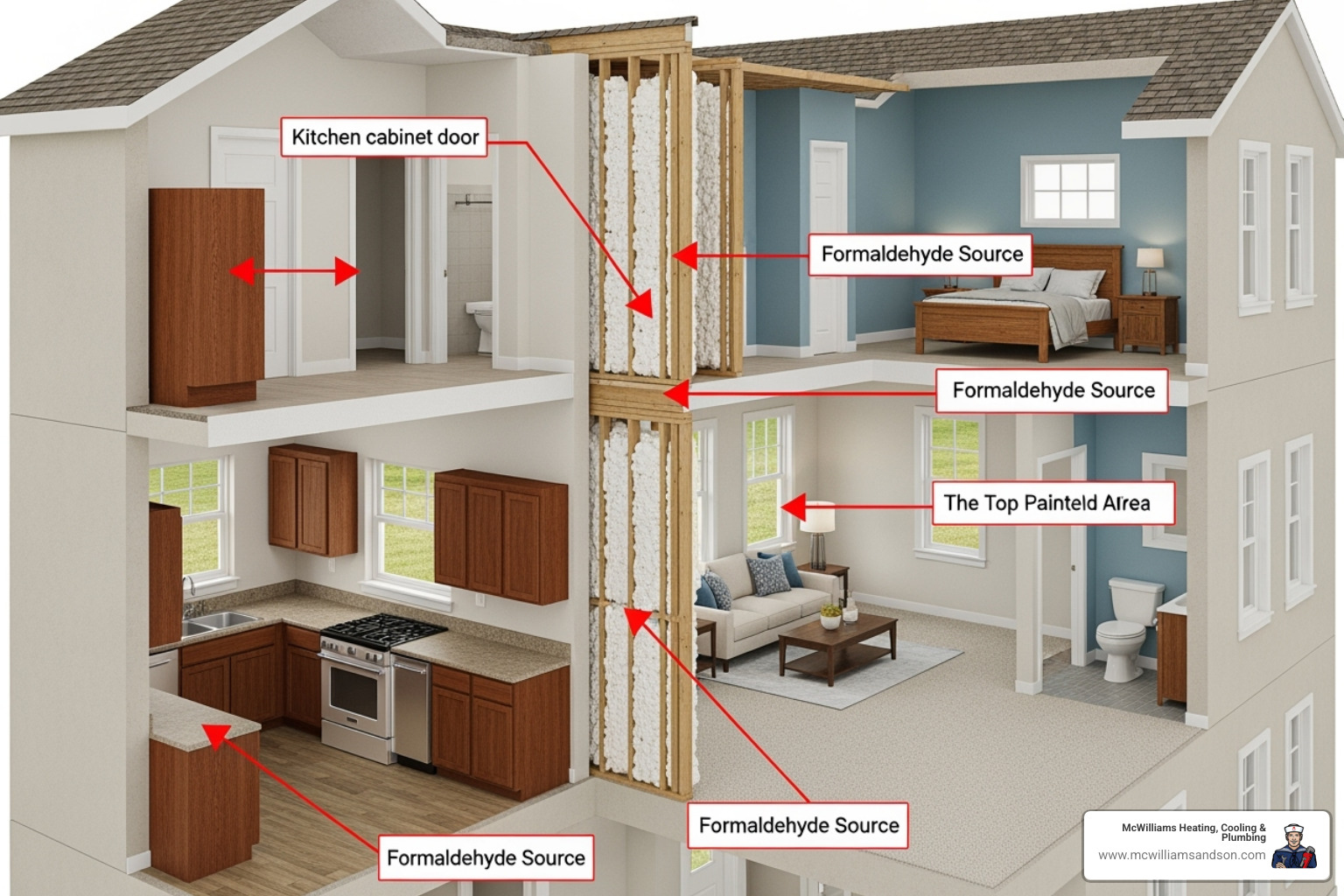
You’d be amazed at how many everyday items in your home could be contributing to formaldehyde indoor air pollution. The reason formaldehyde shows up in so many products is simple: it’s incredibly useful as both a binding agent and a preservative. But that usefulness comes at a cost to your indoor air quality.
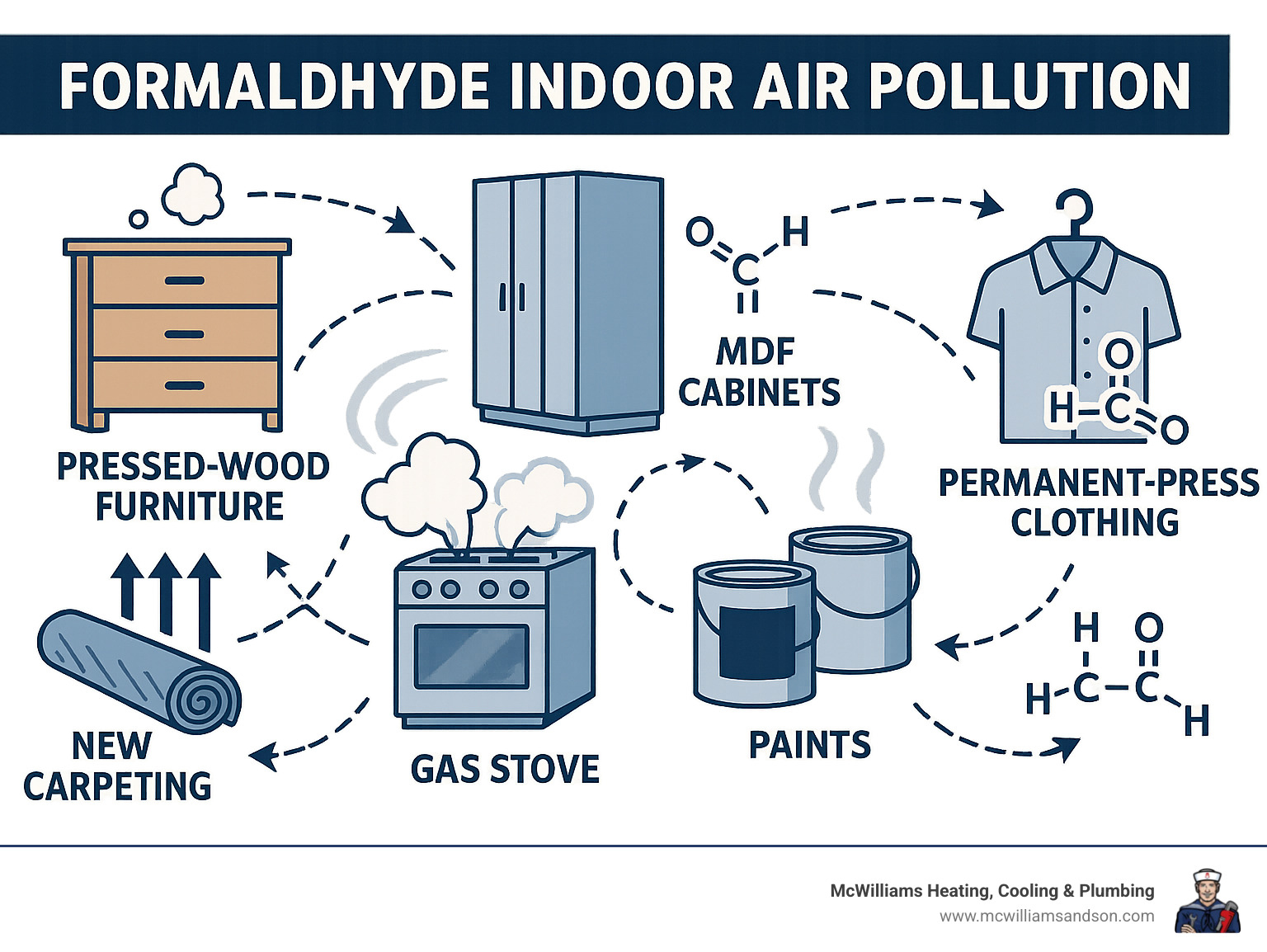
The biggest culprit in most homes? Pressed-wood products. These materials use formaldehyde-based resins as strong adhesives, and they’re everywhere in modern homes. Medium Density Fiberboard (MDF) is often the worst offender because it has a higher resin-to-wood ratio than other pressed wood products. You’ll find MDF in everything from kitchen cabinets to bathroom vanities. Particleboard is another major source—it’s hiding in your subflooring, shelving, and that affordable furniture you picked up last month. Hardwood plywood paneling might sound more natural, but it can still release formaldehyde, especially if it uses urea-formaldehyde (UF) resins instead of the lower-emitting phenol-formaldehyde (PF) resins found in exterior-grade products.
Furniture and cabinetry are particularly problematic when they’re new. That flat-pack furniture that seemed like such a great deal? It’s often made with pressed wood and can turn your home into a formaldehyde hot zone for weeks or months after assembly.
But it’s not just wood products you need to worry about. Glues and adhesives used throughout your home during construction or DIY projects often contain formaldehyde. Paints and coatings can be sneaky sources too—while many modern paints are low-VOC, older or budget options might still use formaldehyde as a preservative.
Here’s one that catches many people off guard: permanent-press fabrics. Those wrinkle-resistant clothes, curtains, and bedding get their magic from chemical treatments that often include formaldehyde. Always wash new permanent-press items before using them!
Even your daily routines can contribute to the problem. Fuel-burning appliances like unvented gas stoves and kerosene heaters release formaldehyde as a combustion byproduct. Tobacco smoke from cigarettes or vaping is a significant source. And believe it or not, many cosmetics and personal care products—including shampoos, soaps, and nail polish—contain formaldehyde-releasing preservatives.
Typical Indoor vs. Outdoor Levels
Want to know something that might make you think twice about staying indoors all day? The formaldehyde levels inside most homes are significantly higher than what you’d breathe outside. It’s a perfect example of how our enclosed spaces can concentrate pollutants.
Outdoor levels of formaldehyde are typically quite low—usually around 1-4 μg/m³ (about 0.8-3.2 ppb). In places like Minnesota, outdoor levels average about 2.0 ppb. Mother Nature keeps things pretty clean when it comes to formaldehyde.
Inside our homes, it’s a different story. Conventional homes average around 20 ppb (25 μg/m³), while manufactured homes often see levels around 40 ppb (50 μg/m³) due to their higher concentration of pressed wood products. Studies from around the world show similar patterns—whether you’re looking at Arizona (21 μg/m³), the UK (22.2 μg/m³), Germany (23.3 μg/m³), or Canada (29.5 μg/m³), indoor levels consistently run higher than outdoor air.
The real eye-opener comes when you look at homes with lots of new pressed wood products. These spaces can see levels greater than 0.3 ppm (300 ppb)—that’s 15 times higher than typical indoor levels! Recently renovated homes in China showed average concentrations of 238 μg/m³, proving just how much new materials can impact your air quality.
There’s some good news, though. Older homes without problematic materials like urea-formaldehyde foam insulation typically maintain levels well below 0.1 ppm. This shows that time does help—formaldehyde off-gassing naturally decreases as materials age.
The type of resin used in pressed wood products makes a huge difference too. Urea-formaldehyde (UF) resins, commonly used in indoor-grade pressed wood like particleboard and MDF, have much higher emission rates than phenol-formaldehyde (PF) resins used in exterior-grade products like construction plywood. When you’re shopping for wood products, choosing exterior-grade materials can dramatically reduce your home’s formaldehyde levels.
Several factors influence how much formaldehyde builds up in your home: the age of your building materials, temperature, humidity, how well your home is ventilated, and even the season. The good news? Understanding these factors puts you in control of creating a healthier indoor environment for your family.
How to Reduce Formaldehyde in Your Home
Now that we understand what formaldehyde is and where it comes from, here’s the encouraging news: you have real power to dramatically reduce formaldehyde indoor air pollution in your home. It’s not about expensive overhauls or complicated procedures. Instead, it’s about smart strategies that work together – controlling sources, choosing better products, and getting fresh air flowing through your space.
Think of it like managing any household problem. You wouldn’t just clean up a spill without fixing the leak, right? The same approach works here: stop new sources from entering your home, dilute what’s already there, and give existing sources time to naturally decrease their off-gassing.
The Role of Ventilation and Humidity Control
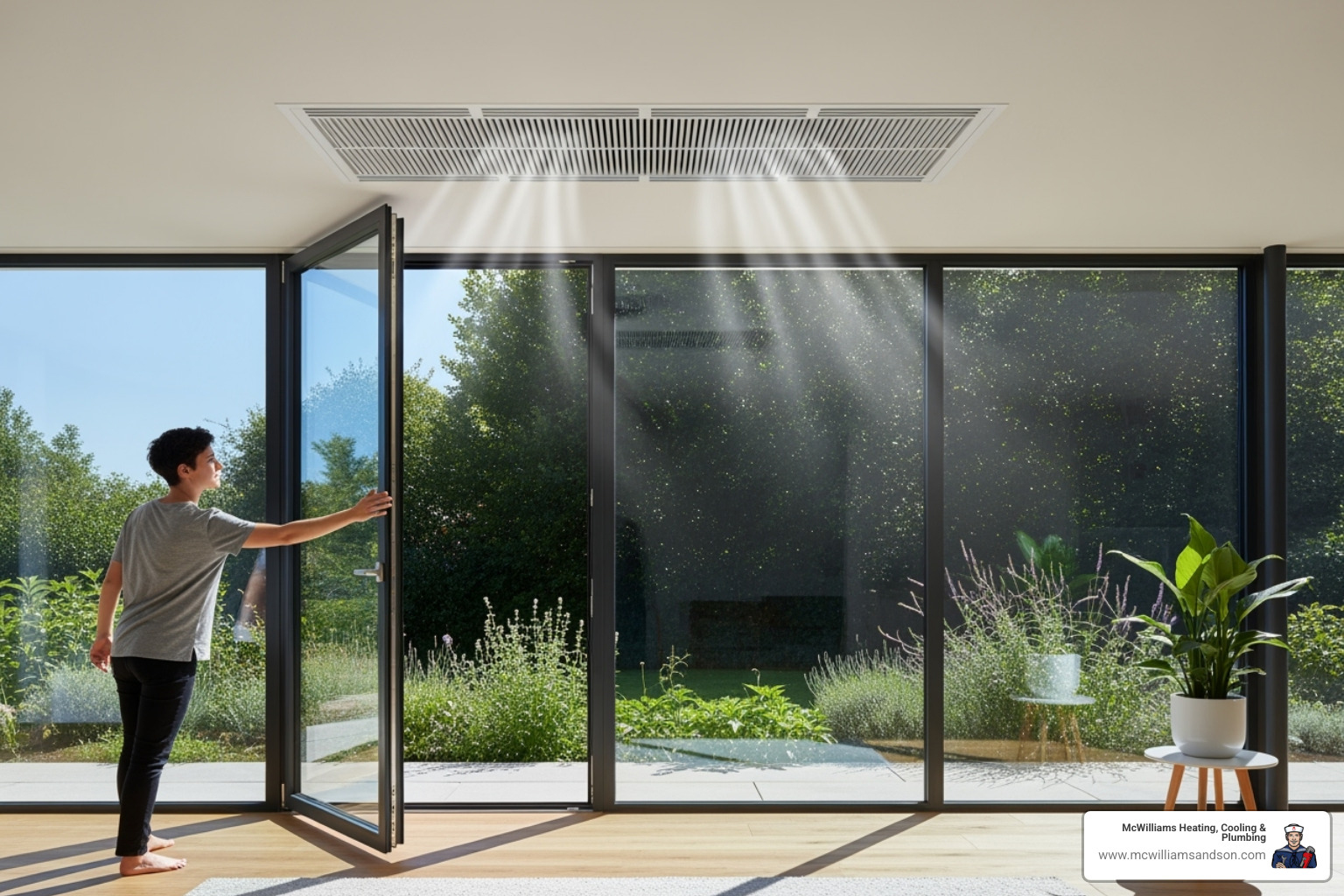
One of the most effective weapons against formaldehyde indoor air pollution is something you probably already do instinctively – opening windows when the air feels stuffy. Fresh air dilutes indoor pollutants, and it’s surprisingly powerful for reducing formaldehyde levels.
Simple ventilation strategies can make a huge difference in your home’s air quality. Opening windows and doors for even 15-30 minutes daily allows outdoor air to sweep through and carry away accumulated formaldehyde. This is especially important after bringing home new furniture or completing a painting project, when off-gassing is at its peak.
Your kitchen and bathroom exhaust fans are also formaldehyde fighters, even if you don’t realize it. These fans don’t just remove cooking odors and moisture – they’re constantly pulling indoor air (including formaldehyde) outside and creating circulation throughout your home. Make it a habit to run them during and after cooking, showering, or using cleaning products.
Here in Texas, we have a unique advantage and challenge with our climate. Your HVAC system plays a crucial role in managing indoor air quality year-round. A well-maintained system keeps air moving throughout your home and can bring in controlled amounts of fresh outdoor air. While standard filters won’t capture gaseous formaldehyde, good airflow prevents pollutants from building up in any one area.
The Texas heat also means we need to think strategically about temperature and humidity control. Here’s something that might surprise you: formaldehyde off-gasses faster when it’s hot and humid – kind of like how a wet towel dries faster on a hot, humid day. By keeping your home comfortably cool (around 68-72°F) and using a dehumidifier to maintain humidity below 50%, you’re actually slowing down the rate that formaldehyde escapes from furniture and building materials.
For homeowners who want to take their indoor air quality to the next level, we offer comprehensive solutions that go beyond basic ventilation. Our team can evaluate how well your current HVAC system supports healthy indoor air and recommend specific improvements. Learn more about our indoor air quality services to see how we can help create a healthier home environment.
Choosing Low-Formaldehyde Products
The best time to fight formaldehyde is before it enters your home. When you’re shopping for furniture, planning renovations, or even buying clothes, you can make choices that dramatically reduce your family’s exposure.
Solid wood furniture is your best friend when it comes to avoiding formaldehyde. Unlike pressed wood products that use formaldehyde-based glues, solid wood naturally emits very little of this chemical. Yes, it might cost more upfront, but you’re investing in both durability and your family’s health.
When pressed wood is unavoidable, look for “exterior-grade” products. These use phenol-formaldehyde (PF) resins instead of the higher-emitting urea-formaldehyde (UF) resins found in many indoor products. The difference in emissions can be dramatic – sometimes 10 times lower.
Product labels are your secret weapon for making smart choices. Look for CARB Phase II or TSCA Title VI compliant labels on composite wood products. These California and federal standards respectively ensure significantly lower formaldehyde emissions. When shopping for paint, seek out low-VOC or no-VOC options – many major paint manufacturers now offer these healthier alternatives without sacrificing quality or color selection.
The GreenGuard certification is another trustworthy guide. Products with this label have been tested for chemical emissions and meet strict standards for indoor air quality. You can search for certified products at GreenGuard certified products, covering everything from furniture to flooring to office supplies.
Don’t forget about textiles in your formaldehyde-reduction strategy. Permanent-press fabrics – those wrinkle-resistant sheets, curtains, and clothes – often contain formaldehyde treatments. The good news? A thorough washing before use removes most of these chemicals. It’s a simple step that makes a real difference.
One clever strategy many of our customers use is airing out new products before bringing them into living spaces. That new bookshelf or dresser can spend a few days in the garage or on a covered porch, allowing the initial burst of off-gassing to happen outside your home. Some customers even ask furniture stores if they can leave items unsealed in the warehouse for a few extra days before delivery.
How to Test for Formaldehyde
Sometimes you want to know exactly what you’re dealing with, especially if family members are experiencing unexplained symptoms or you’ve recently made major changes to your home. Testing gives you concrete data to guide your decisions.
DIY home test kits offer a convenient starting point. These typically involve placing a small collection device in your home for 24-72 hours, then mailing it to a lab for analysis. While they won’t tell you exactly which piece of furniture is the culprit, they give you a baseline understanding of your home’s formaldehyde levels.
For a more thorough assessment, consider hiring an Indoor Air Quality (IAQ) consultant. These professionals use sophisticated equipment to take precise measurements and can often pinpoint specific sources. They’re particularly valuable if you’re dealing with persistent symptoms or planning major renovations.
Understanding your results helps you take appropriate action. Levels below 0.05 ppm (50 ppb) are generally considered acceptable, though the goal is always as low as possible. Moderate levels between 0.05-0.1 ppm might cause mild irritation in sensitive individuals. Anything above 0.1 ppm is considered liftd and likely to cause noticeable symptoms for most people.
Typical indoor levels average 20-40 ppb, so you can compare your results to these benchmarks. More importantly, testing helps you track whether the changes you make – better ventilation, new product choices, or source removal – are actually working to improve your family’s air quality.
Frequently Asked Questions about Formaldehyde Pollution
After helping thousands of Texas families improve their indoor air quality over the past 50 years, we’ve heard just about every question you can imagine about formaldehyde indoor air pollution. Here are the ones that come up most often, along with the straight answers you need.
How long does it take for formaldehyde to off-gas from new furniture?
This is probably our most common question, especially from families who’ve just furnished a nursery or bought new bedroom furniture. The answer depends on several factors, but here’s what you can expect.
Off-gassing is highest when products are brand new. That strong smell when you first unpack furniture? That’s formaldehyde and other VOCs being released at their peak levels. The good news is this intense period doesn’t last forever.
The rate significantly decreases over weeks to months. Most new furniture will release the majority of its formaldehyde within the first few weeks to a couple of months. However, products made with pressed wood and formaldehyde-based adhesives can continue off-gassing at lower levels for years.
Temperature and humidity affect the rate. Here in Texas, our warm, humid climate can actually speed up the process. Higher temperatures and humidity levels make formaldehyde evaporate faster from materials. This means your new furniture might off-gas more quickly in summer, but it also means the intense period may be shorter.
The type of product matters too. A solid wood dresser will off-gas very little, while particleboard furniture with lots of adhesive can continue releasing formaldehyde for months or even years, though at decreasing levels over time.
Can air purifiers remove formaldehyde?
Yes, but not all air purifiers are created equal when it comes to formaldehyde indoor air pollution. This is where many homeowners get confused, so let’s clear things up.
Look for models with activated carbon filters. Standard HEPA filters are fantastic for capturing dust, pollen, and other particles, but they can’t grab gaseous pollutants like formaldehyde. You need an air purifier specifically designed with activated carbon or other chemical sorbents that can actually absorb these invisible gases.
Some purifiers produce ozone, which can worsen indoor air quality. This is a big red flag. Ozone-generating purifiers can actually react with other chemicals in your air and create more formaldehyde or other harmful compounds. Always choose purifiers that specifically state they don’t produce ozone.
Proper filtration is key. The best air purifiers for formaldehyde use a combination of technologies – activated carbon, potassium permanganate, or specialized chemical sorbents. These work by actually trapping or breaking down the formaldehyde molecules.
While a good air purifier can be a helpful tool, it’s not a magic solution. Source control and ventilation are still your most effective weapons against formaldehyde. Think of air purifiers as backup support, not your main defense.
What is a safe level of formaldehyde in a home?
Here’s the honest answer: there’s no “safe” level of formaldehyde because it’s a known carcinogen. The goal should always be to keep levels as low as possible. But we understand you need practical guidance, so here’s what the experts recommend.
WHO guideline is 0.1 mg/m³ (30-min avg) to prevent irritation. The World Health Organization established this level specifically to prevent sensory irritation like watery eyes and throat burning. In more familiar terms, this equals about 80 parts per billion (ppb).
Levels below 0.1 ppm are generally recommended. Most experts suggest keeping indoor formaldehyde below 0.1 parts per million (100 ppb) to avoid acute health effects for most people. Even better is staying below 0.05 ppm (50 ppb), especially if you have children, elderly family members, or anyone with respiratory conditions in your home.
To put this in perspective, typical homes average around 20-40 ppb, while homes with lots of new pressed wood products can spike above 300 ppb. Older homes without recent additions usually stay well below 100 ppb.
The reality is that individual sensitivity varies greatly. What doesn’t bother one person might cause headaches or breathing problems for another. If you’re experiencing symptoms that might be related to indoor air quality, the specific number matters less than taking action to reduce your exposure.
Conclusion

Understanding formaldehyde indoor air pollution might feel overwhelming at first, but knowledge is power. You now know that this colorless, pickle-smelling gas is more than just an unpleasant odor – it’s a serious health threat that can cause everything from watery eyes and headaches to long-term cancer risks.
The reality is that formaldehyde is everywhere in our modern homes. From that new particleboard bookshelf to your favorite wrinkle-free shirt, these everyday items can quietly release this dangerous chemical into the air your family breathes. Children, elderly family members, and anyone with respiratory conditions face even greater risks.
But here’s what gives us hope: you’re not powerless against this invisible threat. Every smart choice you make – choosing solid wood over pressed wood furniture, opening windows for fresh air, washing new fabrics before use, and maintaining proper humidity levels – directly protects your family’s health. Even simple actions like airing out new purchases in your garage before bringing them inside can make a real difference.
Your home should be your safe haven, not a source of health concerns. The good news is that with proper ventilation, thoughtful product choices, and awareness of the biggest culprits, you can create the clean, healthy indoor environment your family deserves.
At McWilliams Heating, Cooling & Plumbing, we’ve spent over 50 years helping families across the Greater Texas Area breathe easier. We understand that in our warm, humid climate, managing indoor air quality requires special attention. Your HVAC system isn’t just about comfort – it’s a crucial partner in controlling humidity and circulating fresh air to dilute pollutants like formaldehyde.
Whether you’re in Katy, Nacogdoches, Lufkin, or Livingston, our team is ready to help you tackle any indoor air quality concerns. We’re available 7 days a week with flexible financing and free in-home estimates because clean air shouldn’t wait.
Don’t let invisible pollutants compromise your family’s health and comfort. Take control of your home’s air by exploring our indoor air quality solutions.