
Why You Should Monitor Formaldehyde in Your Home
Air quality monitor formaldehyde devices help you detect a dangerous chemical that could be silently threatening your family’s health. Here’s what you need to know:
Top Formaldehyde Monitors:
- Portable units – Best for spot-checking ($50-200)
- Continuous monitors – Real-time tracking ($100-400)
- Multi-gas detectors – Monitor multiple pollutants ($150-500)
- Professional assessment – Most accurate option
Key Features to Look For:
- Electrochemical sensors for accuracy
- Real-time PPM readings
- Data logging capabilities
- Audible alarms at 0.1 PPM (CDC threshold)
Formaldehyde is a toxic chemical and known carcinogen emitted from common household items like furniture, flooring, and building materials. The US CDC says we should be concerned about formaldehyde at 0.1 PPM—the level where most people can start smelling its strong, chemical odor.
What makes this invisible threat so concerning? Formaldehyde exposure can lead to side effects that range from mild to life-threatening. Short-term exposure causes eye, nose, and throat irritation. Long-term exposure is linked to respiratory problems, allergic reactions, and even cancer of the nasal cavity and throat, as highlighted by the CDC.
The problem is especially serious in newer homes and recently renovated spaces where formaldehyde off-gassing from pressed wood furniture, carpets, and paints can reach dangerous levels. Without proper monitoring, you might not realize your family is breathing contaminated air until health symptoms appear.
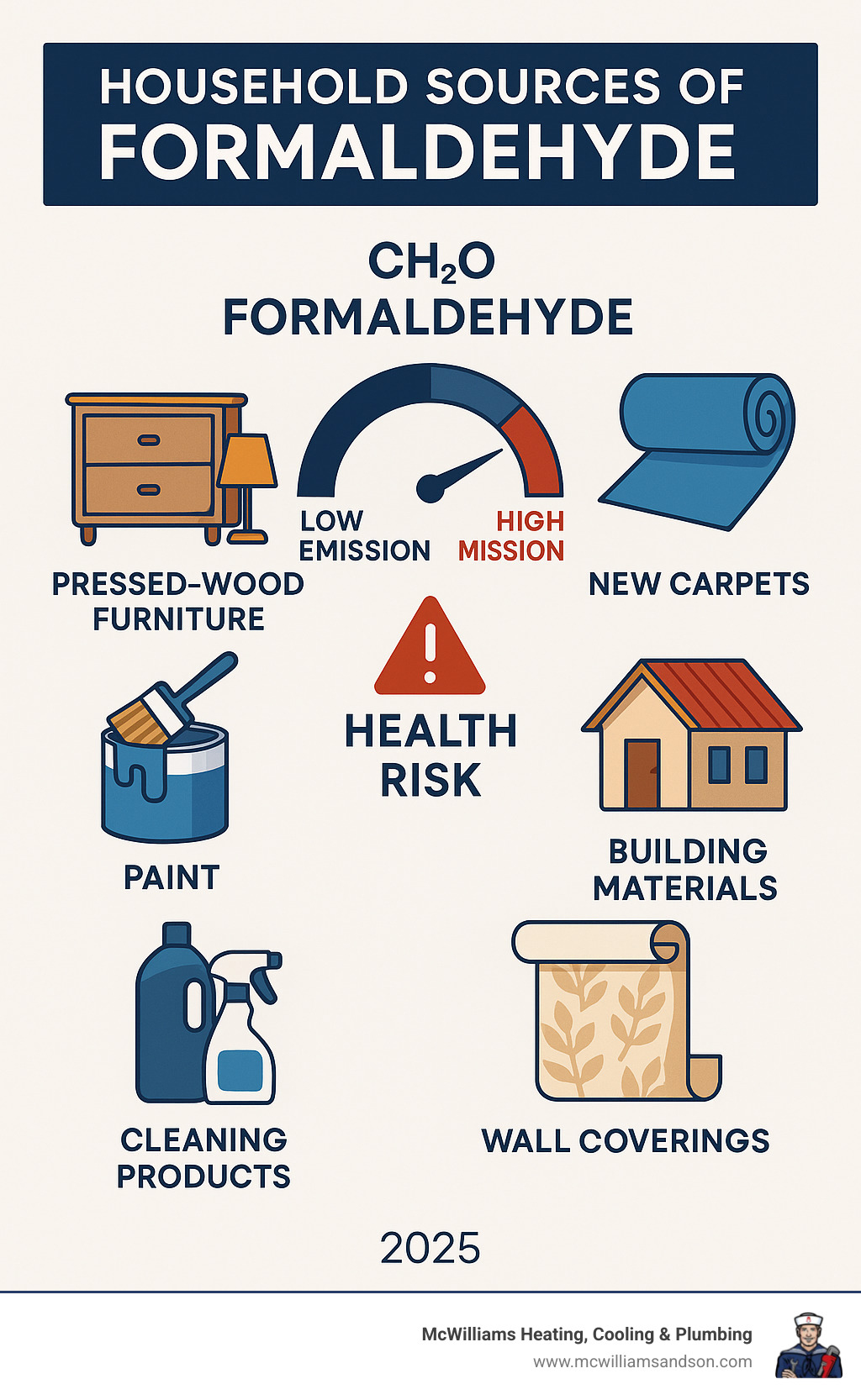
While formaldehyde (CH2O) is a naturally occurring compound, its presence indoors is largely due to its use in manufacturing synthetic resins. That “new furniture” or “fresh paint” smell is often formaldehyde. Other common culprits include floorboards, wallpapers, and certain cleaning products. This invisible threat can lead to a range of symptoms, from watery eyes and coughing to more severe respiratory issues. That’s why understanding and monitoring formaldehyde levels is crucial for maintaining a healthy indoor environment.
Choosing the Right Air Quality Monitor for Formaldehyde
When shopping for an air quality monitor formaldehyde device, it can feel overwhelming. However, knowing what to look for makes finding the right monitor much simpler.
The heart of any reliable formaldehyde detector is its sensor. Electrochemical sensors are your best bet for accuracy, creating an electrical current that matches the amount of formaldehyde in the air. Some newer monitors use semiconductor (MOS) sensors, which can also be effective for detecting formaldehyde alongside other volatile organic compounds.
Accuracy and resolution matter more than fancy features. Look for devices that can measure down to 0.01 PPM for precise readings. You’ll see measurements displayed in either parts per million (PPM) or milligrams per cubic meter (mg/m3).
Data logging is incredibly helpful for tracking patterns over time. Noticing formaldehyde spikes when you make coffee near new cabinets, or when windows are closed in winter, helps you make informed decisions about your indoor air quality.
Smart features like Wi-Fi connectivity and smartphone apps are convenient, especially for smart home setups. But don’t let flashy tech distract you from the basics—accurate sensors and reliable readings should be your top priorities.
Consider whether you need a portable unit for spot-checking or a fixed monitor for continuous surveillance. Portable monitors are perfect for testing new furniture or checking a child’s bedroom, while fixed units offer constant monitoring.
Calibration requirements vary. Some monitors calibrate automatically, while others need periodic fresh air calibration. Knowing what your device requires helps ensure accuracy.
Finally, think about battery life for portable units. Look for devices that offer at least 4 hours of continuous use.
Key Features in an Air Quality Monitor for Formaldehyde

When comparing air quality monitor formaldehyde options, certain features separate the good from the great.
Real-time readings are essential. You want to see what’s happening with your air quality right now. The best monitors update their displays continuously, so you can watch levels change as you open windows or turn on fans.
Understanding PPM vs. mg/m3 units helps you make sense of your readings. Most health organizations, including the CDC, use parts per million (PPM), which makes it easier to compare your readings to safety guidelines.
Audible alarms can be lifesavers. Set your monitor to sound an alert when formaldehyde reaches 0.1 PPM (the CDC’s concern threshold), and you’ll know immediately when action is needed.
Temperature and humidity sensors are quite useful. Both factors affect how much formaldehyde is released from materials. Higher temperatures and humidity typically mean more off-gassing.
TVOC detection broadens your monitoring beyond just formaldehyde. Total Volatile Organic Compounds include other chemicals that can affect your health. Many quality monitors measure both TVOC and formaldehyde.
Connectivity features like Wi-Fi and smartphone apps add convenience. You can check air quality remotely, get alerts on your phone, and track long-term trends.
Display clarity matters. A bright, easy-to-read screen with clear numbers or simple color codes means you’ll actually use your monitor regularly.
Understanding Safe Formaldehyde Levels
Figuring out what formaldehyde levels are safe can be confusing. Here’s what you need to know.
The CDC sets 0.1 PPM as the level where we should be concerned. This is also roughly the concentration where most people can start smelling that sharp, chemical odor. If you can smell it, you’re being exposed to levels that warrant attention.
Short-term exposure to formaldehyde, even below 0.1 PPM, can cause immediate discomfort like watery eyes or throat irritation.
Long-term exposure is where the real health risks lie. Formaldehyde is a carcinogen, meaning prolonged exposure increases your risk of certain cancers. This is why continuous monitoring matters, as low-level exposures add up over time.
Here’s a practical way to think about formaldehyde levels:
| Concentration Level | What It Means | What You Should Do |
|---|---|---|
| ~0.03 PPM | Natural outdoor air levels | This is your baseline – perfectly normal |
| 0.1 PPM | CDC concern threshold | Time to investigate sources and improve ventilation |
| Above 0.1 PPM | Potentially harmful levels | Take immediate action to reduce exposure |
| 0.5 PPM and higher | Dangerous concentrations | Seek professional help immediately |
Individual sensitivity varies widely. Some people, especially those with asthma or chemical sensitivities, may experience symptoms at lower concentrations. Children and elderly family members may also be more susceptible. The goal is to keep formaldehyde levels as low as reasonably possible.
Types of Formaldehyde Detection Solutions for Your Home
To protect your family from formaldehyde, you have several excellent options. Each type of air quality monitor formaldehyde solution serves different needs and budgets. Let’s walk through what’s available to find the perfect fit for your home.
And here’s the good news: you don’t have to figure this out alone. At McWilliams Heating, Cooling & Plumbing, we support homeowners with everything from helping you choose the right consumer device to providing professional-grade assessments.
Portable & Handheld Monitors
Portable monitors are incredibly handy and perfect for getting started. These battery-powered devices let you play detective, moving from room to room to check formaldehyde levels wherever you suspect trouble.
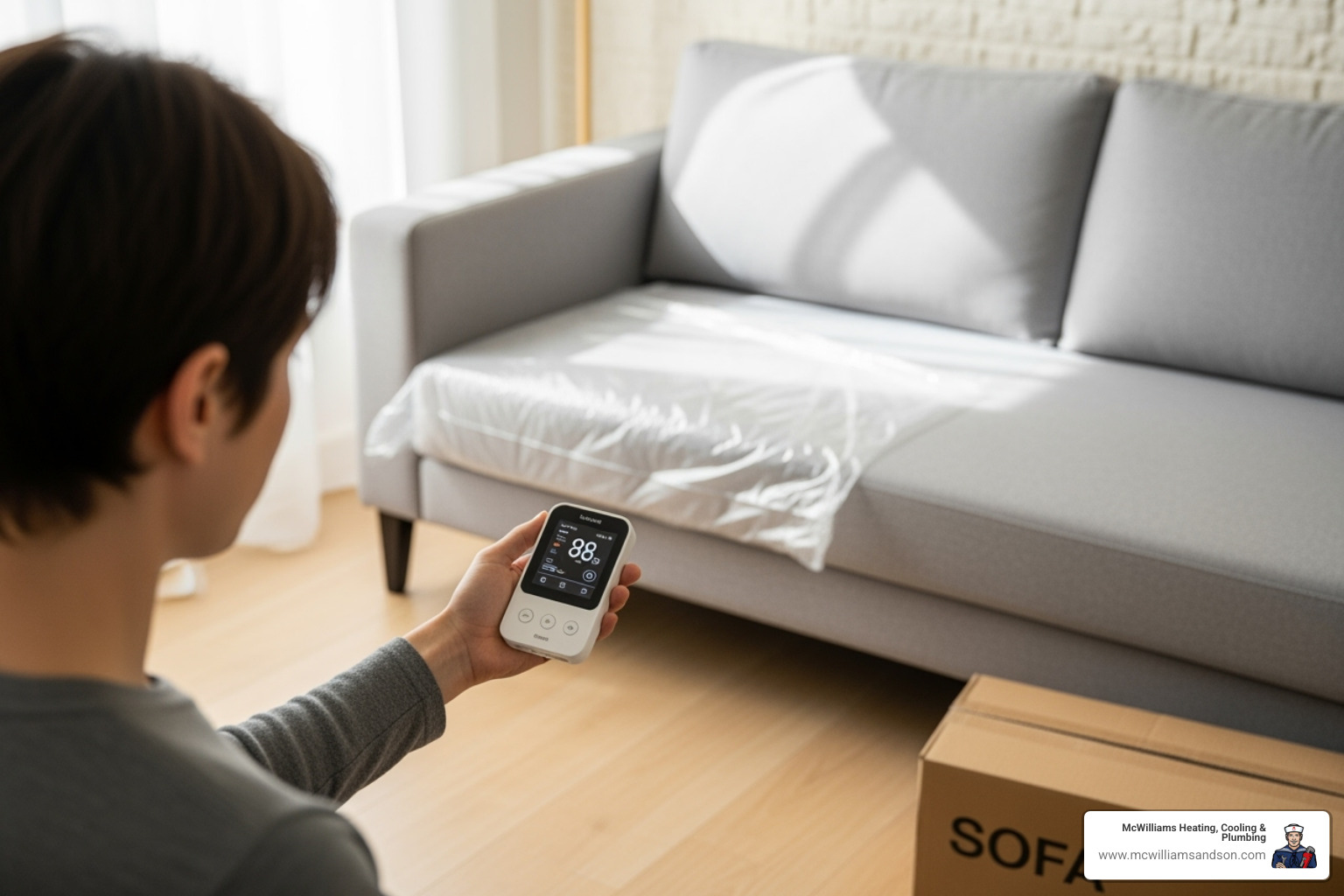
The beauty of these devices is their simplicity and convenience. You can test that new dresser, check the air near a freshly painted bathroom, or even test a potential new apartment. Most portable units run for several hours on a single charge, giving you plenty of time to investigate.
These monitors are especially ideal for renters who can’t make permanent changes. If you find high formaldehyde levels from a specific piece of furniture, you can address just that source.
The main limitation is that they’re not great for long-term tracking. They provide snapshots rather than a continuous view of your home’s air quality. However, they are an excellent first step before deciding whether to invest in more comprehensive monitoring or seek professional indoor air quality services.
Integrated Home Air Quality Solutions
For the premium experience in air quality monitoring, integrated systems watch over your family’s air 24/7. Instead of spot-checking, you get continuous monitoring that tracks formaldehyde along with other important pollutants.
What makes these systems special is their smart home integration and historical tracking. Imagine getting a notification on your phone that formaldehyde levels just spiked in your living room. You might realize it coincides with a new bookshelf being delivered—now you know the cause.
These comprehensive systems track multiple pollutants at once, including CO, CO2, other VOCs, particulate matter, temperature, and humidity. The app-based controls let you see trends over time, helping you understand if your air quality is improving.
The real advantage comes when you pair these systems with professional IAQ services from McWilliams Heating, Cooling & Plumbing. We can help you interpret the data, understand the trends, and recommend the most effective solutions for your specific situation.
Professional Indoor Air Quality Assessments
Sometimes you need to call in the experts. Professional assessments offer the highest level of accuracy, using specialized equipment that goes far beyond consumer devices. Our certified technicians at McWilliams bring years of experience and professional-grade tools to give you the complete picture.
Consider a professional assessment if: family members have ongoing respiratory issues, your consumer monitor shows consistently worrying readings, after major renovations, before purchasing a home, you suspect hidden formaldehyde sources, or you need expert guidance on remediation.
Professional assessments provide in-depth analysis that consumer devices can’t match. We can verify your monitor readings, identify missed sources, and create a custom action plan. Think of it as getting a complete diagnosis rather than just checking your temperature.
At McWilliams Heating, Cooling & Plumbing, we’ve been helping families across the Greater Texas Area breathe easier for over 50 years. Our professional indoor air quality services are available throughout Katy, Nacogdoches, Lufkin, Livingston, and the surrounding areas. We’ll identify problems and recommend practical, effective solutions.
What to Do When You Detect High Formaldehyde Levels
Finding high formaldehyde levels with your air quality monitor formaldehyde device can be alarming, but there are proven ways to tackle this problem and protect your family.

The first thing to remember is that ventilation is your immediate best friend. Opening windows and doors dilutes the formaldehyde with fresh outdoor air. Run your bathroom and kitchen exhaust fans, even when not in use. Turn on ceiling fans to keep air moving. This increased air exchange helps your house exhale trapped chemicals.
Source control is the next step. That new bookshelf or fresh paint could be the culprit. Identifying and removing offending materials is often the most effective long-term solution. If you can’t remove the source, like built-in cabinets, you can seal unfinished surfaces to lock in emissions.
Air purification adds another layer of protection. Activated carbon filters work like sponges, soaking up gaseous pollutants like formaldehyde and other VOCs. While HEPA filters are for dust and particles, they won’t directly capture formaldehyde gas, but they can catch particles it may be attached to.
When these steps aren’t enough, professional solutions and recommendations are essential. At McWilliams Heating, Cooling & Plumbing, we help families tackle formaldehyde with advanced air filtration, mechanical ventilation, and thorough indoor air quality assessments.
How an HVAC System Can Help
Your HVAC system can be a powerful ally in fighting formaldehyde. Most homeowners don’t realize its potential beyond just temperature control.
Whole-home filtration can start with upgrading your air filter to a higher-MERV rating to trap smaller particles. For even better protection, whole-house air cleaning systems integrate into your ductwork, cleaning all the air that circulates through your home.
Mechanical ventilation through HRV and ERV systems provides a controlled breathing system for your house. Heat Recovery Ventilators (HRVs) and Energy Recovery Ventilators (ERVs) bring in fresh outdoor air while pushing out stale indoor air, and they save energy while doing it. This continuous air exchange is incredibly effective at diluting formaldehyde.
Humidity control plays an important role. High humidity can increase formaldehyde off-gassing. Your air conditioner removes moisture from the air, and maintaining optimal humidity levels (30-50%) can slow the release of formaldehyde.
A professional assessment can reveal opportunities you might not have considered. Our team at McWilliams Heating, Cooling & Plumbing has over 50 years of experience creating healthier homes. We can evaluate your current system and recommend customized upgrades that fit your situation and budget.
For more information about how we can help improve your home’s air quality through smart HVAC solutions, check out our indoor air quality services page.
Frequently Asked Questions about Formaldehyde Monitors
We get lots of questions from homeowners about air quality monitor formaldehyde devices. Here are answers to the most common concerns.
How accurate are consumer-grade formaldehyde detectors?
Accuracy varies depending on the price and technology of the device.
Sensor type matters tremendously. The most reliable consumer monitors use electrochemical sensors specific to formaldehyde. However, many cheaper devices use sensors with cross-sensitivity issues, meaning they react to other gases, which can cause false readings.
Even a less-than-perfect consumer device can still be a useful early warning system. They’re great at indicating a potential problem, even if they don’t provide laboratory-precise numbers.
Calibration importance can’t be overstated for meaningful results. If you get consistently high readings, verifying with professional assessments is always the smart move.
How often should I calibrate my formaldehyde monitor?
Calibration keeps your monitor honest, and the schedule depends on your device.
Manufacturer guidelines should always be your starting point. Following their recommendations will keep your device working properly.
Self-calibrating models are becoming more common and can make your life easier, though you’ll still want to check on them occasionally.
For most portable monitors, you’ll want to do baseline testing in fresh air before first use and periodically after. This usually means taking the monitor outside for a couple of hours to establish a “clean air” reference point.
Annual professional calibration is recommended for more advanced or permanently installed systems. Sensors naturally drift and become less accurate over time. Most electrochemical sensors last about 2-5 years before they need replacement.
Can I use my nose to detect formaldehyde?
That sharp, chemical smell from new furniture or fresh paint is often formaldehyde. Your nose can be a decent detector.
Formaldehyde has a strong, pickling odor that most people can smell around 0.1 PPM—the same level where the CDC expresses concern. If you smell something sharp and chemical, your nose is likely picking up on formaldehyde.
However, the odor threshold varies from person to person. Some are more sensitive than others.
The bigger problem is olfactory fatigue—your nose gets used to the smell. If you’re constantly exposed to low levels of formaldehyde, your brain starts ignoring the odor, even if dangerous levels persist.
Your nose also can’t tell you the exact concentration in the air. That’s why your nose is a great alarm system, but it’s not a reliable measurement tool for making health decisions.
Scientific research on odor detection levels shows how variable our sense of smell can be, which is why we recommend backing up your nose with an actual air quality monitor formaldehyde device.
Take Control of Your Home’s Air Quality
We’ve explored the hidden dangers of formaldehyde—a toxic chemical and known carcinogen off-gassing from everyday items like furniture and flooring. The health risks range from irritating symptoms like watery eyes to serious conditions like respiratory problems and cancer.
The empowering part is that you don’t have to live with this invisible threat. By monitoring formaldehyde levels with a reliable air quality monitor formaldehyde device, you’re taking the first crucial step to protect your loved ones.
Proactive monitoring gives you the power to act quickly. Whether you choose a portable monitor for spot-checking or an integrated system for continuous protection, you’ll have the data to make informed decisions.
Your action plan starts with simple solutions. Increasing ventilation, identifying and removing the source, and adding air purification with activated carbon filters can all make a real difference.
Don’t forget your HVAC system’s potential as your home’s air quality guardian. Whole-home filtration, mechanical ventilation, and smart humidity control can turn your heating and cooling system into a 24/7 defender against indoor pollutants.
Sometimes, you need the experts. For a complete assessment and professional solutions like advanced filtration and ventilation, trust the team at McWilliams Heating, Cooling & Plumbing. With over 50 years of experience serving families across the Greater Texas Area—including Katy, Nacogdoches, Lufkin, and Livingston—we understand your family’s health can’t wait.
Your family deserves clean, healthy air. Take control of your indoor air quality today, because peace of mind about the air your family breathes is priceless.