
Why Indoor Air Quality Matters for Your Business
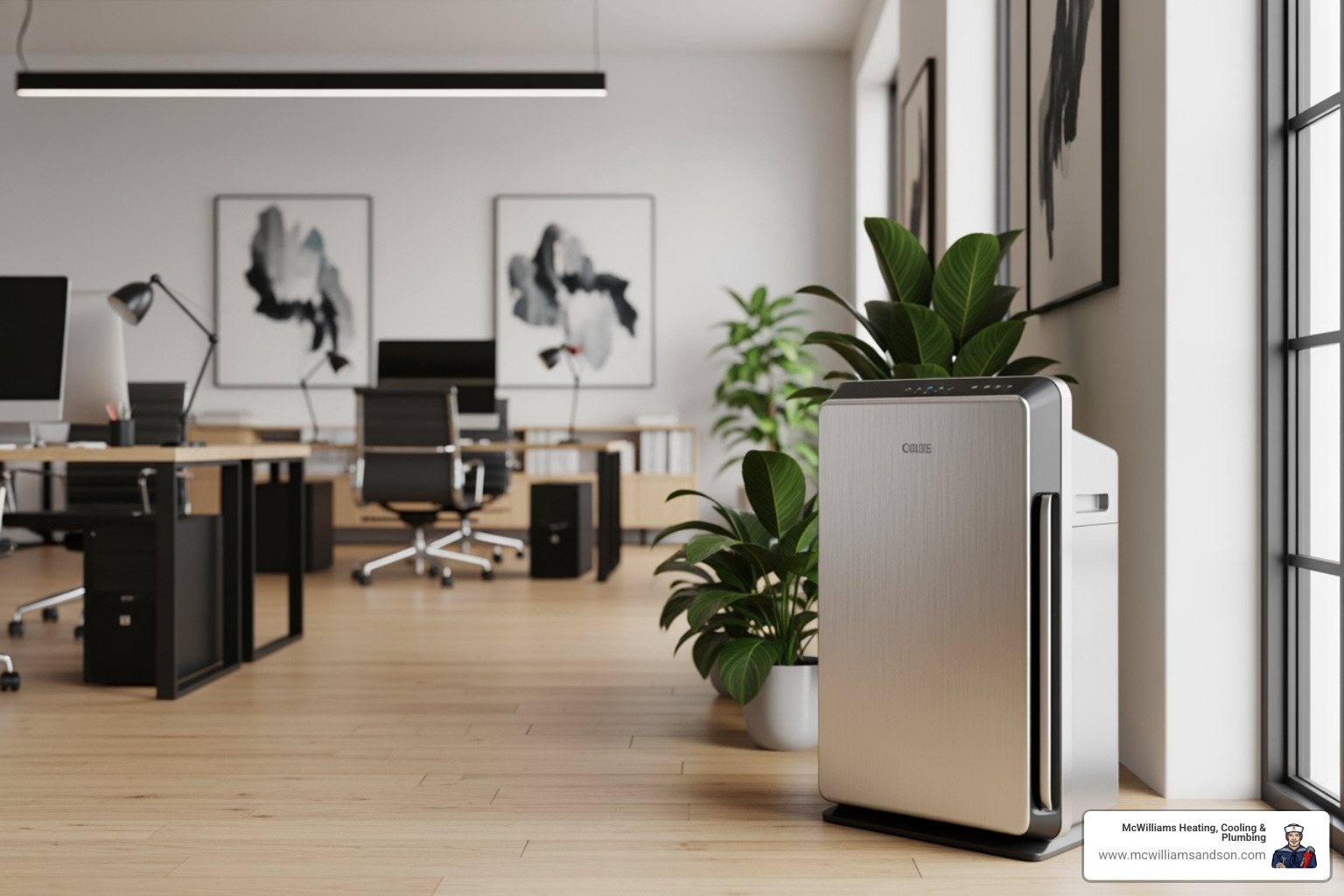
Commercial air purifiers are specialized systems designed for the demanding needs of business environments. Compared to residential models, they offer greater airflow (CFM), longer-lasting filters, and more robust construction for continuous operation.
Key Features of Commercial Air Purifiers:
- High Capacity: 500-2000+ CFM for large spaces (1,000 to 10,000+ sq ft).
- Multi-Stage Filtration: HEPA, activated carbon, and UV-C technologies.
- Durability: Built for high-traffic environments like offices, schools, and healthcare facilities.
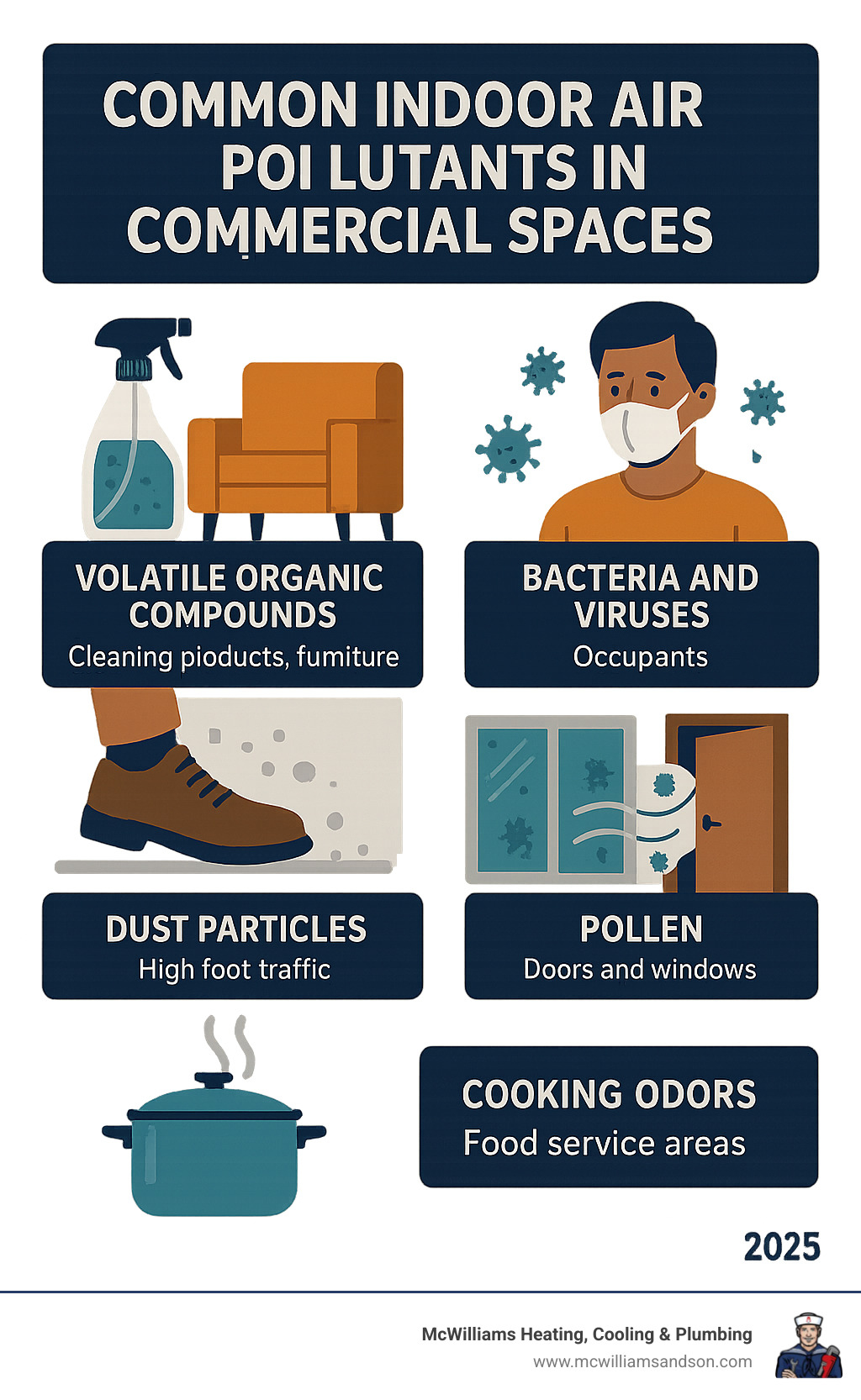
Poor indoor air quality has a real cost. Research shows businesses using these systems see improved productivity and fewer sick days, while schools report up to a 20% reduction in absenteeism. Indoor air can be filled with dust, VOCs, bacteria, viruses, and odors, creating an unhealthy environment for employees and customers.
Modern purifiers use proven technologies to solve these problems. HEPA filters capture 99.97% of particles down to 0.3 microns, activated carbon removes odors and chemical vapors, and UV-C systems can neutralize up to 99% of airborne pathogens. For Texas business owners, investing in commercial air purification protects your people and your reputation.
Why Clean Air is a Smart Business Investment
Commercial air purifiers are an investment in your business’s most valuable assets: your people and your reputation. Improving indoor air quality creates a chain reaction of positive outcomes, from employee wellness to customer confidence.
Clean air leads to reduced sick days, fewer operational disruptions, and increased productivity. Studies show better air quality can improve cognitive performance by up to 15%. It also creates an improved customer experience, signaling professionalism and care that keeps people coming back.
These systems excel at odor removal and allergen reduction, which is crucial during peak allergy seasons. For more strategies, see our guide on Battle Allergy Season with HVAC Upgrades.
Boosting Employee Health and Productivity
Poor indoor air quality is a drain on your workforce, causing respiratory issues, fatigue, and headaches. By eliminating dust, pollen, and mold spores, you create an environment with fewer respiratory issues. This leads to improved concentration and higher cognitive function, as employees are no longer fighting brain fog or sinus problems.
The data on reduced absenteeism is compelling. Schools with advanced air purification report a 20% reduction in absenteeism, a benefit that translates directly to more consistent staffing and better service in a business setting. Investing in your team’s health also boosts morale. For more tips, explore our 5 Simple Tips for Improving Indoor Air Quality in Huntsville, TX.
Creating a Safer Environment for Customers
Air quality creates a powerful positive first impression. Clean air signals professionalism, while stale odors can turn customers away. In today’s health-conscious world, investing in air purification is a form of health-conscious branding that builds trust and safety perception.
This is especially vital for restaurants, healthcare facilities, and gyms. Increased visitor comfort means customers stay longer, spend more, and are more likely to return. Furthermore, mitigating airborne illness spread is a critical advantage. Purifiers with HEPA and UV-C technology capture and neutralize pathogens, giving customers the confidence to visit your establishment.
Understanding Commercial Air Purifier Technologies
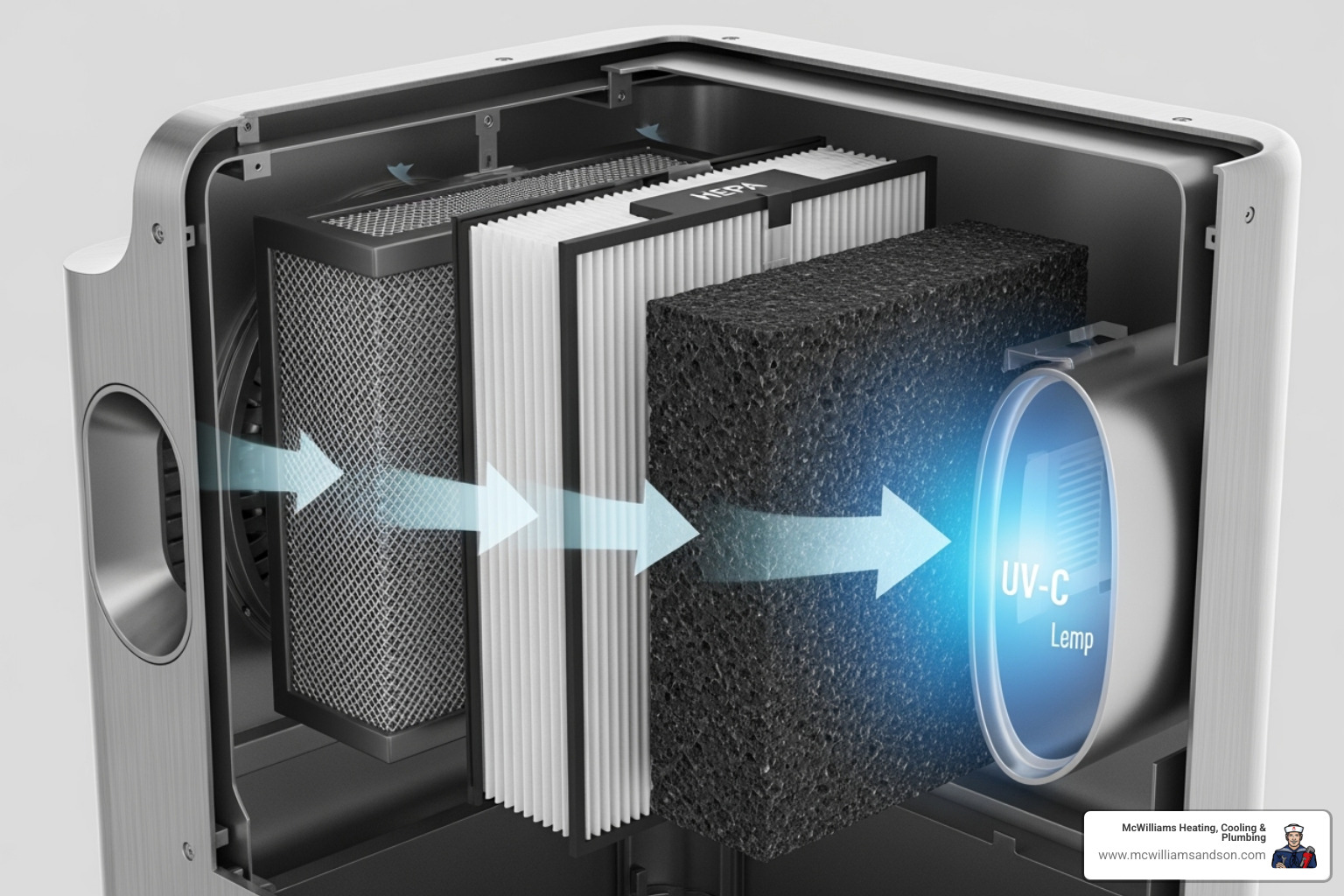
Commercial air purifiers use a multi-stage approach to clean the air, with each technology targeting different pollutants. Key performance metrics include Air Changes Per Hour (ACH), which measures how often a room’s air is cleaned, and the Clean Air Delivery Rate (CADR), which shows how quickly specific pollutants are removed.
Mechanical Filtration: HEPA and MERV
The core of most systems is mechanical filtration. HEPA filters are the gold standard, capturing 99.97% of particles as small as 0.3 microns, including dust, pollen, mold spores, and bacteria. Medical-grade HEPA filters can last 5 to 6 years, making them highly cost-effective.
MERV ratings (1-20) also measure filter effectiveness. While HEPA is superior, MERV 13 filters are common in many systems and meet ASHRAE guidelines for capturing larger particles. For help choosing the right filters, see our Air Filters in Huntsville, TX services.
Gas-Phase Filtration: Activated Carbon
While HEPA filters trap particles, they can’t stop gases or odors. Activated carbon handles this through adsorption, where its porous surface traps gas molecules. It is highly effective at odor removal and capturing Volatile Organic Compounds (VOCs) from cleaning supplies, furniture, and paint. It also neutralizes chemical fumes from industrial processes, making it essential for restaurants, salons, and clinics.
Germicidal Inactivation: UV-C and PCO
For biological threats, germicidal technologies inactivate harmful microorganisms.
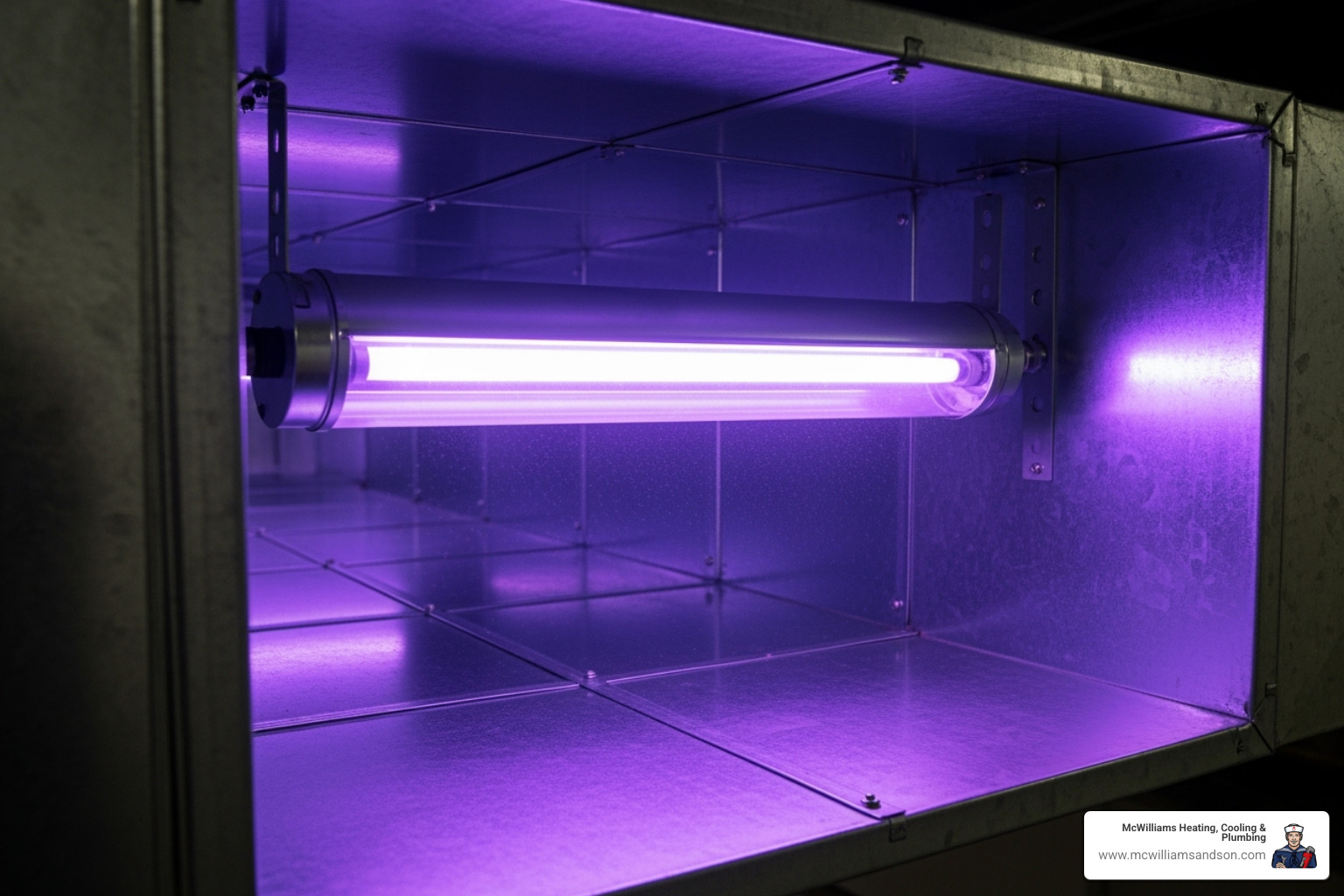
UV-C light damages the DNA and RNA of bacteria, viruses, and mold, preventing them from reproducing. A quality UV lamp can achieve a kill rate approaching 99% with multiple passes and can be integrated into your HVAC system for whole-building protection.
Advanced systems may use Photocatalytic Oxidation (PCO), where UV light reacts with a catalyst to break down VOCs and microorganisms. Others use Dry Hydrogen Peroxide (DHP) to create cleansing molecules that reduce pathogens in the air and on surfaces, with some systems showing a >99.99% reduction of SARS-CoV-2 variants.
Learn more in our guide on How a UV Air Purifier Can Benefit Your Family. For safety information, the CDC provides scientific research on hydrogen peroxide safety.
How to Select the Best Commercial Air Purifiers for Your Business
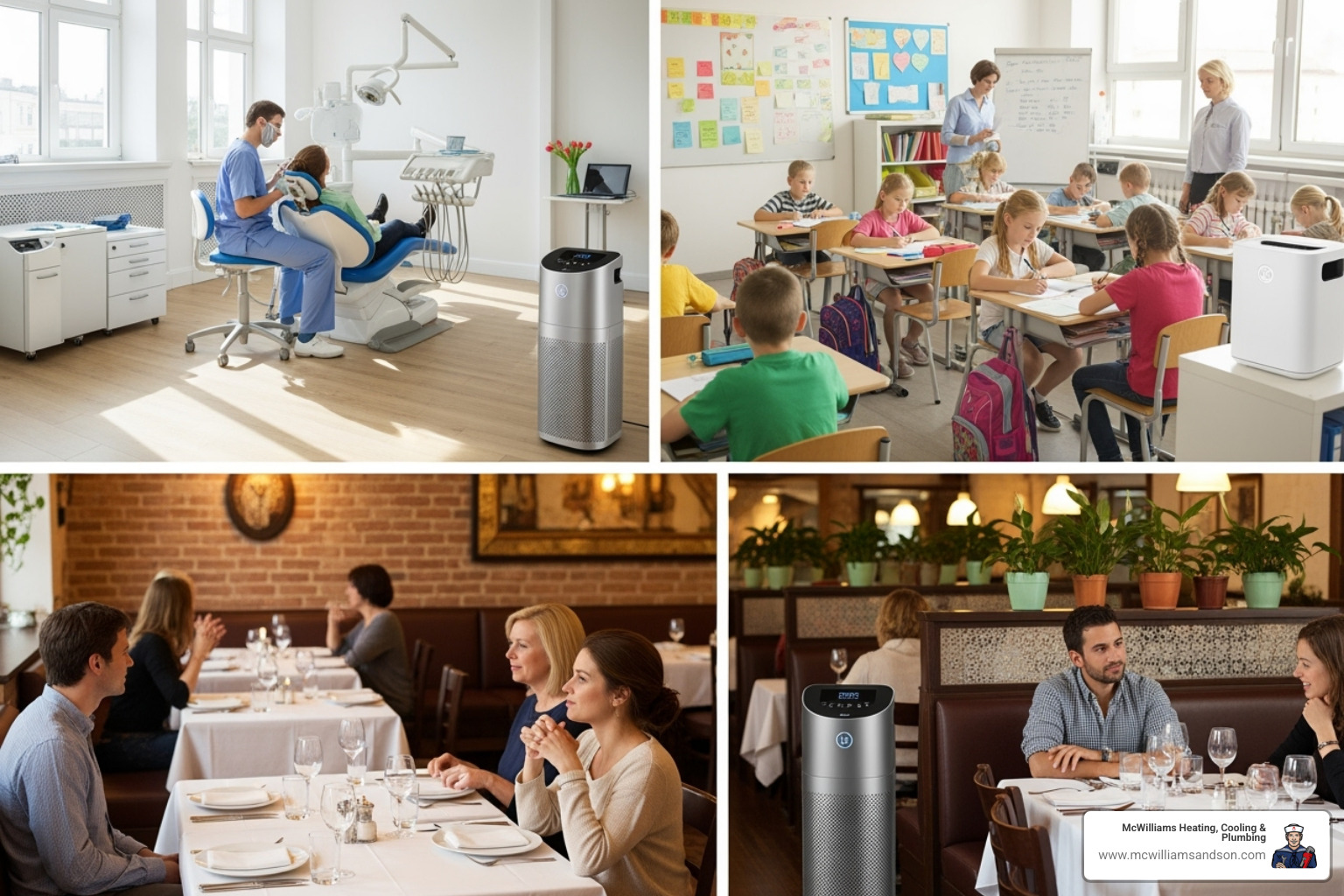
Selecting the right commercial air purifier requires matching the unit to your specific environment and pollutants. A dental office has different needs than a restaurant, so understanding your unique challenges is the first step.
Consider the primary technologies for your needs:
- HEPA filtration is ideal for capturing particles like dust and bacteria in offices, schools, and retail spaces.
- Activated carbon is essential for battling odors, chemicals, and VOCs in restaurants, salons, or industrial facilities.
- UV-C light offers powerful protection against airborne viruses and bacteria, making it crucial for healthcare, schools, and other high-traffic areas.
| Technology | Pollutants Targeted | Maintenance Needs | Ideal Use Cases |
|---|---|---|---|
| HEPA Filtration | Particulates (dust, pollen, dander, mold, bacteria, viruses on particles) | Regular filter replacement (every 6 months to 5 years, depending on usage) | General offices, schools, healthcare (for particle control), retail, homes |
| Activated Carbon | VOCs, odors, chemical fumes, smoke | Regular filter replacement (every 6 months to 2 years) | Restaurants, salons, industrial facilities, pet care, areas with strong odors |
| UV-C Light | Viruses, bacteria, mold spores (airborne) | UV bulb replacement (every 9-12 months) | Healthcare, schools, public transportation, high-traffic areas, HVAC integration |
Sizing and Power: Matching a Unit to Your Space
Proper sizing is critical to avoid wasting money or getting poor results. The key metrics are CFM (Cubic Feet per Minute), which measures airflow, and Air Changes Per Hour (ACH), which tells you how many times the room’s air is cleaned hourly. Most commercial spaces need 4-6 ACH.
A unit’s CFM rating determines its coverage area, with some handling 900 CFM for 1,100 sq ft and others reaching 1,900 CFM for 2,400 sq ft. For larger spaces like warehouses, multiple units can be “daisy-chained” or stacked to increase cleaning power.
Key Differences Between Commercial and Residential Units
While residential units may seem cheaper upfront, they are a poor long-term investment for businesses.
- Durability: Commercial units use 22-gauge steel and are built to run continuously for over 20 years, unlike plastic residential models.
- Capacity: Commercial purifiers process thousands of CFM to handle high traffic and pollutant loads, far exceeding residential capacity.
- Filter Lifespan: A commercial medical-grade HEPA filter can last 5 to 6 years, while residential filters need replacement every 6-12 months.
- Efficiency: Commercial units are engineered for efficiency, often using 3 to 6 times less energy than consumer fans while moving more air. They also use sealed, all-metal housing to prevent off-gassing.
For comprehensive solutions, consider Whole House Air Filtration in Huntsville, TX for building-wide protection.
Long-Term Value and Maintenance
The true value of commercial air purifiers is revealed in their total cost of ownership. While the initial price is higher than residential units, their long-term economics are far superior. Quality commercial systems are built with energy-efficient components that reduce monthly electricity bills and are designed to last over 20 years with proper care. This makes them a more cost-effective investment over time compared to frequently replacing cheaper, less durable units.
Maintenance Requirements for Commercial Air Purifiers
Commercial systems are designed for low-maintenance operation in busy environments.
- Filter Replacement: This is the main task, but it’s infrequent. Medical-grade HEPA filters last 5 to 6 years, while activated carbon filters need changing every 6 months to 2 years. Many units have indicators that tell you exactly when a change is needed.
- Pre-filter Cleaning: A simple monthly rinse of the washable pre-filter protects the more expensive main filters and extends their life.
- UV Bulb Replacement: For systems with UV-C technology, the lamp should be replaced every 9-12 months to maintain its germ-killing effectiveness.
- System Checks: A quick visual inspection every few months helps catch minor issues early.
To further improve your air quality, consider how to Improve Air with Duct Cleaning.
Innovations in Air Purification Technology
Modern commercial air purifiers are smarter and more efficient than ever.
- Smart Sensors: Built-in IAQ monitors track pollutants and trigger automatic mode adjustments, optimizing performance and saving energy.
- Energy-Efficient Fans: New fan technology delivers powerful airflow with minimal electricity consumption, leading to significant long-term savings.
- Quieter Operation: Innovations in sound attenuation allow some commercial-grade units to operate at remarkably low noise levels (43-48 dBA), making them suitable for offices and classrooms.
- Sustainable Materials: Many manufacturers are now using more recyclable and environmentally friendly components.
These advances make today’s purifiers intelligent, adaptable systems that deliver better results with less hassle.
Frequently Asked Questions about Commercial Air Purifiers
Business owners often have questions about the health, safety, and financial wisdom of investing in commercial air purifiers. Here are answers to the most common inquiries.
What is the role of commercial air purifiers in reducing the spread of airborne illnesses?
Commercial air purifiers are a key part of a layered safety approach to reduce airborne illness transmission. They work in two main ways:
- Aerosol Capture: HEPA filters trap 99.97% of airborne particles as small as 0.3 microns, including the tiny droplets that carry viruses and bacteria.
- Virus Inactivation: Technologies like UV-C light damage the genetic material of pathogens, neutralizing them so they cannot cause illness.
By continuously cleaning the air, these systems reduce the overall concentration of harmful microorganisms, lowering the risk of exposure for everyone in your facility. This aligns with CDC and ASHRAE recommendations for creating safer indoor spaces.
Can I use a commercial-grade air purifier in my home?
While it might seem like a powerful solution, using a commercial air purifier at home is generally not recommended. Key issues include:
- Noise Levels: Commercial units are built for performance and can be loud (often 43-70 dBA), which is disruptive in a home setting.
- Power Consumption: Their high capacity means they use more electricity than necessary for a typical residence.
- Oversizing: A unit designed for a large office can create uncomfortable drafts and is inefficient in a smaller home.
A high-quality residential or whole-house system is a better fit for home use. For more on this, see our guide on 3 Reasons Air Purifier Will Help You Breathe Easy This Summer.
How do I know if my business needs an air purifier?
Your business would likely benefit from a commercial air purifier if you notice any of the following signs:
- High Foot Traffic: Retail stores, restaurants, and busy offices constantly introduce new pollutants.
- Persistent Odor Issues: Lingering smells from cooking, chemicals, or general stuffiness are a clear indicator.
- Sensitive Individuals: Schools, healthcare facilities, and senior living communities require the highest level of air purity.
- Poor Ventilation: Older buildings or spaces with few windows often trap pollutants indoors.
- Local Air Quality Alerts: If your area suffers from pollution, smog, or wildfire smoke, those contaminants get inside.
- Industry-Specific Needs: Salons, workshops, and manufacturing facilities have unique pollutants that require specialized filtration.
Conclusion
Investing in commercial air purifiers is a smart business decision that demonstrates a commitment to your employees and customers. Clean air leads to healthier, more productive employees, fewer sick days, and a better customer experience. With advanced technologies like HEPA filtration and UV-C sterilization, today’s systems are more effective than ever.
The formula is simple: fewer sick days + higher productivity + happier customers = a stronger bottom line. More importantly, you create an environment where people feel safe and valued.
For over 50 years, McWilliams Heating, Cooling & Plumbing has helped Texas businesses improve their indoor environments. Serving Katy, Nacogdoches, Lufkin, and Livingston, our team is available 7 days a week to find the right solution for your unique needs. We offer free in-home estimates and flexible financing to make the process easy.
Don’t let poor air quality hold your business back. An investment in commercial air purifiers pays long-term dividends in health, satisfaction, and peace of mind.
Ready to take the next step? Explore our Indoor Air Quality services and find out how we can help your business breathe easier.