
Why Energy Efficient HVAC Systems Are Essential for Texas Homeowners
For Texas homeowners facing soaring energy costs, an energy efficient HVAC system is essential. It can cut your annual energy bill by nearly $140 while keeping your home comfortable year-round.
Quick Answer: Energy Efficient HVAC Systems
- Cut energy costs by up to 20% through better equipment and duct sealing.
- Save $140+ annually with ENERGY STAR certified equipment.
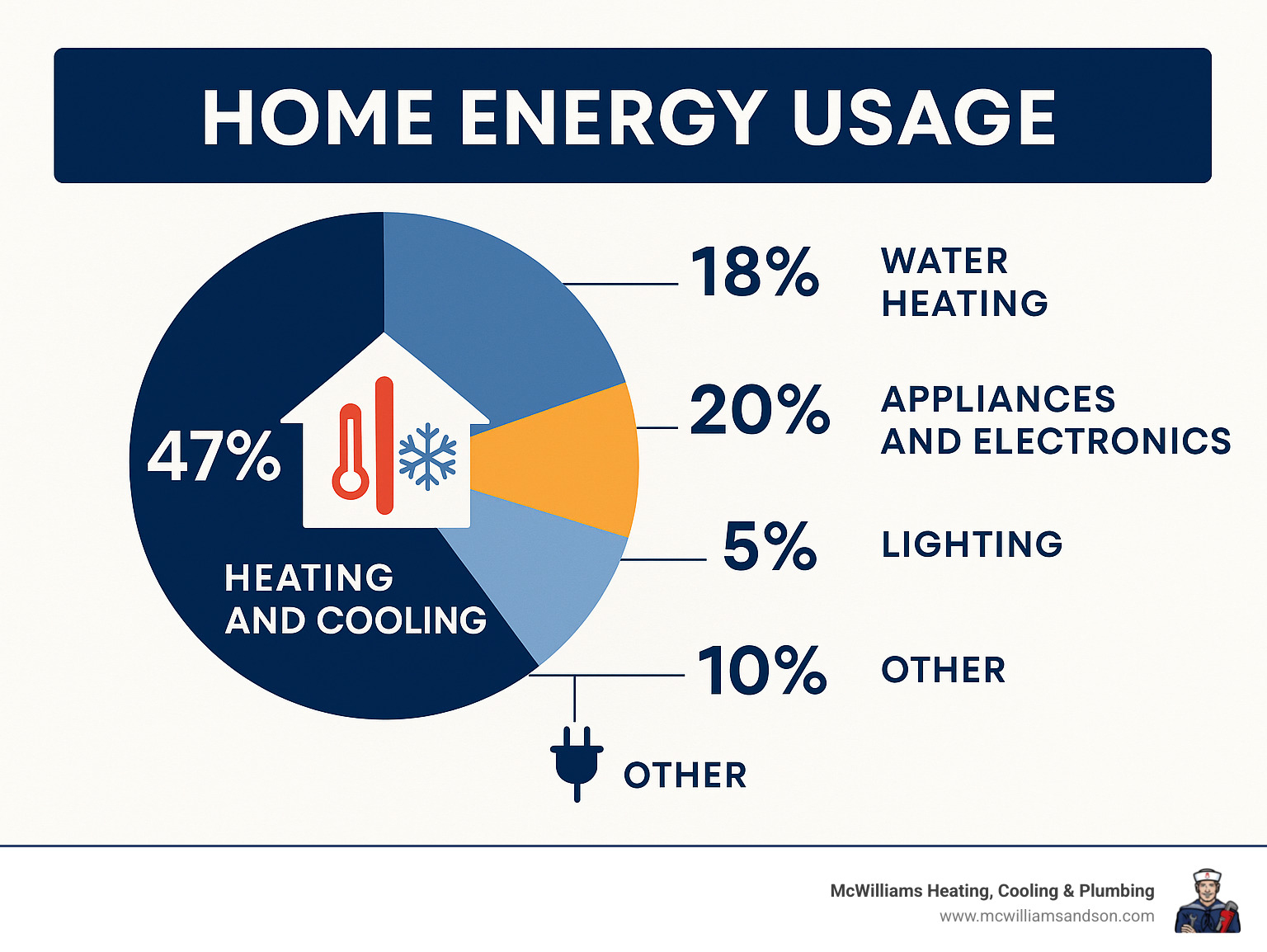
- Reduce energy use, as heating and cooling account for nearly 50% of home energy consumption.
- Top options include: Heat pumps (SEER 20-25), high-efficiency furnaces (90%+ AFUE), and ductless mini-splits.
- Key ratings: SEER for cooling, AFUE for heating, HSPF for heat pumps (higher numbers = better efficiency).
Nearly half of the energy used in your home goes to heating and cooling. In Texas, where air conditioners work overtime, that percentage can be even higher. When an old system fails and repair bills climb, an efficient replacement is about taking control of your energy costs.
Modern systems also provide better comfort control, run quieter, and often come with extended warranties. With federal tax credits up to $2,000 for qualified heat pumps and local utility rebates, the investment pays for itself quickly. Plus, high-efficiency systems significantly reduce greenhouse gas emissions, lowering your home’s carbon footprint.
This guide covers everything from decoding efficiency ratings to choosing the right system for your Texas home.
Understanding and Choosing Your Energy-Efficient HVAC System
Choosing an energy efficient HVAC system is an impactful decision for your home’s comfort and budget. The best system depends on your home’s size, layout, insulation, and the Texas climate. Let’s explore the key factors to make an informed choice.
Decoding Efficiency Ratings (SEER, AFUE, HSPF)
Think of these ratings as the MPG for your HVAC system: the higher the number, the more efficient it is.
- Seasonal Energy Efficiency Ratio (SEER): Measures an air conditioner’s or heat pump’s cooling efficiency over a season. The most efficient systems have SEER ratings around 20-28. To meet ENERGY STAR specifications, the minimum SEER rating is 14.5. Upgrading from a lower SEER unit can lead to significant savings. Learn more about What is SEER?.
- Energy Efficiency Ratio (EER): Measures cooling efficiency at peak conditions (e.g., 95°F outside). It’s a snapshot of performance, with the most efficient systems rated at 13 EER or more.
- Annual Fuel Utilization Efficiency (AFUE): Applies to furnaces and boilers, indicating how efficiently they convert fuel to heat. An AFUE of 90% means 90% of the fuel becomes heat for your home. High-efficiency furnaces have an AFUE of 90% or higher. For more details, see High-efficiency furnaces.
- Heating Seasonal Performance Factor (HSPF): Measures a heat pump’s heating efficiency over a season. A higher HSPF indicates greater efficiency.
Types of Energy-Efficient HVAC Systems
The world of energy efficient HVAC system options is broad, offering solutions for every home.
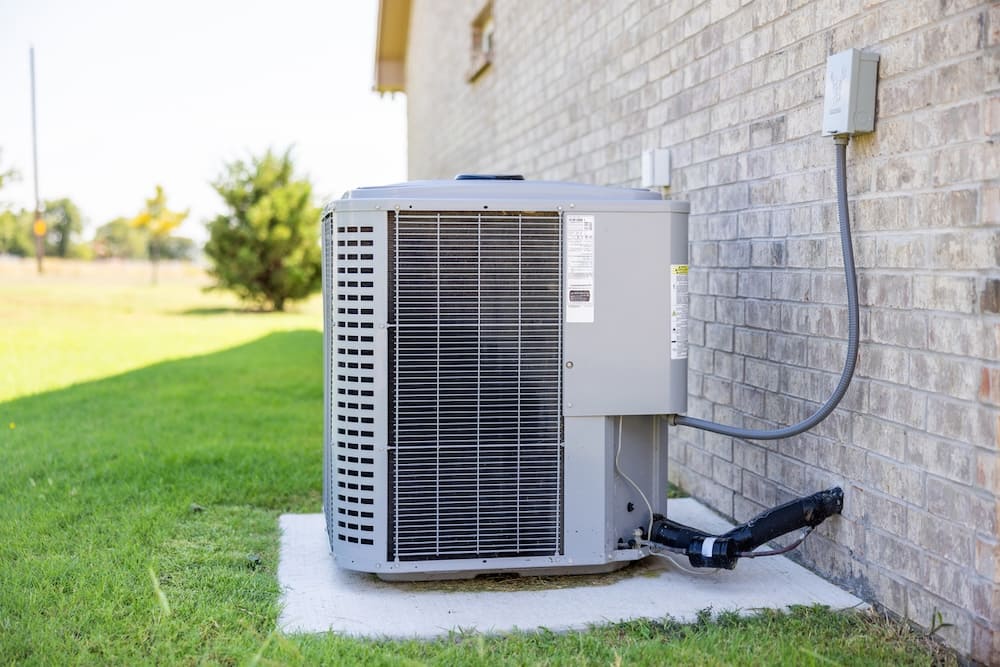
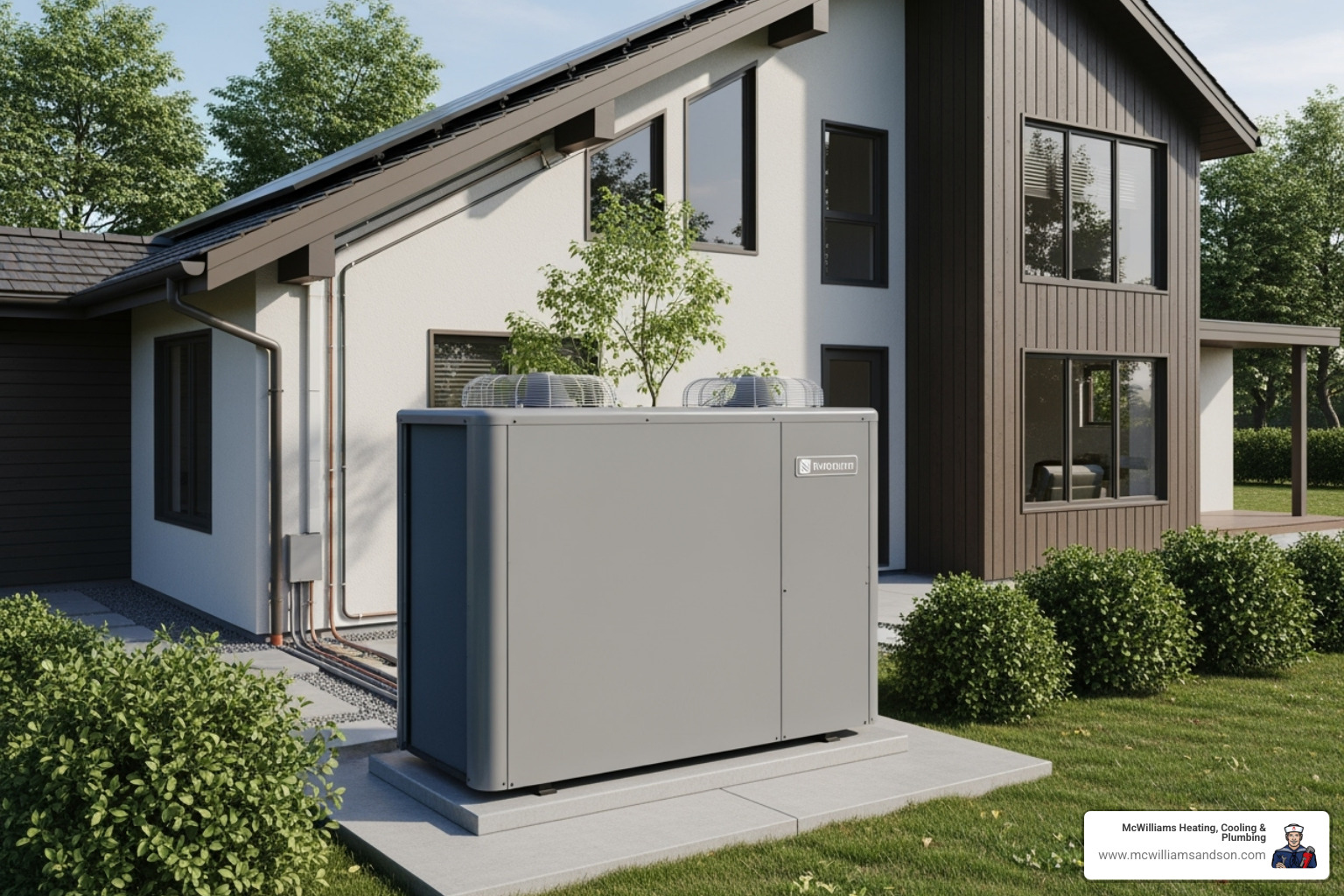
- Heat Pumps: These versatile systems provide both heating and cooling by moving heat rather than generating it. This transfer process makes them incredibly efficient, with SEER ratings of 20-25. According to the U.S. Department of Energy, modern heat pumps can reduce electricity use for heating by about 65% compared to electric resistance heating. They are available as air-source (most common) or geothermal models. For more on their function, visit Heat pumps.
- High-Efficiency Furnaces & ACs: For homes with a traditional split system, high-efficiency models offer significant improvements. High-efficiency furnaces convert 90% or more of their fuel into heat, while high-efficiency central air conditioners can achieve SEER ratings around 20. This pairing offers excellent efficiency for those who prefer a dedicated heating solution. We offer comprehensive services for Energy Efficient Heating.
- Ductless Mini-Splits: Ideal for homes without ductwork or for creating zoned comfort, these systems are flexible and efficient. They consist of an outdoor unit connected to indoor units, eliminating the 20-30% energy loss associated with leaky ducts. They offer personalized comfort control but may not be ideal for very large homes. Explore the Benefits of Ductless Mini Split Installation and Ductless Heating & Cooling.
The ENERGY STAR Advantage
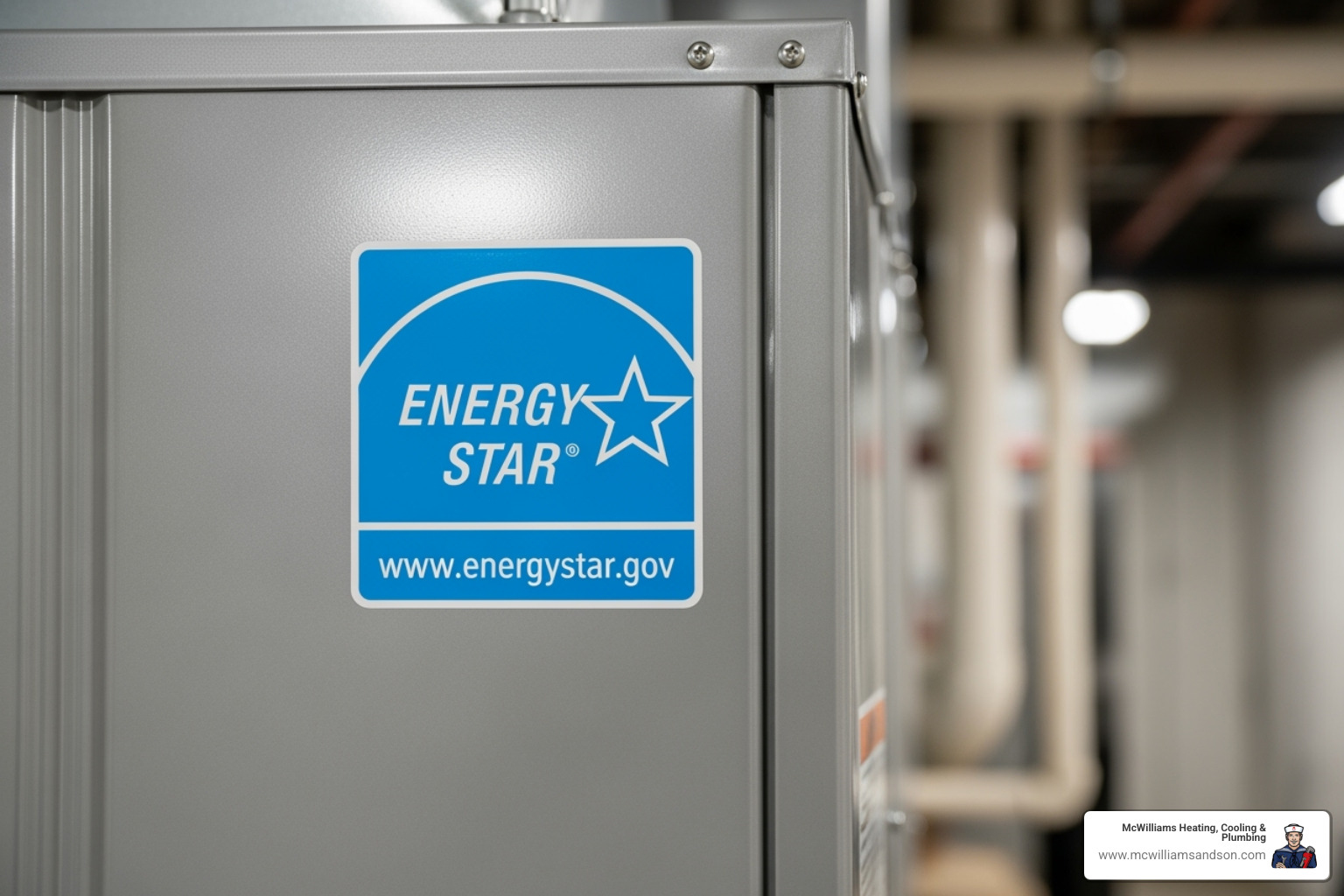
The ENERGY STAR label from the U.S. EPA guarantees a product meets strict energy efficiency guidelines. Choosing an ENERGY STAR certified system is a straightforward way to ensure you’re getting a reliable and efficient product.
ENERGY STAR certified equipment can cut your annual energy bill by nearly $140. For homes with high heating and cooling bills, an ENERGY STAR certified smart thermostat can save about $100 a year. Look for the “ENERGY STAR Most Efficient” designation for top-tier products.
Key Factors That Impact HVAC Performance
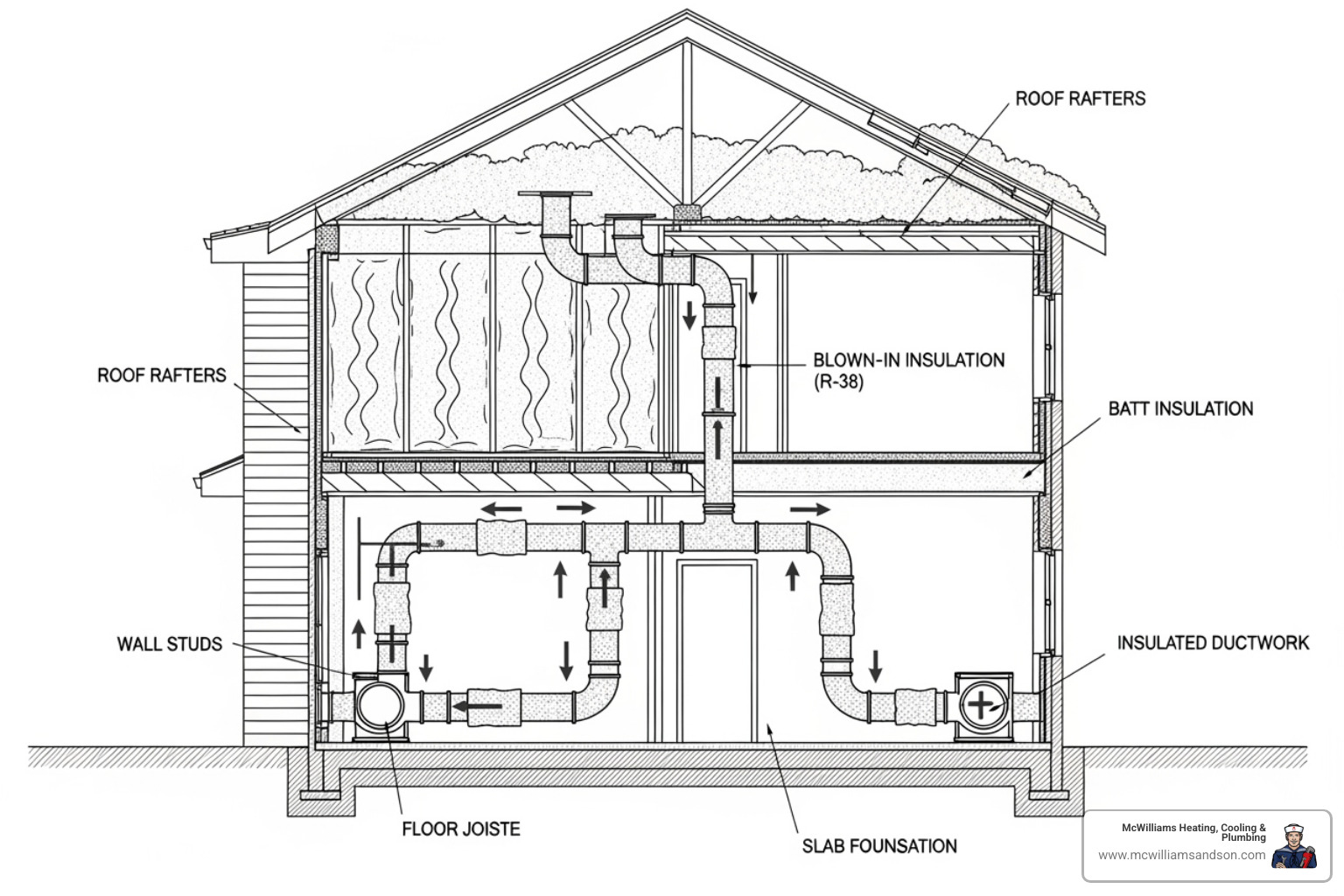
An energy efficient HVAC system is only as good as the home it serves. Your system works with your home’s insulation, ductwork, and overall construction. When these elements work together, you get maximum comfort and savings. If they don’t, you may wonder why your energy bills are still high despite a new high-efficiency unit.
Proper System Sizing
One of the biggest mistakes in HVAC is the “bigger is better” mentality. An oversized system cools your home too quickly, shutting off before it can properly dehumidify, resulting in a cold, clammy feeling. It also wears out components faster and wastes energy. An undersized system runs constantly, struggling to keep up, which skyrockets energy bills and reduces comfort.
A Manual J load calculation is the professional standard for determining the correct system size. This detailed analysis considers everything from ceiling height to window direction. A qualified contractor will perform this calculation to find the perfect size for your home. For more insights, check our guide on Choosing the Right AC for Your Home.
Your Home’s Envelope: Insulation and Climate
Your home’s “envelope” is its first line of defense against the Texas climate, from 100-degree summers to winter freezes. Good insulation in your attic, walls, and floors acts as a thermal barrier, keeping heat out in the summer and warmth in during the winter. Without it, even the best HVAC system will struggle.
Air leaks around windows, doors, and plumbing connections also sabotage efficiency by letting conditioned air escape. Sealing these gaps is crucial, especially given our extreme temperature swings that can create new gaps over time. A well-sealed and insulated home ensures comfort no matter the weather.
The Critical Role of Ductwork
In a typical home, 20-30% of the air moving through ducts is lost to leaks, holes, and poor connections. This conditioned air ends up in your attic or crawlspace, doing no good. Imagine paying to cool air only to have a third of it disappear before it reaches your living room.
Duct sealing can dramatically improve system performance by 20% or more. Professionals use mastic sealant or metal-backed foil tape to seal leaks properly. Insulating ducts in unconditioned spaces prevents further energy loss. Combining a sealed duct system with an energy efficient HVAC system open ups your equipment’s full potential. Learn more at Why you should seal your ducts.
Maximizing Efficiency with Technology and Professional Care
An energy efficient HVAC system needs smart technology and professional care to deliver the performance you paid for. Modern HVAC technology makes it easier than ever to maximize comfort and savings.
Modern HVAC Technology
Today’s technology works smarter, not harder, to provide precise comfort while cutting energy bills.
Variable-speed compressors are a game-changer. Instead of running at full power, they adjust their output to match your home’s needs. They run at lower speeds for longer periods, maintaining steady temperatures without energy-wasting start-stop cycles. This can lead to up to 50% less energy consumption compared to single-speed units, plus quieter operation and better humidity control.
Smart thermostats act as the brain of your system. They learn your schedule and preferences, automatically adjusting temperatures when you’re away. Homes with high heating and cooling bills can save approximately $100 a year with an ENERGY STAR certified model. Many let you control everything from your smartphone.
Zoning systems create different temperature zones in your home, each with its own thermostat. This allows you to keep common areas comfortable while dialing back unused rooms, leading to significant energy savings.
For more tips, check out our guide on 5 Useful Tips to Improve Your HVAC Efficiency.
Professional Installation and Maintenance
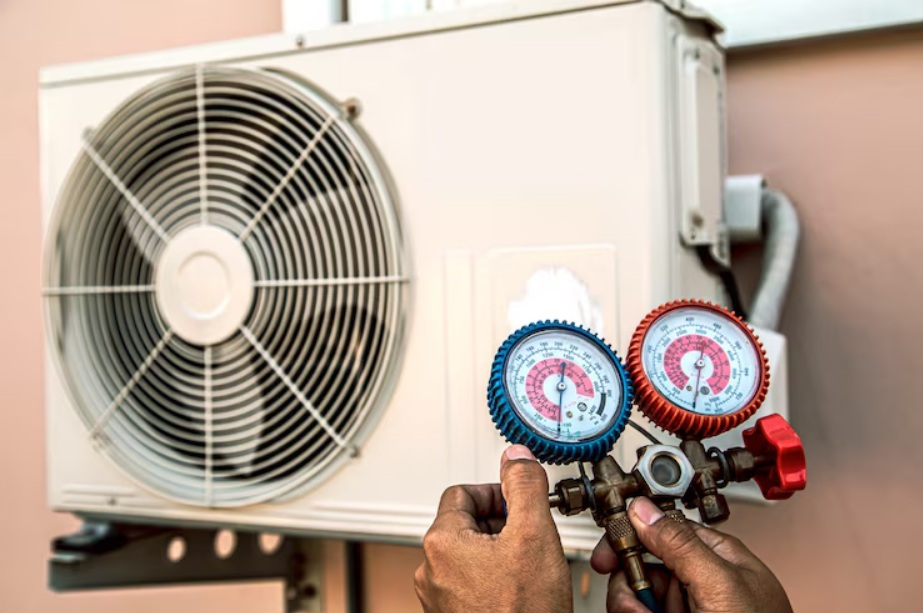
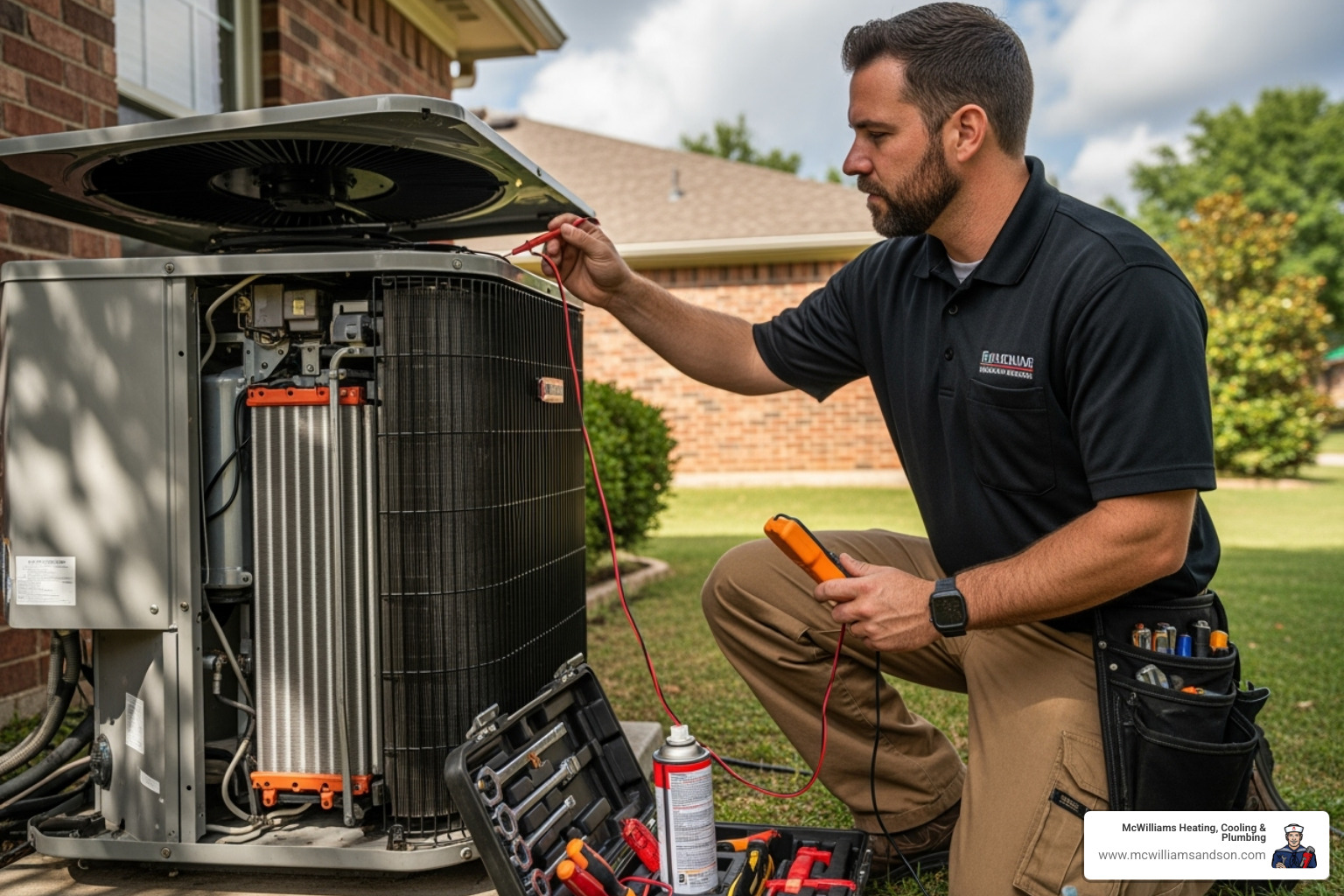
Even the best energy efficient HVAC system will underperform if not installed and maintained correctly. Professional installation is critical; improper setup can reduce system efficiency by up to 30%. Skilled technicians ensure correct sizing, refrigerant charges, airflow calibration, and leak-free connections. This is Why Successful AC Installation is Necessary for Energy Savings.
Regular maintenance keeps your system running like new. Annual tune-ups (ideally twice a year) are essential for cleaning coils, checking refrigerant levels, and catching small problems early. Filter changes are the simplest DIY task. Check your filter monthly during peak seasons and change it when dirty (at least every three months) to prevent restricted airflow and wasted energy.
Our HVAC Maintenance services protect your investment and keep it at peak efficiency.
Signs You Need a More Energy Efficient HVAC System
Your current system may be signaling it’s time for an upgrade. Watch for these warning signs:
- Rising utility bills without changes in usage.
- Uneven temperatures throughout your home.
- Frequent breakdowns and repair calls.
- System age over 10-15 years.
- Excessive noise like grinding or squealing.
- Poor indoor air quality or humidity issues.
Financials: Incentives and Your Return on Investment
An energy efficient HVAC system is a significant upfront investment, but it’s one of the smartest financial moves for your home. While high-efficiency systems cost more initially, focusing only on the price tag can lead to higher long-term costs from energy bills and repairs.
Tapping into Tax Credits and Rebates
Generous incentives make now a great time to upgrade. The government and utility companies are offering cash to homeowners who choose efficiency.
Federal tax credits through the Inflation Reduction Act (IRA) can provide up to $2,000 for qualifying heat pump installations. These are dollar-for-dollar credits that directly reduce your tax bill. Additionally, state and local programs often offer their own rebates. By combining incentives, homeowners can sometimes cover a significant portion of their upgrade costs.
Check the rebate finder for local offers and learn about homeowner tax credits to maximize your savings.
Calculating Your Long-Term Savings
An energy efficient HVAC system saves you money in several ways over time.
- Lower Energy Bills: Since heating and cooling account for nearly half your energy budget, upgrading from an old 10 SEER system to a modern 20+ SEER unit can cut that portion of your bill significantly.
- Reduced Repair Costs: New systems are more reliable, saving you thousands over a 15-year lifespan in avoided service calls.
- Increased Home Value: Modern, efficient HVAC systems are major selling points for potential buyers.
- Improved Comfort: Better temperature and humidity control improve your quality of life.
When you add up the savings from lower bills, fewer repairs, tax credits, and increased home value, most homeowners find their energy efficient HVAC system pays for itself within 5-8 years. After that, it’s pure savings.
Frequently Asked Questions about Energy-Efficient HVAC
Here are answers to the most common questions we receive from Texas homeowners considering an HVAC upgrade.
What is the most energy-efficient type of HVAC system?
There is no single “best” system for everyone; it depends on your home, climate, and priorities. However, ductless mini-splits and high-SEER heat pumps are consistently top performers. Heat pumps are especially efficient in the Texas climate. Proper sizing and professional installation are more critical to efficiency than the specific type of system you choose.
How much can I really save with an energy-efficient HVAC system?
The savings can be substantial. An ENERGY STAR certified system can save around $140 annually on energy bills. You can save even more by:
- Sealing leaky ducts, which can boost efficiency by up to 20%.
- Installing a smart thermostat, which can save around $100 annually in homes with high energy use.
- Taking advantage of federal tax credits (up to $2,000 for qualifying heat pumps) and local utility rebates.
Since heating and cooling make up nearly half your home’s energy use, these improvements lead to significant long-term savings.
How do I choose the right size HVAC system for my home?
Avoid using “square footage rules of thumb.” The only reliable method is a Manual J load calculation performed by a qualified contractor. This comprehensive analysis considers your home’s insulation, windows, layout, local climate, and more to determine the precise size needed.
An improperly sized system—whether too large or too small—wastes energy and reduces comfort. A professional calculation ensures your new energy efficient HVAC system is perfectly matched to your home, saving you money and frustration.
Conclusion: Accept Sustainable Comfort in Your Texas Home
Investing in an energy efficient HVAC system is about upgrading your home’s comfort while lowering energy costs. It gives your home the ability to stay comfortable while using less energy and saving you money every month.
As we’ve covered, understanding ratings like SEER and choosing the right system type are key. But remember, maximum performance depends on proper sizing, good insulation, sealed ducts, and regular maintenance. The financial benefits are clear: ENERGY STAR systems save nearly $140 annually, and federal tax credits can be as high as $2,000 for qualifying heat pumps. Plus, every efficient system installed helps reduce greenhouse gas emissions.
For over 50 years, McWilliams Heating, Cooling & Plumbing has helped Texas families make smart comfort decisions. We understand that every home and budget is unique. That’s why we offer 7-day-a-week availability, flexible financing, and free in-home estimates to make your upgrade seamless.
If you’re dealing with high bills or an unreliable system, we’re here to help find the perfect solution. Our team will perform proper load calculations and install your new system with the precision required for maximum efficiency and longevity.
Ready to upgrade to a high-efficiency heat pump in Huntsville, TX? Let’s start the conversation about bringing sustainable comfort to your Texas home.