
Why HEPA Air Cleaners Are Essential for Texas Allergy Sufferers
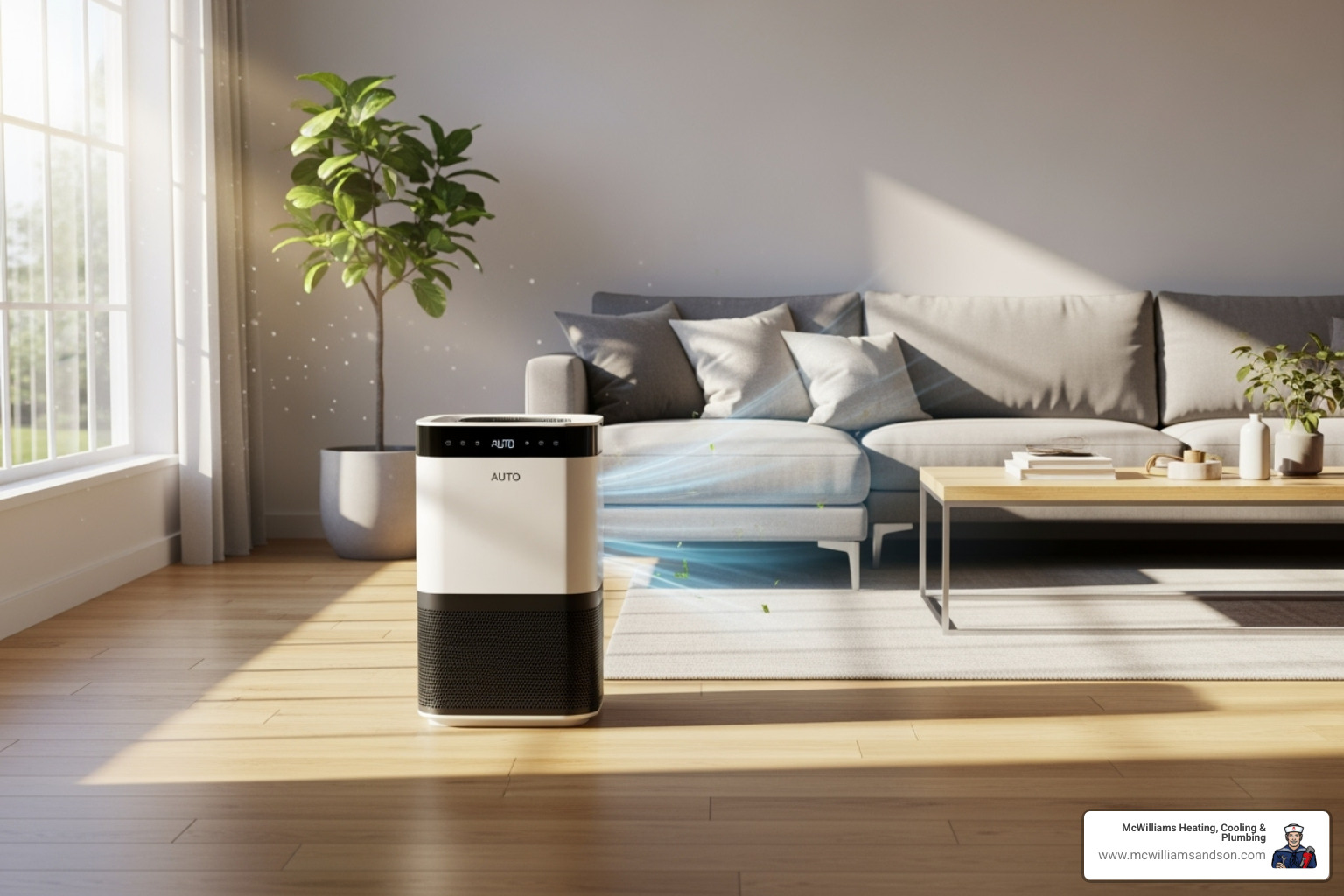
If you’re dealing with sneezing, watery eyes, or congestion in your own home, a hepa air cleaner for allergies could be the game-changer you need. Texas homes face unique challenges with cedar pollen, dust, and high humidity that can make indoor air quality worse than outdoor air.
Top HEPA Air Cleaners for Allergies (Quick Answer):
- Portable Units: Levoit Core 400S, Honeywell HPA300, Coway Airmega ProX
- Whole-House Systems: Amaircare 3000, Austin Air HealthMate, Captura PureFlo
- Key Features: True HEPA filters (99.97% efficiency), CADR ratings matching room size, activated carbon for odors
- Recommended ACH: 4-6 air changes per hour for severe allergies
What makes HEPA filters special? They capture 99.97% of particles as small as 0.3 microns – including dust mites, pollen, pet dander, and mold spores that trigger your symptoms.
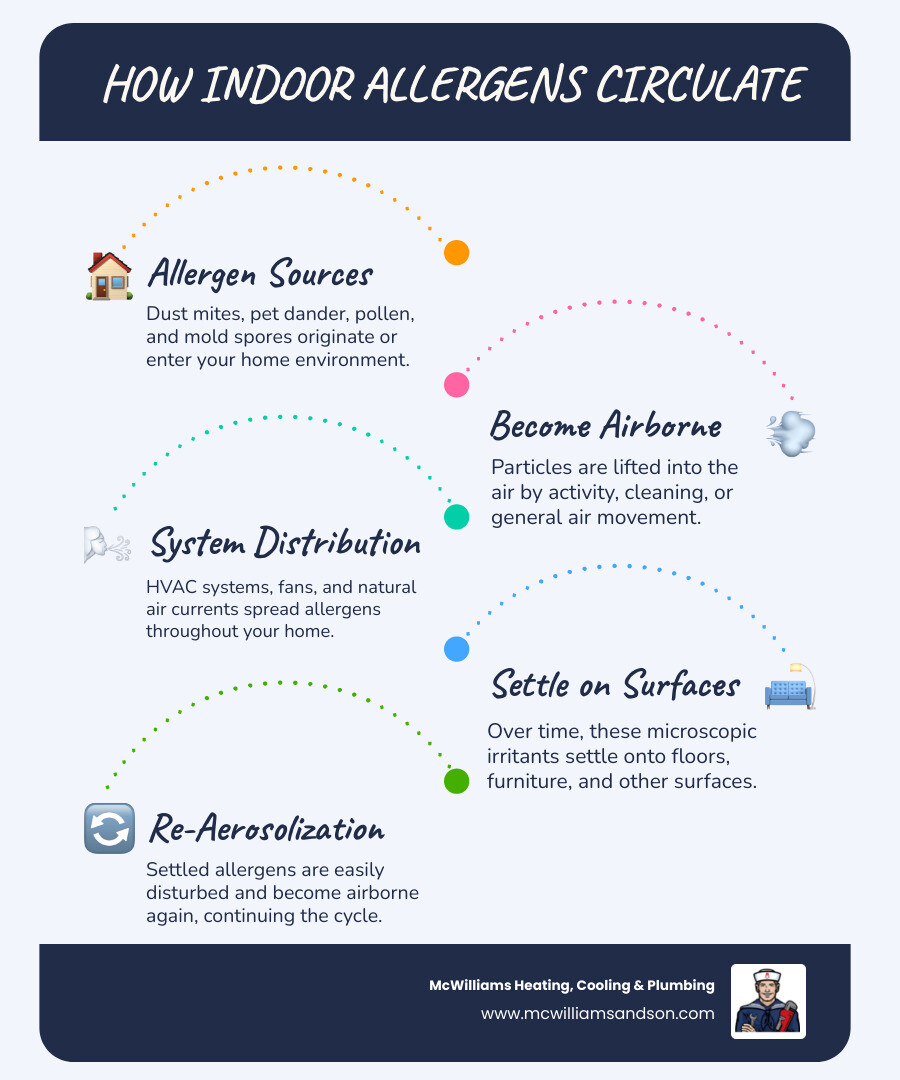
The air inside your home can harbor more pollutants than outdoor air due to poor ventilation. Common culprits like dust mites, pet dander, pollen, and mold spores circulate through your HVAC system, settling on surfaces and in the air you breathe.
Two main options exist: portable room air cleaners for targeted relief, or whole-house systems that integrate with your HVAC for comprehensive coverage. The right choice depends on your budget, home size, and severity of allergies.
For severe allergies, experts recommend aiming for 6 air changes per hour – meaning your air gets completely filtered every 10 minutes. This level of filtration can dramatically reduce allergy symptoms and improve your family’s comfort.
Understanding Indoor Allergens and Air Filtration
Did you know the air inside your home can be more polluted than the air outside? The U.S. Environmental Protection Agency lists indoor air pollution as a top environmental health risk. Let’s look at what’s in your air and how to filter it out.

Common Indoor Allergens
These are the usual suspects that wreak havoc on allergies:
- Dust Mites: These microscopic critters thrive in warm, humid environments. It’s not the mites themselves that cause allergies, but their droppings and decaying bodies.
- Pet Dander: Tiny flakes of skin, saliva, and urine from pets can become airborne and trigger allergic reactions. Dander can also enter your home on clothing.
- Pollen: This fine powder from trees, grasses, and weeds is a major outdoor allergen that easily finds its way indoors through open windows, on clothes, or via your HVAC system.
- Mold Spores: Mold thrives in damp areas like bathrooms and basements, releasing tiny spores into the air that can cause respiratory issues and allergic reactions.
How Air Filters Tackle Allergens
Air filters capture airborne particles to stop them from circulating. The main types include:
- Mechanical Filtration: This is the most direct method. Filters create a physical barrier that traps particles as air passes through. The denser the filter, the smaller the particles it can capture.
- Activated Carbon Filters: These filters don’t trap particles but instead absorb gases, odors, and Volatile Organic Compounds (VOCs) through a process called adsorption.
- Electrostatic Filters: These use static electricity to attract and hold airborne particles. Some are washable, while others are disposable.
Why HEPA is the Gold Standard for Allergy Relief
A HEPA (High-Efficiency Particulate Air) filter isn’t just a name; it’s a standard. To be certified as True HEPA, a filter must trap 99.97% of particles that are 0.3 microns in size. This specific size is the hardest to capture, making HEPA filters incredibly efficient and the undisputed champion for allergy relief. You can learn more about the specifics from the EPA’s guidance: What is a HEPA filter?
True HEPA filters are designed to capture the smallest airborne allergens, including dust, pollen, mold, and pet dander. This level of filtration is crucial for anyone suffering from seasonal or year-round allergies.
For those with asthma, HEPA filtration offers significant relief by removing airborne triggers. Our team at McWilliams Heating, Cooling & Plumbing knows how clean air can improve respiratory health. Air conditioning, when paired with good filtration, can significantly reduce airborne allergens. Find more about how your AC can help with asthma symptoms: 3 Ways Air Conditioning Improves Asthma Symptoms
The Role of Activated Carbon
While HEPA filters are masters of particle removal, they don’t handle odors or gases. That’s where activated carbon filters come in. VOCs (Volatile Organic Compounds) are gases from household items like paints, furniture, and cleaning products that can worsen allergies. Activated carbon filters trap these gaseous pollutants through adsorption, neutralizing odors and chemicals.
This is why many high-quality hepa air cleaner for allergies units use a multi-stage filtration system. They combine a pre-filter (for larger particles), a True HEPA filter (for fine particles), and an activated carbon filter (for odors and gases). This comprehensive approach ensures a truly clean and fresh indoor environment.
Key Metrics for Choosing an Air Cleaner
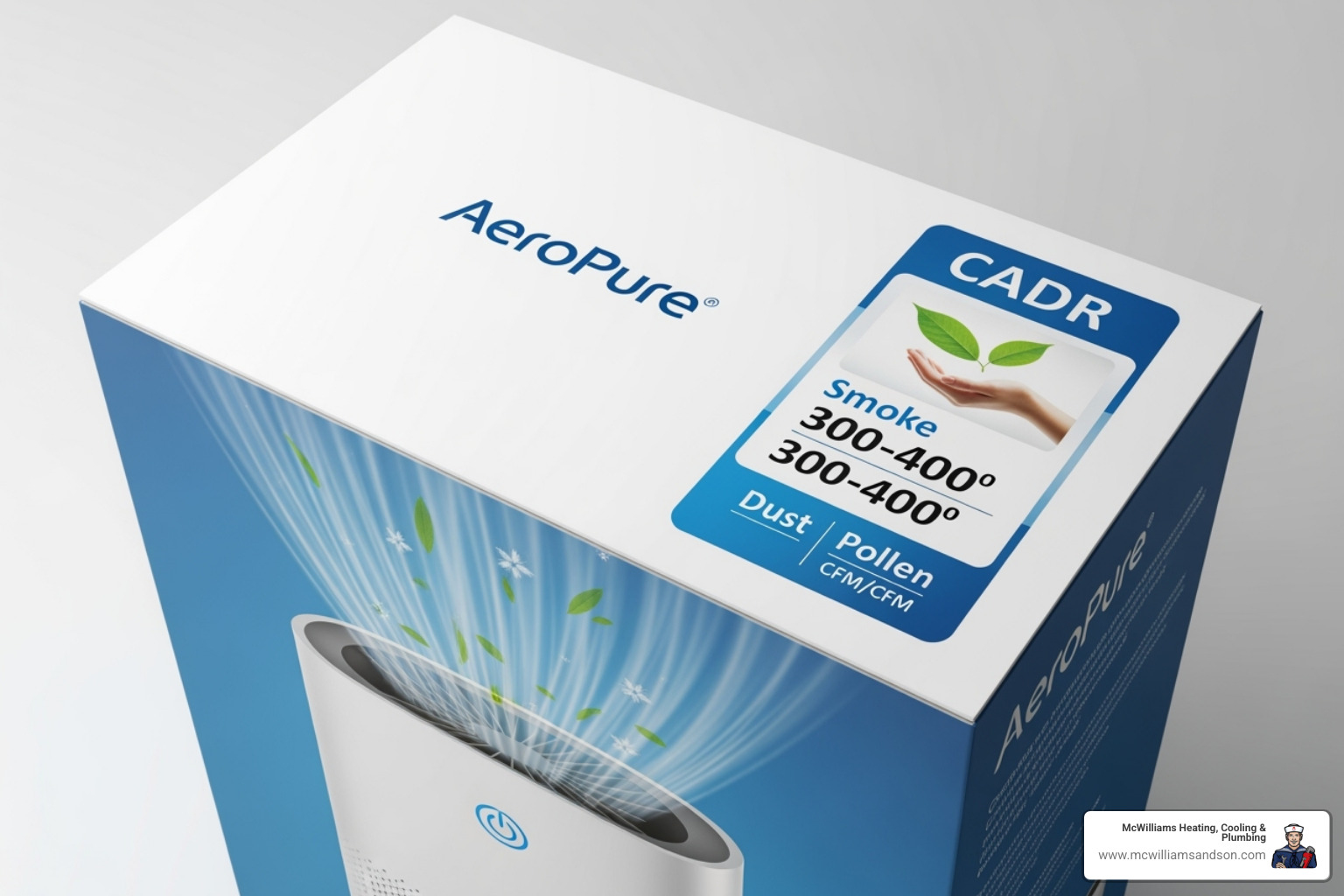
Shopping for a hepa air cleaner for allergies can feel overwhelming, but understanding a few key metrics makes it much simpler. Think of them as the specs for your air cleaner: Clean Air Delivery Rate (CADR), Air Changes Per Hour (ACH), and decibel levels (dB). For whole-house systems, you’ll also see MERV ratings.
These numbers tell you if an air cleaner will actually help your allergies.
Decoding CADR and ACH for Allergy Sufferers
CADR (Clean Air Delivery Rate) tells you how fast a purifier cleans pollutants like smoke, pollen, and dust from the air, measured in cubic feet per minute (CFM). A simple rule is to choose a unit with a CADR that is at least two-thirds of your room’s square footage. For a 300-square-foot room, you need a CADR of at least 200 CFM for it to be effective.
Even more important for allergy sufferers is Air Changes Per Hour (ACH). This is how many times the air in your room gets completely filtered each hour. While 2-3 ACH is fine for general use, experts recommend 4-6 ACH for severe allergies. At 6 ACH, your air is cleaned every 10 minutes, providing constant relief.
Be wary of purifiers claiming to cover huge rooms. A unit rated for 1,000 square feet might only achieve 1 ACH in that space, which is not effective for allergy relief. To ensure you’re getting proper protection, you can calculate ACH yourself: multiply the CADR by 60, then divide by your room’s cubic feet (length × width × ceiling height).
Understanding MERV for HVAC Systems
For whole-house filtration via your HVAC system, you’ll use MERV ratings (Minimum Efficiency Reporting Value), which run from 1 to 20. Most homes have basic MERV 8 filters, which are not ideal for allergens. We recommend MERV 11-13 filters for allergy sufferers, as they capture smaller particles like pollen and pet dander without restricting airflow.
Going higher than MERV 13 can be counterproductive. These filters can restrict airflow, causing your system to work harder, use more energy, and potentially break down sooner. We help Texas homeowners find the right balance for their HVAC filters to create effective, whole-home air cleaning. Check out our Air Filters Lufkin TX services to see how we can optimize your system.
Finally, consider noise levels. An air cleaner won’t help if it’s too loud to run continuously. Look for units under 45 decibels on their effective settings, with quiet sleep modes for nighttime use. An effective hepa air cleaner for allergies must run constantly to work, and a loud unit will likely end up unused.
Portable vs. Whole-House: Which HEPA Air Cleaner for Allergies is Right for You?
Choosing the right hepa air cleaner for allergies comes down to a key decision: targeted relief for specific rooms or comprehensive coverage for your entire home? The best choice depends on your budget, home size, and the severity of your allergies.
Let’s break down the differences between portable room units and whole-house filtration systems.
| Feature | Portable Room Air Cleaners | Whole-House Filtration Systems |
|---|---|---|
| Initial Cost | Lower (hundreds of dollars per unit) | Higher (thousands of dollars, plus installation) |
| Coverage | Single room or targeted area | Entire home, consistent air quality |
| Maintenance | Filter changes per unit (can be frequent), unit cleaning | Centralized filter changes (less frequent), professional checks |
| Effectiveness | Highly effective for specific rooms (if sized correctly) | Consistent filtration throughout the home |
| Noise | Can be noticeable, especially on high settings | Often quieter as unit is in HVAC, less noticeable operation |
| Installation | Plug-and-play | Professional installation required |
| Flexibility | Can be moved between rooms | Fixed installation, operates with HVAC |
The Pros and Cons of Portable Room Air Cleaners
Portable air cleaners are versatile and accessible for tackling specific problem areas. Their portability allows you to move a unit from the bedroom at night to a home office during the day, which is valuable if only one family member has severe allergies.
Lower initial costs are also attractive. You can start with one unit for a few hundred dollars and get immediate results. Many also have smart features like air quality sensors that automatically adjust fan speed and smartphone app controls.
However, their limited coverage means you’ll likely need multiple units for whole-home relief, and those costs can add up. Noise levels can also be a challenge, as achieving the recommended 4-6 air changes per hour often requires higher, louder fan speeds. Finally, you’ll need to track and replace filters for each unit, with carbon filters lasting about three months and HEPA filters about a year.
The Power of a Whole-House HEPA Air Cleaner for Allergies
For comprehensive allergy relief, whole-house systems offer consistent, invisible, whole-home air purification.
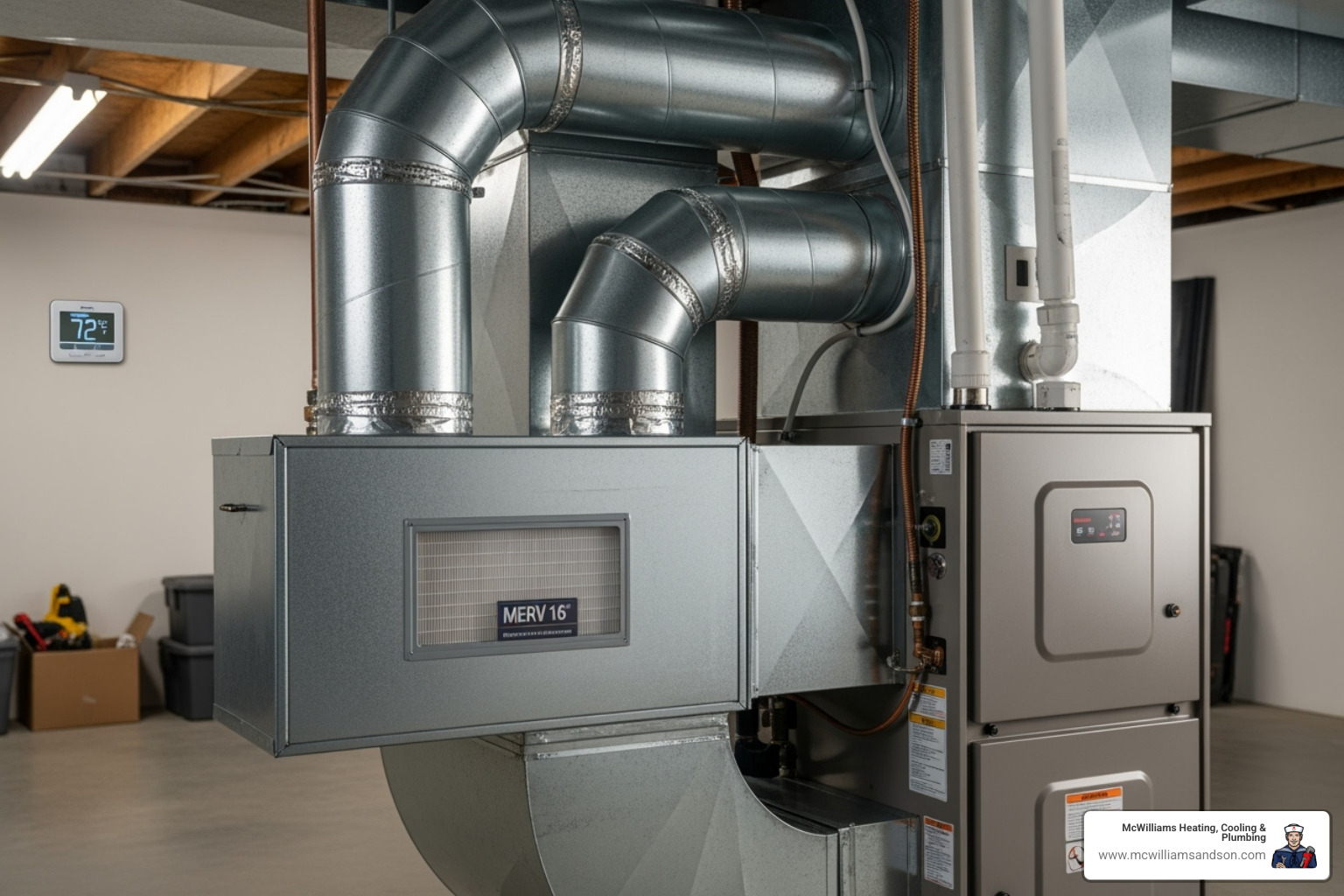
Central HVAC integration means every time your heating or cooling system runs, it’s also filtering air throughout your entire home. This provides consistent air quality in every room, creating a true sanctuary for allergy sufferers. The invisible operation is another major advantage, as these systems work quietly within your existing HVAC infrastructure without cluttering your living spaces.
The main drawbacks are the higher upfront investment and the need for professional installation. HVAC system compatibility is also crucial, as not all systems can handle the airflow requirements of high-efficiency filters. Our team has over 50 years of experience integrating these systems and can determine what works with your HVAC setup.
For homeowners in areas like Nacogdoches, TX, we’ve seen the remarkable difference whole-house solutions can make. Learn more about our services: Whole House Air Filtration Nacogdoches TX
The choice between portable and whole-house systems depends on your family’s needs, budget, and goals for indoor air quality. Both can provide excellent allergy relief when properly sized and maintained.
Buyer Beware: What to Avoid in an Air Purifier
Not all air purifiers are created equal, and unfortunately, some can actually make your allergies worse. After helping countless families choose the right hepa air cleaner for allergies over the years, we’ve seen our share of disappointing purchases. Let’s walk through the red flags to watch out for.
Ozone generators are the biggest offender we encounter. These devices produce ozone as their main cleaning method, and while ozone can neutralize some pollutants, it’s also a lung irritant that can worsen asthma and allergies. The EPA has been clear on this: ozone generators are not effective for allergy relief and can actually harm your respiratory system. If you see terms like “activated oxygen” or “energized oxygen” in the marketing, that’s just fancy talk for ozone.
Ionizers fall into a similar category. Many air purifiers include ionizer features that release charged particles into the air. The theory is that these ions make particles clump together and fall out of the air. In practice, ionizers often produce small amounts of ozone and lack solid scientific backing for allergy relief. If you’re considering a unit with an ionizer, make sure you can turn that feature off.
The world of air purification is full of unproven technologies with flashy names and bold claims. We’ve seen everything from UV lights to photocatalytic oxidation being marketed as breakthrough solutions. While some of these technologies have legitimate uses in specific applications, there’s often a lack of scientific data supporting their effectiveness for common household allergies.
Misleading marketing claims might be the most frustrating issue we see. Many manufacturers drastically overstate their room coverage. A purifier claiming to clean 1,000 square feet might only achieve one air change per hour in that space – nowhere near the 4-6 ACH you need for allergy relief. Always dig deeper than the headline claims and look for actual CADR ratings.
Watch out for sneaky filter terminology too. Terms like “HEPA-type” or “HEPA-style” don’t meet the strict standards of true HEPA filtration. Only True HEPA filters guarantee that 99.97% efficiency at 0.3 microns that makes such a difference for allergy sufferers.
The washable versus replaceable filter debate comes up frequently. While washable filters seem cost-effective upfront, they’re often less efficient at capturing the tiny particles that trigger allergies. Those microscopic allergens can be nearly impossible to completely wash out, and the filter’s effectiveness tends to degrade over time. Disposable True HEPA filters maintain consistent performance, even though they do represent an ongoing cost.
Here’s something that might surprise you: not changing filters regularly can actually make your air quality worse than having no purifier at all. Clogged filters lose their effectiveness and can become breeding grounds for mold and bacteria. It’s like having a dirty sponge – it just spreads the problem around instead of solving it.
The key is sticking with proven technology from reputable manufacturers who provide clear CADR ratings and honest room size recommendations. True HEPA filtration has decades of scientific research backing its effectiveness for allergies. Sometimes the tried-and-true solution really is the best one.
A Complete Strategy for an Allergy-Proof Home
A hepa air cleaner for allergies is absolutely essential, but it’s only part of winning the war against indoor allergens. Think of your home as a castle – you need multiple layers of defense to keep those microscopic invaders at bay!
The truth is, even the best air purifier can’t solve everything if allergens keep flooding in from other sources. That’s why we recommend a comprehensive approach that tackles the problem from every angle.
Regular HVAC maintenance forms the backbone of your allergy defense system. Your heating and cooling system is literally the lungs of your home, circulating air throughout every room. When it’s not properly maintained, it can become a highway for allergens instead of a barrier against them. We recommend professional maintenance at least twice a year, plus changing your HVAC filters every 1-3 months depending on your filter type and home conditions.
Humidity control is often overlooked but incredibly important. Dust mites and mold absolutely love humid environments – they throw parties when humidity levels climb above 50%! Keep your indoor humidity between 30% and 50% using dehumidifiers if needed. Here in Texas, this can be a real challenge, but it’s worth the effort. Just avoid vaporizers or humidifiers unless your doctor specifically recommends them, as they can accidentally create mold breeding grounds.
Duct cleaning might not be the first thing that comes to mind, but over the years, dust, allergens, and even mold can build up in your HVAC ducts. While it won’t solve active allergy problems overnight, professional duct cleaning removes these accumulated contaminants from your air circulation system. You can learn more about how this helps: Benefits of Air Duct Cleaning.
Frequent vacuuming sounds simple, but there’s a catch – regular vacuums can actually make things worse by stirring up allergens that then float around for hours. Use a vacuum with a HEPA filter to actually trap those particles instead of just relocating them.
Reducing allergens at the source means getting strategic about where these particles come from. Groom pets outside when possible and wash their bedding regularly to minimize dander. During pollen season, leave shoes at the door to avoid tracking outdoor allergens inside. Never allow smoking indoors – tobacco smoke is a major irritant that lingers for hours. Keep bathrooms, basements, and other damp areas scrubbed clean to prevent mold growth, and fix any leaks immediately.
When you combine a quality hepa air cleaner for allergies with these practical strategies, you’re creating a comprehensive defense system that addresses allergens from every angle. It’s like having a team of bodyguards protecting your family’s respiratory health!
For detailed guidance on implementing these strategies, check out our complete guide: 5 Tips Allergy Proof Home. The EPA also provides excellent resources for maintaining healthy indoor air quality: EPA’s guidance on indoor air quality.
Creating an allergy-proof home isn’t about perfection – it’s about consistency. Small daily actions add up to dramatically cleaner air and fewer allergy symptoms for your family.
Conclusion
Finding the right hepa air cleaner for allergies can genuinely transform your home from a source of constant sniffling into the comfortable sanctuary it should be. Throughout this guide, we’ve seen how HEPA filtration earns its reputation as the gold standard – that impressive 99.97% efficiency rate isn’t just a number, it’s your ticket to capturing those microscopic troublemakers like dust mites, pollen, pet dander, and mold spores that have been making your life miserable.
The numbers we’ve discussed – CADR ratings, those crucial 4-6 air changes per hour, and MERV ratings for your HVAC system – might seem technical at first, but they’re really your roadmap to relief. Whether you choose a portable unit that you can move from your bedroom to your home office, or invest in a whole-house system that works silently behind the scenes with your HVAC, both approaches can deliver the cleaner air your family deserves.
Remember to stay alert for those marketing tricks we warned you about. Skip the ozone generators and be wary of “too good to be true” claims. Stick with proven True HEPA technology, and you’ll be on solid ground.
Here’s what we’ve learned works best: a comprehensive indoor air quality strategy that goes beyond just plugging in an air purifier. Regular HVAC maintenance keeps your system running smoothly, humidity control makes life harder for dust mites and mold, and professional duct cleaning removes built-up contaminants. Add frequent vacuuming with a HEPA-equipped vacuum and smart source control measures, and you’ve created a multi-layered defense against allergens.
At McWilliams Heating, Cooling & Plumbing, we’ve spent over 50 years helping families across the Greater Texas Area breathe easier. From Katy to Nacogdoches, Lufkin to Livingston, we understand the unique challenges Texas homes face – from cedar pollen to high humidity. We’re not just about keeping your AC running or your pipes flowing; we’re about creating healthier homes where you can actually enjoy being indoors.
Our team is available seven days a week because allergies don’t take weekends off. We offer flexible financing and free in-home estimates because we believe everyone deserves clean, healthy air. Whether you need professional consultation on the best air purification system for your specific situation or want to explore whole-house solutions, we’re here to guide you every step of the way.
Ready to stop suffering and start breathing easier? Let us help you create the clean, comfortable home environment you and your family deserve.
Improve your home’s indoor air quality with McWilliams Heating, Cooling & Plumbing – because life’s too short to spend it sneezing.