

Blog
Home || Blog
Whether you are in the heart of the Piney Woods or living in downtown Nacogdoches, East Texas homeowners share one common, invisible enemy: hard water. You see it as the white, chalky crust on your showerhead and hear it as the strange popping sounds coming from your water heater at night. These minerals are essentially liquid rock, and they act as a slow-motion wrecking ball for your home’s plumbing infrastructure.
In this guide, we will explore why East Texas hard water damages your water heater and fixtures significantly faster than you might realize.
The Water Heater Killer: Sediment and Scale
Your water heater is the primary target of hard water because heat accelerates mineral buildup. When hard water is heated in a tank, the dissolved calcium and magnesium solidify into a chalky substance known as limescale. In East Texas, this process happens continuously. Over time, these minerals settle at the bottom of your tank, creating a thick layer of “rock” between the heating element and the water it is supposed to warm. This forces your heater to work significantly harder, as it must now heat that layer of stone before it can even begin to warm the water inside.
This buildup is not just an efficiency problem; it is a mechanical threat. Many homeowners in Nacogdoches and Lufkin describe hearing a strange popping or “kettling” sound coming from their garage or utility closet. This is the sound of water trapped beneath the sediment layer boiling and turning into steam bubbles that burst through the mineral crust. This constant internal stress can eventually lead to hot spots that weaken the steel tank, causing it to crack or leak years earlier than expected.
- Thermal Insulation: The layer of limescale acts as a thermal barrier, forcing the burner or electric element to run much longer to reach the set temperature.
- The Popping Sound: Steam bubbles bursting through the sediment layer create the characteristic “kettling” noise that signals a high mineral load.
- Tank Fatigue: Excessive heat trapped at the bottom of the tank can cause the glass lining to crack and the outer steel to fail prematurely.
- Efficiency Loss: Each millimeter of scale buildup can increase your water-heating costs by up to 10%-15%.
The combination of these factors creates a perfect storm for premature tank failure in the East Texas region. Instead of providing the decade of service you expect, a hard-water-taxed heater might start leaking or fail entirely in half that time. While regular tank flushing can help remove some of the loose debris, the constant influx of minerals from the local water supply means your system is always fighting an uphill battle against the local geology.
Fixtures and Faucets: The Visible Cost of Buildup
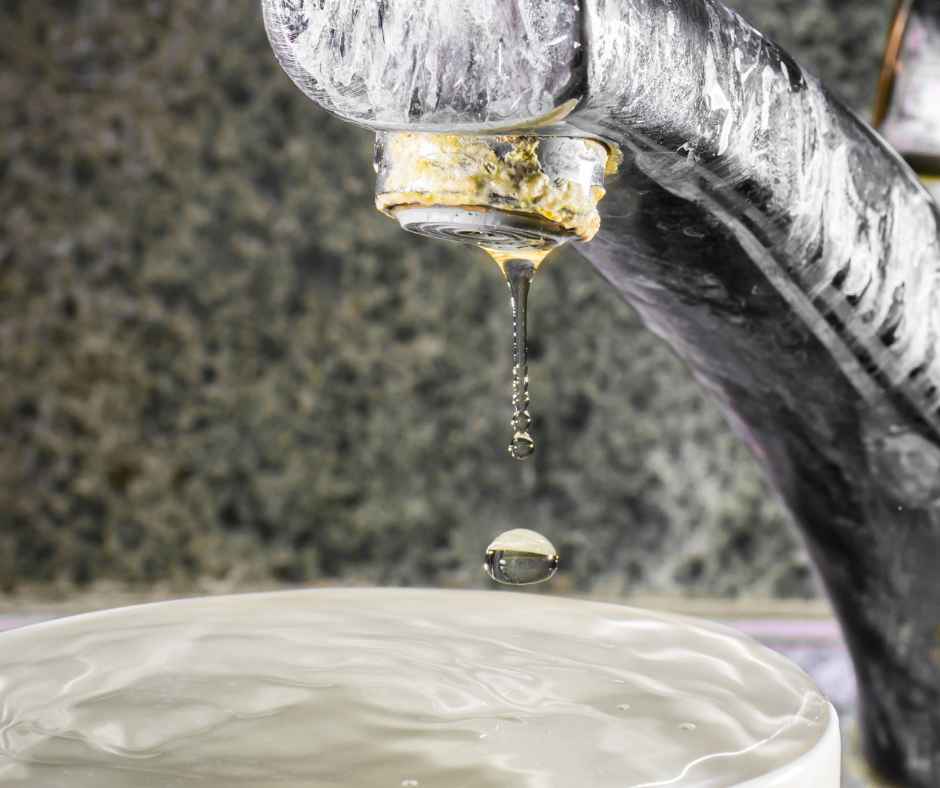
If the water heater is the hidden victim of hard water, your faucets and showerheads are the front-line casualties. In East Texas, it does not take long for a brand-new, high-end fixture to lose its luster. You likely recognize the white, crusty buildup that forms around the base of your handles or the nozzles of your showerhead. This is not just a cleaning nuisance; it is a sign that the minerals are actively attacking the internal mechanics of your plumbing. Limescale acts like sandpaper on the delicate rubber seals and O-rings inside your faucets, leading to persistent drips and leaks that are often impossible to stop without replacing the entire unit.
Beyond mechanical failure, hard water ruins your home’s aesthetic. The minerals in the Nacogdoches and Lufkin water supplies are particularly aggressive toward popular finishes like oil-rubbed bronze, matte black, and brushed nickel. The “pitting” caused by mineral deposits can permanently scar the metal, meaning no amount of scrubbing will ever bring back that showroom shine. When your showerhead nozzles become clogged with “rock,” the water pressure drops and the spray becomes uneven, turning what should be a relaxing morning ritual into an exercise in frustration.
- Aerator Clogging: Tiny screens in your faucets trap mineral deposits, causing a “spitting” water flow and reduced pressure.
- Seal and Gasket Decay: Hard minerals grind away at the flexible parts inside your handles, causing “phantom leaks” that waste thousands of gallons of water.
- Finish Pitting: Persistent mineral contact can erode the protective coating on your fixtures, causing permanent discoloration and structural weakening.
- Restricted Flow: As scale builds up inside the “neck” of a faucet, the internal diameter of the pipe shrinks, leaving you with a weak stream of water.
The cost of replacing designer fixtures every few years adds up quickly. Many homeowners find themselves stuck in a cycle of buying new showerheads and kitchen sprayers because they are treating the symptoms rather than the cause. The visible buildup you see on the outside is just a fraction of what is happening inside the valve bodies. Protecting these investments requires more than a bottle of vinegar; it requires a strategy to address the water’s mineral content before it reaches your sink.
The Domino Effect: How Hard Water Shortens Lifespans
Hard water does not stop at your faucets. It creates a domino effect that affects nearly every water-using appliance in your home. In East Texas, a dishwasher that should last a decade might only make it to year six before the pump fails. This is because the same minerals that clog your pipes also build up inside the tiny spray arms and heating coils of your appliances. Even your HVAC performance can be indirectly affected if you have a whole-home humidifier or a boiler system that relies on water circulation. When these systems are forced to process mineral-heavy water, their internal sensors and valves become coated in scale, leading to frequent errors and eventual appliance failure.
- Dishwasher Struggles: Mineral deposits clog the spray nozzles, leaving your dishes spotted and eventually burning out the drain pump.
- Washing Machine Wear: Hard water is tough on fabrics, but it is even tougher on the internal heating elements and gaskets of your washer.
- Ice Makers and Fridges: The small lines leading to your refrigerator often become completely blocked by “rock,” causing your ice maker to stop working entirely.
- HVAC Systems: For homes with specialized heating or humidification equipment, hard water can corrode internal components, leading to costly service calls.
This widespread damage means that a single issue with your water quality can trigger a cascade of costly repairs throughout your home. When one appliance fails due to mineral buildup, others are usually not far behind. By recognizing that hard water is a systemic issue rather than a series of isolated plumbing problems, you can better appreciate the importance of a comprehensive water treatment plan. Addressing the mineral content at the source prevents this domino effect from taking down your home’s most essential and expensive comfort systems.
The Solution: Whole-Home Water Softening
The most effective way to stop the “mineral tax” on your home is to remove the calcium and magnesium before it ever touches your plumbing. A whole-home water softener acts as a gatekeeper for your house. Through a process called ion exchange, the system replaces those “hard” minerals with a small amount of sodium, leaving you with water that is gentle on your skin, your clothes, and your water heater. For a home in Nacogdoches or Lufkin, this is not just a luxury upgrade; it is a defensive shield that preserves the life of every pipe and valve in your building.
By installing a professional-grade softening system, you are essentially “resetting” the clock on your plumbing’s health. You will notice the difference immediately in the shower and on your dishes, but the real benefit is the peace of mind that comes with knowing your water heater is not slowly turning into a giant rock. At McWilliams Heating, Cooling & Plumbing, we specialize in high-capacity systems specifically designed to handle the heavy mineral loads found in the East Texas groundwater supply.
- Eliminate Scale Buildup: Softening the water prevents new limescale from forming and can even help dissolve existing deposits over time.
- Extend Appliance Life: Your water heater and dishwasher can return to their factory-expected lifespans, saving you thousands in replacement costs.
- Improve Soap Efficiency: You will use up to 50% less soap and detergent because soft water allows cleaners to lather and rinse much more effectively.
- Protect Your Fixtures: Say goodbye to the white crust on your showerheads and keep your designer finishes looking new for years.
This proactive approach pays for itself over time by reducing energy bills and reducing the need for appliance replacements. Instead of spending your weekends scrubbing mineral stains or calling a plumber for a leaking faucet, you can enjoy the comfort of a home that runs efficiently. A water softener is a long-term investment in the mechanical health of your East Texas home, ensuring that the water you rely on every day is working for you, not against you.
Protect Your Home with McWilliams Heating, Cooling & Plumbing
At McWilliams, we have been serving the Piney Woods and surrounding areas with a commitment to “best-in-class” craftsmanship and honest, local service. We know exactly what East Texas water can do to a home because we have spent years repairing the damage it leaves behind. Our team of licensed plumbers is dedicated to delivering clear, effective solutions that protect your investment and improve your daily quality of life. Whether you need a precision water heater flush or a full whole-home filtration system, you can count on McWilliams to get the job done right the first time.
We believe in transparent pricing and providing our neighbors with the information they need to make smart decisions for their homes. When you choose McWilliams, you are partnering with a firm that understands the unique challenges of our local environment. We are proud to be the trusted name for plumbing and HVAC in Nacogdoches, Lufkin, and Richmond, and we look forward to helping you keep your home running smoothly for years to come.
Ready to stop the mineral damage in its tracks? Contact McWilliams Heating, Cooling & Plumbing today to schedule your water quality test and discover the best solution for your home!
Frequently Asked Questions
Does soft water feel “slippery” on the skin?
Yes, and that is actually a good sign. Hard water leaves a “curd” or film of soap on your skin that makes it feel “squeaky clean.” The slippery feeling of soft water is actually your natural oils remaining on your skin because the soap has been completely rinsed away.
How often do I need to add salt to my softener?
For most East Texas families, you will only need to add a bag of salt every four to six weeks. Modern systems are highly efficient and only use the amount of salt necessary to regenerate based on your actual water usage.
Is hard water a problem if I am on city water instead of a well?
Absolutely. While city water is treated for safety, the treatment process does not always remove the calcium and magnesium that cause scale. Many municipal sources in Nacogdoches and Lufkin still qualify as “hard” or “very hard.”
Can a water softener fix a water heater that is already popping?
It can stop the problem from getting worse, but it may not completely remove the “rock” already at the bottom of the tank. We recommend a professional tank flush in combination with a softener installation to get the best results.
Does a water softener affect the taste of my drinking water?
Most people do not notice a difference, but some prefer the taste of softened water because it lacks the “metallic” or chalky notes of hard water. If you are concerned about sodium, we can install a reverse osmosis system for your kitchen tap.
Share This :

ferociouscontent
Table of Contents
Latest
Discover New Blog Posts
Stay updated with our latest blog posts.
An AC blowing warm or weak air is one of the most common (and most urgent) HVAC complaints in Texas homes, and it almost always […]
A water heater should operate without drawing much attention, so popping, crackling, or rumbling sounds coming from the tank can be concerning. Your system may […]
When the water in your bathroom sink starts draining slower than usual, it does not take long before it turns into a daily frustration. Standing […]